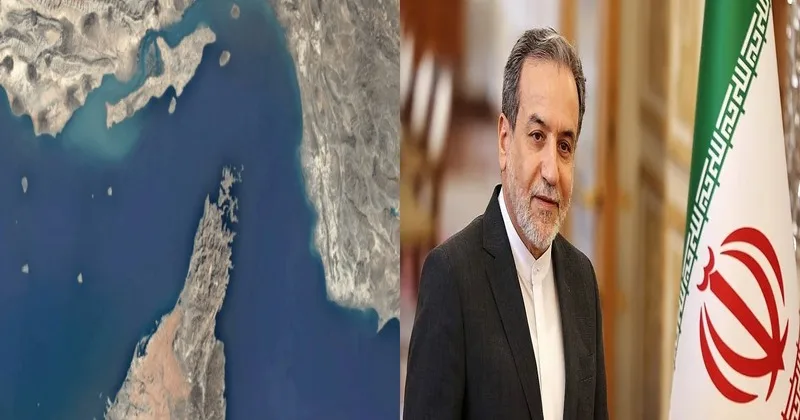
Mumbai: Iranian Foreign Minister Abbas Araghchi on March 26, Thursday said that they have permitted the passage of vessels for friendly countries, including India, through the Strait of Hormuz. Consulate General of Iran in Mumbai said in a post, “Iran FM Abbas Araghchi: We permitted passage through the Strait of Hormuz for friendly nations including China, Russia, India, Iraq and Pakistan”.
#Iran FM Abbas #Araghchi: We permitted passage through the Strait of #Hormuz for friendly nations including China, Russia, India, Iraq, and Pakistan. pic.twitter.com/RvLtiwYB4v
— Iran in Mumbai (@IRANinMumbai) March 25, 2026
This follows comments by the Secretary-General of the UN, Antonio Guterres, who called for the opening of the Strait of Hormuz. In a post on X, he said, “The prolonged closure of the Strait of Hormuz is choking the movement of oil, gas & fertilizer at a critical moment in the global planting season. Across the region & beyond, civilians are enduring serious harm & living under profound insecurity. The UN is working to minimise the consequences of the war. And the best way to minimise those consequences is clear: End the war – immediately”.
“My message to the US & Israel is that it’s high time to end the war – as human suffering deepens, civilian casualties mount & the global economic impact is increasingly devastating. My message to Iran is to stop attacking their neighbours that are not parties to the conflict”, UN Secretary General further added. Earlier on March 25, the Iranian mission in New York said that they will allow the passage of what it called “non-hostile vessels” through the Strait of Hormuz.
The mission announced in a post on X, “Non-hostile vessels, including those belonging to or associated with other States, may provided that they neither participate in nor support acts of aggression against Iran and fully comply with the declared safety and security regulations benefit from safe passage through the Strait of Hormuz in coordination with the competent Iranian authorities”. The Iranian Defence Council has announced that the transit of “non-hostile vessels” through the strategic Strait of Hormuz is now strictly dependent on prior “coordination with Iranian officials”.
The Strait of Hormuz, a narrow energy chokepoint between Persian Gulf and the Gulf of Oman has been a sensitive and contested maritime passage since the conflict broke out between US-Israel axis and Iran on February 28. Nearly, 20 to 25 per cent of global oil supply passes through the Strait of Hormuz, thus the strategic passage is critical to ensure unhindered global oil supply. For India, approximately 50 per cent of its energy imports including crude oil, LPG and LNG comes through the Strait of Hormuz.
India, thus to ensure its energy security has been striving diplomatically to accelerate the safe passage of India bound vessels through the conflict-ridden Strait of Hormuz. India has been consistently in contact with Iran and various West Asian partners to ensure energy security. As an impact of India’s sound diplomatic efforts, many LPG carriers and oil tankers carrying large scale crude oil have safely reached India via the Strait of Hormuz, without being targeted by the Iranian bombs, drones and missiles. This includes carriers Pine Gas and Jag Vasant carrying 92,000 tonnes of LPG. Shivalik, Nanda Devi are the other carriers that ensured unhindered energy supply to India without being the victim of West Asia conflict at the Strait of Hormuz.
The latest assertion by the Foreign Minister of Iran regarding the safe passage of Indian oil tankers and other vessels via the Strait of Hormuz illustrates the resounding diplomatic capabilities of India. New Delhi is accelerating the country’s energy security amidst a massive conflict in West Asia. When the US, Europe flagged vessels are relentlessly bombed by Iran in the maritime route, Indian carriers are gaining safe passage. This reflects the straegic patience, negotiating skills and overarching diplomatic leverage of India to deal equally with every stakeholder in the conflict with the ultimate goal of fulfilling national security priorities.
(With Inputs from ANI)