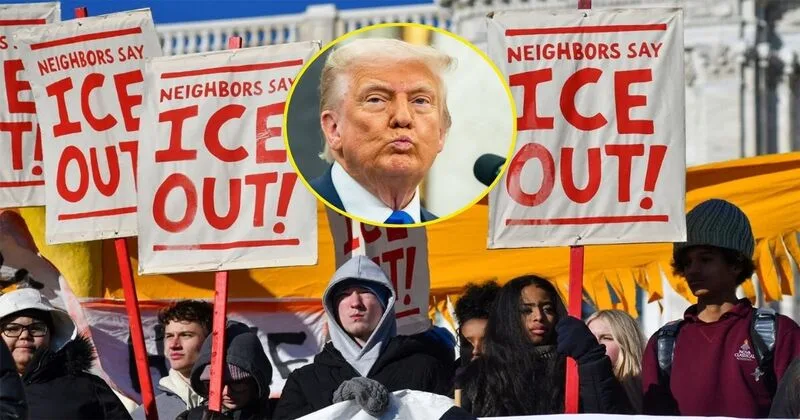
Washington: At least 10 people have reportedly died in US Immigration and Customs Enforcement (ICE) custody or during enforcement operations in 2026, continuing a disturbing pattern after 32 deaths in 2025, the highest annual toll outside the COVID-19 pandemic since the agency’s creation. With 11 deaths in just the first 60 days of 2026, current trends indicate a potentially more severe year ahead.
Among those who died in early 2026 are Alberto Gutierrez Reyes, who died in March at the Adelanto ICE detention facility following alleged medical neglect, and Emmanuel Damas, who died while handcuffed to a hospital bed in Arizona. Multiple deaths occurred within the first weeks of January, including Heber Sánchez Domínguez, who died six days after arrest on January 16, and Víctor Manuel Díaz, who died in custody on January 14. Other cases include Parady La, a Cambodian refugee who died on January 9, Luis Beltran Yanez-Cruz, a Honduran grandfather who died on January 6, Luis Gustavo Nunez Cáceres, who died on January 5, and Geraldo Lunas Campos, who died on January 3 after being restrained. These deaths reflect a concentration of fatalities within a short period of detention and enforcement.
In addition to custody deaths, enforcement operations have resulted in fatal shootings. Alex Jeffrey Pretti, a US citizen and ICU nurse, was shot and killed by a federal immigration agent on January 24, while Renée Nicole Macklin Good, also a US citizen, was shot and killed by ICE agents on January 7. These incidents have intensified scrutiny over the use of force by immigration authorities, including against American citizens.
Advocacy groups such as Detention Watch Network attribute the rising death toll to the rapid expansion of detention systems and worsening conditions inside facilities. Combined figures for 2025 and early 2026 show at least 43 to 45 deaths in ICE custody or related operations, indicating a significant surge tied to expanded enforcement and mass detention strategies.
Public opinion shifts as enforcement expands and images circulate
The escalation in enforcement activity has coincided with a sharp shift in public opinion. According to a PBS News/NPR/Marist poll, 6 in 10 Americans disapprove of the job ICE is doing, while only about 3 in 10 approve. Public perception has increasingly turned critical as enforcement operations expand into more cities and become more visible.
The poll found that 65% of Americans believe ICE has gone too far in enforcing immigration laws, up from 54 per cent last June when enhanced enforcement efforts began. In contrast, only 22 per cent say the agency’s actions are about right, down from 26 per cent, while those who believe ICE is not going far enough have declined from 18 per cent to 12 per cent.
Concerns over safety have also intensified. A majority, 62 per cent of respondents, believe ICE’s actions are making Americans less safe, while 37 per cent say the country is more safe, including 77 per cent of Republicans. Despite continued support among Republican respondents, opposition among Democrats and independents remains dominant, contributing to the overall majority disapproval. Public scrutiny has been further fuelled by widespread circulation of images and videos showing armed and masked immigration agents detaining individuals in public spaces, including US citizens. These visuals, alongside reports of shootings and deaths in custody, have contributed to a visible erosion of public trust in enforcement practices.
The latest poll was conducted in the aftermath of the killing of Alex Pretti in Minneapolis, the second fatal shooting of an American citizen by federal immigration officials in the city this year. The incident triggered administrative changes, including the removal of Border Patrol commander Greg Bovino and the appointment of Tom Homan as the public face of enforcement operations.
Operational adjustments have followed. Authorities announced that 700 federal immigration agents would leave Minnesota immediately, leaving around 2,000 personnel in place. Enforcement strategies have shifted toward greater coordination with local law enforcement, allowing ICE to take custody of individuals directly from jails rather than conducting large-scale street operations.
At the same time, immigration enforcement has become a central issue in legislative negotiations. ICE policies contributed to a temporary government funding disruption, with debates continuing over new restrictions. Proposed reforms include requiring agents to display identification, limiting the use of masks, and mandating judicial warrants for certain enforcement actions.
The developments highlight a growing contradiction in US governance. While the United States continues to promote democracy, civil liberties, and free speech globally, the rising number of custody deaths, agent-involved shootings, and increasingly aggressive enforcement practices domestically raise questions about adherence to those principles.