

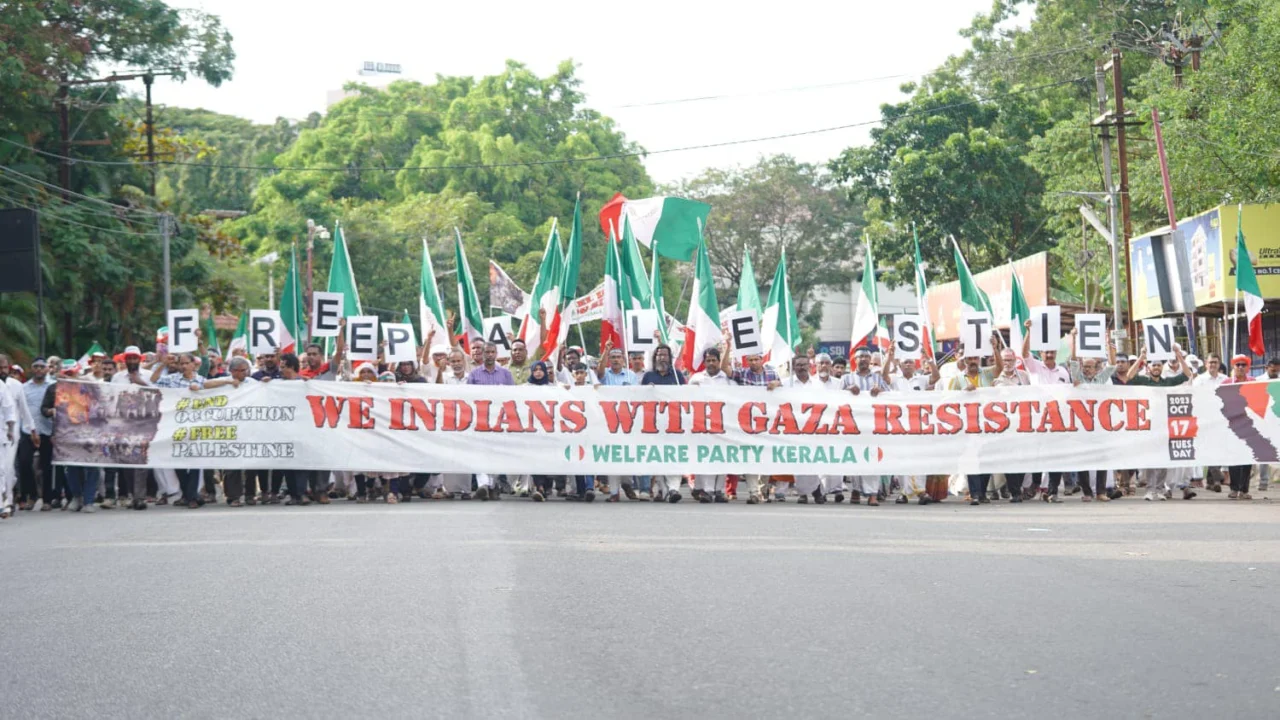
More than a religious organisation, Jamaat-e-Islami Hind in India is known for its political Islamic agenda. Though its political wing, the Welfare Party of India, does not contest elections directly, it plays a key role as a mediator between political parties and Islamic society.
As the Kerala State Assembly elections are scheduled, Muslims are looking for direction from the leaders of Jamaat-e-Islami Hind. The organisation is now likely to make a political statement on March 25, declaring which party it will support in the elections.
As per reports, this less religious and more political organisation is expected to take an official stand in support of the Congress-led United Democratic Front (UDF), while unofficially maintaining political adjustments with the UDF in several seats, with the single agenda of preventing BJP-led NDA prospects in the state.
In the recently concluded local self-government body elections held in December 2025, the Welfare Party of India had made adjustments with the UDF in several parts of the state during the elections, and now the same support is to be extended to the LDF.
The Welfare Party of India has resolved to ensure that the anti-BJP votes do not suffer any split. So, they are ready to support the CPM-led Left Democratic Front (LDF) wherever the LDF leads and the BJP appears to be stronger than the UDF.
Interestingly, the honeymoon between the UDF and the Welfare Party will invite the wrath of a section of Hindu voters. In other words, the UDF is on a tightrope walk. And if the March 25 statement speaks about supporting the LDF in some ‘strategically important’ constituencies, it may invite the wrath of another section of Hindu voters.
In short, the midnight communications between the Welfare Party of India and the Congress-led UDF vindicate what the BJP and other nationalist forces have been alleging for the last few years. It is the regularisation of the hide-and-seek relationship Congress and the Welfare Party have been maintaining for several years.
During every election across the country, be it Assembly or Parliamentary elections, Jamaat-e-Islami Hind comes with Islamic-driven agenda demands and bargains with either Congress or its partners to advance its agenda.
The standard modus operandi is that wherever Jamaat has numbers, they dominate; else, they play a decisive role in influencing elections with their core Islamic vote bank as a ransom or a bait.
The history and political Islam of Jamaat-e-Islami Hind make it clear that they have mastered the art of playing an aggressive role when things are in their favour; otherwise, they play the victim card, while tightly controlling Muslims and their vote bank, not allowing them to vote freely as per their will, and asserting that community interests should be above individual inclination or rational thinking in decision-making.