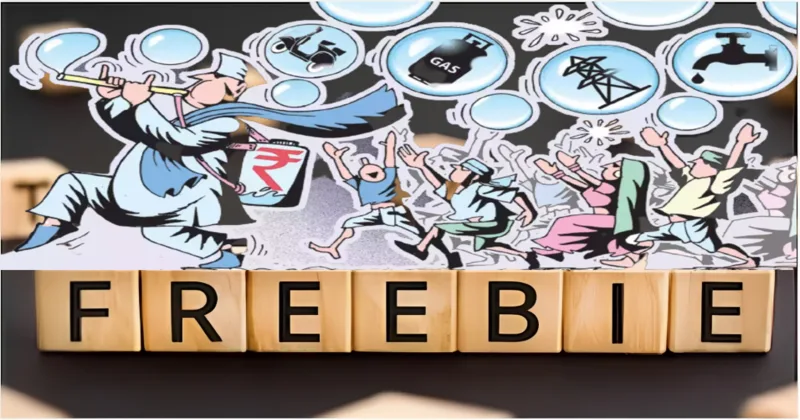
In the high-stakes political theatre of 2026, a new and dangerous recipe is being perfected in the Congress party’s kitchens. It is what economists are now calling “Guarantee-nomics”, a strategy that offers immediate, sugary gratification to the voter while injecting a slow-acting fiscal poison into the state’s economic veins. While the “Five Guarantees” in Karnataka and the “Six Guarantees” in Telangana may feel like a sweet dessert today, the long-term reality for Bharat’s fiscal health is beginning to look like a nightmare. Now, as this model arrives on the shores of Kerala, a state already gasping for financial air, the stakes have never been higher.
The Fiscal Death Spiral: Lessons from the neighbours
The most alarming evidence of this fiscal decay is found in the current debt-to-GSDP ratios across states that have embraced this model. When a state shifts from asset creation to pure revenue expenditure (freebies), it enters a “debt trap” where it must borrow merely to pay interest on previous loans. As of March 2026, the numbers tell a harrowing story. Himachal Pradesh leads in the tragedy, with a debt-to-GSDP ratio of 43.98 per cent, followed by Kerala at 34.26 per cent. Even Telangana, once a revenue-surplus state, is now inching toward the 29 per cent danger threshold with a total public debt approaching ₹5.62 lakh crore.
In Karnataka, the “Five Guarantees” have created a massive hole in the treasury. By February 2026, the state had already spent over ₹1.21 lakh crore on these schemes since their inception. To fund this “sweetness”, the government has been forced to cannibalise its own future by slashing capital expenditure on vital infrastructure. The state’s total liabilities are projected to reach ₹8.24 lakh crore by the end of the 2026-27 fiscal year. This is the hallmark of the Congress model: borrowing from tomorrow to pay for a vote today, leaving the next generation with a mountain of debt and crumbling roads.
The MSME Crisis: When industry pays for “Freebies”
Perhaps the most devastating impact of the “slow poison” is felt by the backbone of the economy: the Micro, Small, and Medium Enterprises(MSMEs). In Karnataka, to fund the Gruha Jyothi(free electricity) scheme, the government has repeatedly hiked power tariffs for industrial and commercial users. As of March 2026, industrial consumers are bracing for fresh hikes as ESCOMs seek to bridge revenue gaps. This cross-subsidisation has pushed many small manufacturing units to the brink of closure.
Trade bodies have sharply criticised these moves, noting that energy-intensive sectors such as textiles and engineering are facing “unbearable financial pressure.” When a small factory’s power bill jumps significantly, it loses the ability to hire, to innovate and eventually, to survive. By making “dessert” free for the domestic consumer, the Congress government is effectively starving the very industries that provide real, sustainable employment. The result is a shrinking industrial base and a growing population of “beneficiaries” with no long-term job prospects.
The KSRTC Paralysis: A case study in managed decay
The impact of these guarantees on public transport is particularly visible in the state transport corporations. In states like Karnataka, the “Shakti” scheme of free travel for women was implemented without a corresponding increase in fleet size or infrastructure. The result has been overcrowded buses, deteriorating safety standards and a massive financial drain on the corporation.
As the Congress looks to bring a similar “Shakti” model to Kerala, the already ailing KSRTC faces an existential threat. Currently, KSRTC survives on monthly government bailouts just to pay pensions and salaries, with the state recently sanctioning over ₹93 crore in June 2025 alone to keep it afloat. Introducing free travel in a corporation already drowning in debt is like asking a sinking ship to carry more weight. It doesn’t empower women; it destroys the very transport system they rely on, leading to service cuts and the eventual privatisation of routes that were once lifelines for rural Bharat.
The Agriculture Sector: Neglect in the name of welfare
Agriculture in Kerala has become a silent victim of the “guarantee” era. While the state government announces populist cash transfers, the actual support for farmers, subsidies for fertilisers, modern equipment and irrigation, has been sidelined. As of March 2026, the agricultural community in Kerala has voiced concerns over being “neglected” in the state budget. Arrears on crop insurance and natural calamity assistance have often lagged by years, as the state treasury prioritises the immediate cash outflows of the flagship “guarantees”.
In contrast to the BJP’s focus on PM-KISAN and massive investments in agricultural infrastructure like cold chains and food parks, the Congress model offers nothing but the “sweetness” of a slightly higher pension, while the farmer’s input costs rocket due to neglected state-level subsidies. This is the “slow poison” at work; farmers are given a small monthly check while the infrastructure that would actually make farming profitable is allowed to decay.
The Terminal Phase: Himachal’s economic collapse
If Karnataka is feeling the first symptoms of the poison, Himachal Pradesh is in the terminal phase of systemic failure. By early 2026, the state reached a point where it could no longer afford to pay its own employees on time. Thousands of workers have faced months of salary delays. The state’s committed liabilities, salaries, pensions, and debt servicing now exceed its total available resources, with nearly 45 per cent of the budget consumed by salaries and pensions alone.
The situation is so dire that the finance department has discussed “peak austerity” measures, including wage freezes. This is the ultimate irony of the “Guarantee” model: it promises freebies that eventually leave the state unable to provide even basic services. For Himachal, the “slow poison” has finally reached the heart, leaving the government struggling to keep the lights on while its debt remains a chronic burden.
The BJP’s “Engine” model: Wealth creation vs. Debt accumulation
Contrast this “poisoned dessert” with the infrastructure-led growth model championed by the BJP-led Union Government. In the 2026-27 Union Budget, the capital expenditure(Capex) has been raised to an unprecedented ₹12.22 lakh crore, representing 4.4 per cent of the GDP. This is not “spending” it is an investment in the future of Bharat. Unlike the Congress model of giving away cash that disappears into thin air, the BJP’s push for Bharatmala, Sagarmala and the PM Gati Shakti Master Plan creates productive assets.
Every rupee spent on a National Highway generates a massive multiplier effect of 2.5x to 3x on the GDP. These projects pay for themselves through self-sustaining revenue; National Highway toll revenues are projected to cross ₹1 lakh crore in FY2026-27 alone. This money is recycled back into the economy to build even more roads, creating a “virtuous cycle” rather than a debt spiral. Most importantly, it creates real jobs; the PLI schemes and industrial corridors have generated over 12.60 lakh jobs, providing a path to prosperity that no meagre stipend can match.
The “debt-per-citizen” breakdown: A burden for the unborn
To truly understand the toxicity of these guarantees, one must look at the debt burden shifted onto the individual. In states like Gujarat or Uttar Pradesh, where the focus remains on Capex-led growth, the per capita debt remains manageable because the GSDP(the “pie”) is growing faster than the debt. However, in Congress-ruled states, the “pie” is stagnant while the debt grows.
In Kerala, every individual carries a debt of approximately ₹1.25 lakh. When Congress promises a “guarantee”, it is taking out a loan in your name, which your children will have to repay with interest. This is the definition of intergenerational theft, served with a smile and a campaign slogan.
The central government’s fiscal warnings
The Reserve Bank of India(RBI) and the Finance Ministry have consistently flagged the “Red Zone” status of states like Kerala. In its latest state finance report, the RBI noted that several states are now using over 25 per cent of their total revenue to pay interest on old debt. When a quarter of your income goes to interest, you have already lost the ability to govern.
The 16th Finance Commission has already begun tightening the screws, recommending that the Revenue Deficit Grant(RDG) be phased out for those who refuse to practice fiscal discipline. For states like Kerala, which depend heavily on central transfers, this is a looming cliff. The Congress guarantees are effectively a bet that the Centre will always be there to bail them out, but as the rules of fiscal prudence tighten, that bet is looking increasingly like a losing one.
The opportunity cost: What could have been built?
The true tragedy of “Guarantee-nomics” is the opportunity cost. If the ₹52,000 crore spent annually on Karnataka’s guarantees were instead invested in infrastructure, it could have funded ten new AI and IT parks, five major industrial corridors and the complete solar electrification of every village in the state within three years. In Kerala, the money proposed for the hike in welfare pensions alone could have been used to solve the KSRTC crisis permanently or complete the widening of crucial highways. Instead, this capital is being “burnt” on revenue expenditure that provides no long-term return. We are trading the highways of tomorrow for the handouts of today.
The long-term consequence: A generation at risk
Beyond the immediate numbers, the true danger of this populist dessert is the erosion of the work ethic and the degradation of public institutions. When citizens are taught to look toward the government for a monthly handout rather than for a high-quality road or a functional hospital, the social contract is fundamentally altered. In Kerala, this is especially dangerous as the state already struggles with a lack of industrial investment and a massive “brain drain” of its youth.
The BJP’s model, by contrast, treats the citizen as a partner in growth. By providing the infrastructure, the highways, the ports and the digital connectivity, the government empowers the individual to create wealth for themselves and for the nation. This is the difference between a state that feeds you for a day and a state that builds a world where you never go hungry.
Rejecting the addictive cycle: The choice between a handout and a future
The real guarantee a citizen needs is not a monthly “freebie” that devalues the currency, erodes the dignity of labour and systematically destroys the state treasury. We are witnessing a dangerous experiment in which governance has been reduced to a transaction, with votes bought with borrowed money. This “Guarantee-nomics” is nothing more than a fiscal mirage that blinds the public to the crumbling reality of our state’s foundations. When a government prioritises a short-term cash handout over long-term asset creation, it isn’t “empowering” the poor; it is ensuring they stay poor by killing the very infrastructure that could have lifted them out of poverty.
The true path to prosperity is paved with world-class highways, high-speed digital connectivity and modern ports, infrastructure that allows local businesses to thrive and ensures our children find high-paying jobs here in Bharat, rather than being forced into a global exodus. The Congress guarantees are like slow poison served in a delicious dessert. It might taste like progress for a fleeting moment, but the toxic aftertaste is one of systemic bankruptcy, industrial stagnation and an inheritance of debt for the next generation. We cannot build a “Viksit Bharat” on a foundation of “Freebie-Kerala”.
For “God’s Own Country” to survive this fiscal winter, it must summon the courage to reject the “sweet poison” of populist bribery. We must demand the “Engine Model” of growth, where every rupee invested generates wealth, employment and pride. It is time to break the addictive cycle of dependency and embrace a vision of a developed, self-reliant Bharat. The choice is clear: we can either have the temporary sugar high of a hollow promise or the lasting strength of a powerhouse economy. Kerala deserves a future built on concrete and steel, not on the shifting sands of a debt-ridden manifesto.