India has reiterated that the Indus Waters Treaty with Pakistan will remain in abeyance until Islamabad credibly and irrevocably ends its support for terrorism, reinforcing a firm diplomatic position at an international forum.
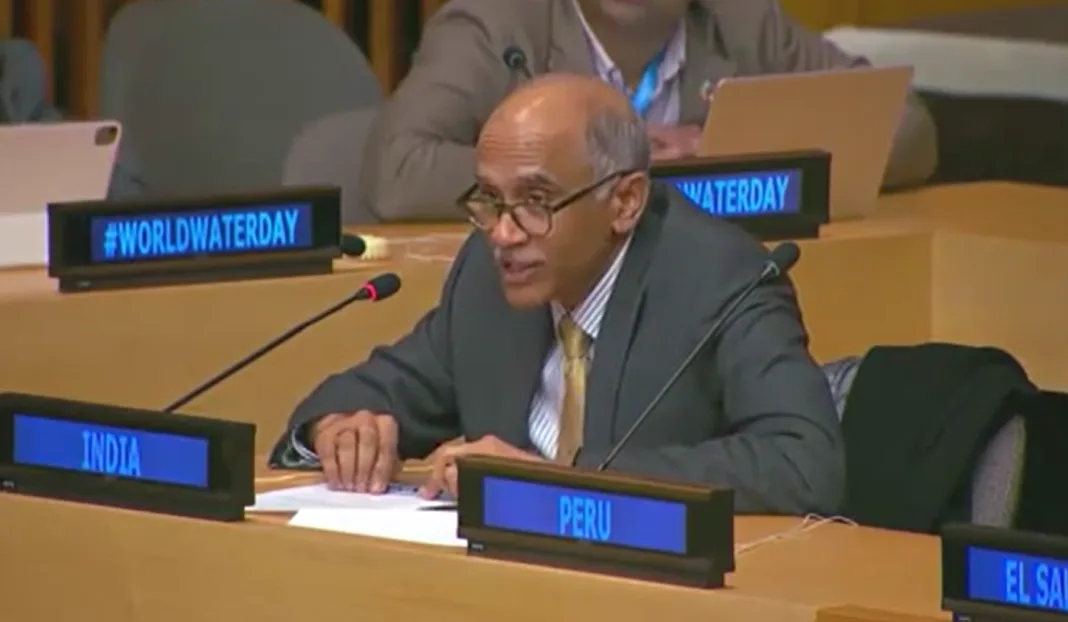
Speaking at a United Nations (UN) event marking World Water Day in Geneva, India’s Permanent Representative to the UN, P. Harish, stated that Pakistan must first uphold the sanctity of human life before raising concerns over treaty obligations. He described Pakistan as a “global epicentre of terror,” accusing it of misusing the platform to push a divisive agenda.
Clarifying that it was not India’s intention to raise bilateral issues at the forum, Harish said he was compelled to respond after Pakistan brought up the matter. He noted that India had entered into the Indus Waters Treaty over six decades ago in a spirit of goodwill and friendship, but that trust had been undermined over the years.
India pointed to Pakistan’s record of “three wars and thousands of terror attacks,” stating that tens of thousands of innocent Indians had lost their lives due to Pakistan-sponsored terrorism. “Our patience and magnanimity did not change Pakistan’s ways,” Harish said, explaining that India was ultimately compelled to place the treaty in abeyance.
Highlighting changing realities, India also underlined the need for revisiting the treaty framework. Harish cited advancements in dam infrastructure technology, rising demand for clean energy, and evolving climate and demographic pressures as factors necessitating amendments. He added that all attempts by India to engage Pakistan in discussions on modifying the treaty had been rebuffed.
Reaffirming India’s position as a responsible upper riparian state, Harish emphasised that responsibility must be mutual. He called on Pakistan to “unconditionally abjure terrorism as an instrument of state policy” and prioritise human life before invoking the sanctity of international agreements.
Concluding his remarks, Harish assured that India remains committed to working with global partners on inclusive, nationally driven, and gender-responsive approaches to water management, while maintaining a firm stance on issues affecting its national security.
On April 23, 2025, Foreign Secretary Vikram Misri announced that India had placed the 1960 Indus Waters Treaty (IWT) with Pakistan in abeyance following the Pahalgam terror attack in J&K, in which 26 Hindu civilians, including tourists, were killed, stating that dialogue cannot proceed alongside continued support for terrorism.