Riyadh: Saudi Arabia has issued a strong warning to Iran following a series of missile attacks targeting the kingdom and other Gulf states, signalling that its patience is “not unlimited” and hinting at possible military retaliation if strikes continue. The warning comes amid a sharp escalation in the ongoing West Asian conflict, with Riyadh itself now directly in the line of fire.
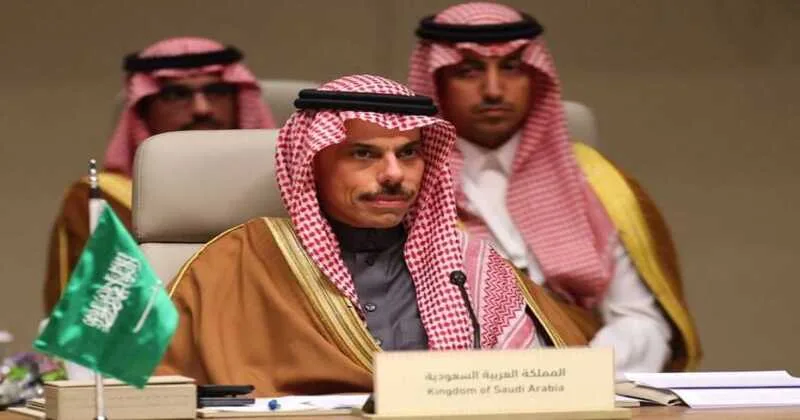
Saudi Foreign Minister Prince Faisal bin Farhan Al Saud described Iran’s actions as a “blatant attempt at blackmail” and urged Tehran to immediately “recalculate” its strategy. He emphasised that Saudi Arabia and its regional partners possess “very significant capacities and capabilities” that could be deployed if necessary. The remarks followed a dramatic incident in which Saudi air defences intercepted and destroyed at least four ballistic missiles fired towards Riyadh. The attack coincided with a high-level meeting of Arab and Islamic foreign ministers in the Saudi capital, a timing that Riyadh believes was intended to send a message.
Missile strikes target Riyadh during diplomatic meeting
The missile attack on Riyadh marked a significant turning point in the conflict. According to Saudi authorities, most incoming missiles were successfully intercepted, though debris from the interceptions fell near a key refinery south of the city. The facility reportedly processes around 1,30,000 barrels of oil per day and supplies the domestic market.
Residents in Riyadh reported hearing explosions for the first time since the war began, with emergency alerts sent to mobile phones across the city. The symbolism of the attack was striking that it occurred as foreign ministers from countries including Turkey, the UAE, Jordan, Qatar, and Syria gathered in Riyadh for discussions on the escalating regional crisis.
Officials suggested that the attack was deliberately timed to intimidate those attending the meeting. Interceptor missiles were reportedly visible near the conference venue, underscoring the proximity of the threat. Iran had previously warned that energy infrastructure across Saudi Arabia and other Gulf states would be considered legitimate targets. The targeting of Riyadh, long perceived as relatively insulated from direct Iranian strikes, has now shattered that assumption.
Saudi Arabia signals patience running out
In some of the strongest remarks since the conflict began, Prince Faisal accused Iran of carrying out premeditated and coordinated attacks, both directly and through regional proxies. He pointed to the precision of recent strikes as evidence of long-term planning rather than reactive measures. “The level of accuracy in some of this targeting indicates that this is something preplanned, pre-organised, and well thought out,” he said. He also made it clear that Saudi Arabia no longer views Iran as a credible partner under current circumstances, stating that whatever limited trust existed has now been “completely shattered.”
While refraining from outlining specific red lines, the foreign minister warned that continued attacks could trigger a defensive military response. “The patience that is being exhibited is not unlimited,” he said, adding that Saudi Arabia and its partners are fully capable of responding if they choose to do so.
He declined to specify a timeline for such action but urged Iran to “recalculate quickly” and halt its strikes. However, he also expressed scepticism about Tehran’s willingness to change course. Saudi Arabia had previously exercised restraint, even after repeated attacks on its infrastructure. The kingdom restored diplomatic ties with Iran in 2023 and had consistently advocated de-escalation. The latest developments, however, suggest a shift in posture as direct strikes on Riyadh intensify pressure on the leadership.
The war entering a more dangerous phase
Since the conflict began on February 28, Iran has launched multiple attacks targeting Gulf states, including the UAE, Bahrain, Kuwait, and Qatar. These strikes have focused on energy facilities, military installations, and assets linked to the United States. Earlier incidents included missile launches towards Prince Sultan Air Base and Riyadh airport, drone strikes on the Ras Tanura refinery, and attacks on residential areas that resulted in civilian casualties. Saudi Arabia has reported intercepting hundreds of drones and dozens of missiles over the past weeks.
The escalation peaked with the direct targeting of Riyadh using long-range ballistic missiles. Simultaneously, Iranian strikes hit energy infrastructure in Qatar and the UAE, including major gas facilities, further widening the scope of the conflict.
Analysts suggest that the attack on Riyadh represents a strategic shift. For years, the kingdom primarily faced threats from shorter-range drones launched by proxy groups. The latest strikes, launched directly from Iranian territory, signal a new level of confrontation. Experts warn that this development could mark a turning point in the war, significantly increasing the risk of a broader regional conflict. The perception of Riyadh as a safe administrative and economic hub has been undermined, exposing the vulnerability of even the most fortified centres.
The psychological impact of the strikes is also considerable. The idea that Saudi Arabia could remain insulated from direct Iranian attacks no longer holds, raising concerns about further escalation. With tensions rising and rhetoric hardening, the conflict appears to be entering a more dangerous and unpredictable phase. Saudi Arabia’s warning that its patience is limited underscores the growing likelihood of a more direct and forceful response if the current trajectory continues.