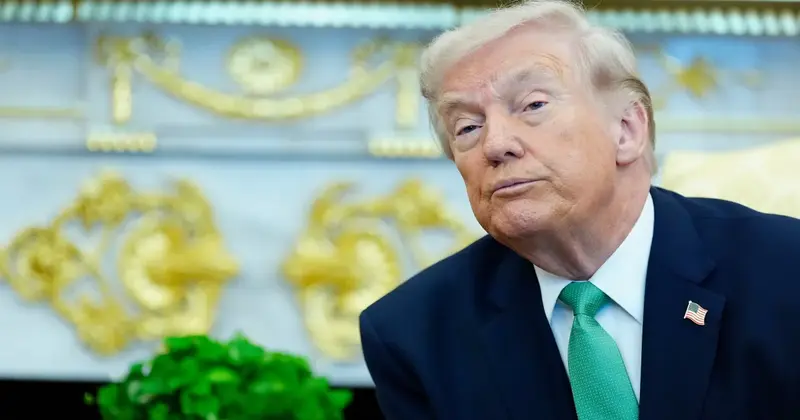
As the conflict between the US-Israel axis and Iran escalates with repercussions witnessed across West Asia, the US President Donald Trump has encountered a major backlash from his NATO partners. The member-states of the North Atlantic Treaty Organisation(NATO) have outrightly rejected the demand of the US President Donald Trump to assist in the war against Iran. NATO has reiterated that the conflict in West Asia, which the US is waging, is not “NATO’s war”. Enraged by this statement and unable to bear the backlash, Trump has warned the NATO members of serious ramifications.
This latest rift between US President Donald Trump and the NATO members also reflects that Trump cannot sell his hypertransactional and assertive style of leadership in every scenario. Despite mounting pressure from the Trump administration to send troops to the Strait of Hormuz to defend the strategic waterway in favour of the US, countries of the NATO alliance, such as the UK, Australia, Japan and Germany, have rejected such military assistance. For example, Germany asserted that it has “nothing to do” with the US-Israel war on Iran.
“It is not NATO’s war. NATO is an alliance to defend the alliance area. The United States did not consult us before this war. So, we believe this is not a matter for NATO or the German government”, a spokesperson for German Chancellor Friedrich Merz said. Earlier, US President Donald Trump had exclaimed that it had contacted more than seven countries and urged them to help to secure the Strait of Hormuz, a sensitive energy chokepoint that is currently entangled in the conflict. Iran has also blocked the Strait and is obstructing the passage of energy vessels. Iran is also bombing many oil tankers and other vessels passing through the Strait.
Demand by Trump and denial by the NATO countries
President Trump had demanded the NATO alliance countries to come in and aid in the war, which will help to protect their own territory. According to Donald Trump, West Asia is apparently their own territory, because that is the place where NATo states get their energy from. The US President had not just urged the NATO member-states to participate in the war against Iran, but he had also warned about the repercussions if they refused. Failing to come to the aid of Washington DC, the NATO partners will face severe consequences, Trump asserted.
Refuting the illicit threat by the Trump administration, the German Defence Minister said, “This is not our war. We have not started it. What does Donald Trump expect a handful or two handfuls of European frigates to do in the Strait of Hormuz that the powerful US navy cannot do?”. Meanwhile, Japanese Prime Minister Sanae Takaichi exclaimed, “We have not made any decision whatsoever about dispatching escort ships. We are continuing to examine what Japan can do independently and what can be done within the legal framework”.
Like Germany and Japan, Australia also rejected the demands of US President Trump. Australia is not ready to render critical naval support to secure the ships in the Strait of Hormuz. “We’ve been very clear about what our contribution is to requests and so far that is to the UAE. Obviously, providing aircrafts to assist with defence particularly given the number of Australians that are in that area in particular. We won’t be sending a ship to the Strait of Hormuz”, Catherine King, the Transport Minister of Australia, reiterated. The other countries Trump demanded help from are South Korea, France, and China. However, all of them have denied it.
Recently, Keir Starmer, the Prime Minister of the United Kingdom, asserted that it will not be drawn into a wider war. “My leadership is about standing firm for the British interest, no matter the pressure, “the British Prime Minister said, without naming Mr Trump. Similarly, Italian Foreign Minister Antonio Tajani said diplomacy was the right way to solve the crisis in the strait, and there were no naval missions that Italy could extend to the area. “As far as Hormuz is concerned I believe diplomacy needs to prevail. I don’t see any missions that can be extended to Hormuz”, he further added. The Foreign Minister of France has stated that the goal is to maintain regional stability rather than escalating tensions.
The Dutch Prime Minister has also denied the demand of Trump, and the Deputy Prime Minister of Luxembourg, another member of NATO, has firmly said that his country will not give in to a “blackmail” by Washington DC. “Don’t ask us to send troops”, he said while addressing the media. Also, the Greek government’s spokesperson confirmed that his country would not take part in any military operations in the Strait of Hormuz.
Major blow to Trump’s authoritative warning
Reacting to a series of rejections by NATO member countries to send troops to the Strait of Hormuz, US President Donald Trump, in an interview, claimed that NATO will face a very bad future if his demand for a military operation in the Strait of Hormuz is rejected or ignored. Trump also branded the NATO countries as “very foolish” for not conceding to his demands to lend military support in the Strait of Hormuz.
Trump also warned that if member states do not provide adequate military assistance to secure the Strait of Hormuz, Washington, DC will have to rethink its role in NATO. Frustrated, Trump also said, “We don’t need any help actually”, as the NATO partners rejected sending the military to the Strait of Hormuz. Trump had apparently labelled his demand towards the NATO countries as a test of loyalty. Dispatching the naval vessels is a “very small endeavour” for the NATO countries as they rely on the United States for their security, Trump exclaimed.
This is not the first time that Trump has threatened NATO partners. He repeatedly warns of exiting the transatlantic military alliance, deeming it a waste of US resources. However, the latest backlash from the NATO partners is a major litmus test to the hypertransactional, assertive and authoritative rule of the US President Donald Trump. The President and his actions lack global acceptance, trust, and credibility, as a result of which NATO partners denied military supplies for the Strait of Hormuz.