India on Monday (March 16) issued a strong rebuttal to the latest report by the United States Commission on International Religious Freedom, accusing the body of presenting a “distorted and selective picture” of the country’s religious landscape.
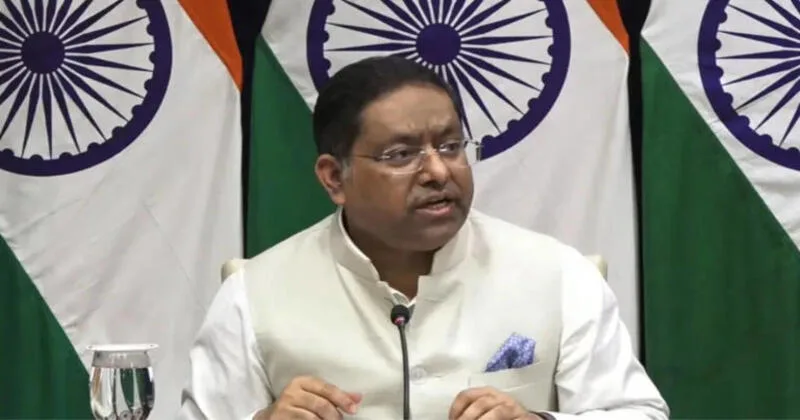
Responding to the report, MEA spokesperson Randhir Jaiswal said the government categorically rejects the commission’s characterisation of India, describing it as motivated and biased.
“For several years now, USCIRF has persisted in presenting a distorted and selective picture of India, relying on questionable sources and ideological narratives rather than objective facts. Such repeated misrepresentations only undermine the credibility of the Commission itself,” Jaiswal said.
The statement marks one of the strongest diplomatic responses from India in recent months regarding international commentary on its internal religious affairs.
India asks USCIRF on attacks on Hindu temples in US
In a pointed counter, India also urged the commission to examine incidents of vandalism and attacks on Hindu places of worship in the United States instead of focusing selectively on India.
According to the MEA spokesperson, the commission should pay attention to “disturbing incidents of vandalism and attacks on Hindu temples in the United States” and the growing intimidation of members of the Indian diaspora.
New Delhi’s response comes in the backdrop of multiple incidents targeting Hindu temples in the US in recent years, including vandalism of temples linked to extremist groups.
“Instead of persisting with selective criticism of India, USCIRF would do well to reflect on the disturbing incidents of vandalism and attacks on Hindu temples in the United States, selective targeting of India, and the growing intolerance faced by the Indian diaspora,” Jaiswal added.
USCIRF recommends sanctions against RSS and R&AW
The controversy erupted after the commission’s annual report released on Sunday (March 15) recommended targeted sanctions against several Indian entities, including the Rashtriya Swayamsevak Sangh and India’s external intelligence agency Research and Analysis Wing.
The report also urged the US administration to designate India as a “Country of Particular Concern” (CPC), a category used by Washington for countries accused of systematic and severe violations of religious freedom.
Such designations are typically applied to countries facing serious allegations regarding religious rights, and they can potentially trigger diplomatic or economic measures.
India has consistently rejected previous recommendations made by the commission to include the country in the CPC category.
Claims of religious freedom decline in 2025
In its report, the USCIRF claimed that religious freedom conditions in India deteriorated during 2025. It alleged that authorities had introduced or strengthened laws targeting religious minorities, including tougher anti-conversion legislation in several states.
The report also cited communal clashes in states such as Maharashtra, Odisha and Uttar Pradesh, while criticising legal developments like amendments to the Waqf (Amendment) Act.
According to the commission, several states expanded anti-conversion laws to include stricter prison sentences, and authorities allegedly carried out detentions and expulsions affecting religious minorities and refugees.
The report further claimed that vigilante violence against minority communities had been tolerated by authorities, allegations that India has repeatedly dismissed as misleading and politically motivated.
Recurring diplomatic friction
The latest exchange reflects an ongoing diplomatic friction between New Delhi and the USCIRF. India has regularly criticised the commission for its assessments, arguing that the body lacks credibility and bases its conclusions on ideological or politically influenced narratives.
However, the recommendations of the commission are not binding, and the final decision on whether to designate a country as a “Country of Particular Concern” lies with the US administration.
India’s reference to attacks on Hindu temples also shows growing concerns in New Delhi about incidents involving pro-Khalistan extremists and anti-India groups targeting Hindu institutions abroad.
In recent months, several temples in the US and Canada have reported acts of vandalism and anti-India graffiti, prompting calls from Indian diplomats and diaspora organisations for stronger investigations and security measures.
Indian officials have repeatedly urged authorities in host countries to take firm action against hate crimes targeting Hindu places of worship and the Indian community.
With its latest rebuttal, India has once again made it clear that it rejects external assessments that it believes misrepresent the country’s social and political realities. At the same time, New Delhi has shifted attention to issues affecting the Indian diaspora and Hindu religious institutions abroad, signalling that concerns over religious freedom must be addressed universally rather than selective