
Bharat, a nation of 1.4 billion people, is particularly susceptible to sudden spikes in oil prices, since decisions made by nations half a world away quickly affect fuel stations, the bottom lines of its farmers and truckers, and its cost-of-living indices. Even though over 85% of the nation’s crude is now imported, refineries are continuously working to refine crude oil in the background.
How Bharat is managing fuels and related economies effectively under the Modi government to fortify the nation
Bharat’s economy is expanding quickly, which is increasing industrial output and, consequently, the demand for oil for transportation and production. Crude oil consumption is expected to grow at a CAGR of 4.59%, from 223 million tonnes in FY23 to 500 million tonnes by FY40. Bharat’s oil consumption is predicted to increase from 4.05 million barrels per day (MBPD) in FY22 to 7.2 MBPD by 2030 and 9.2 MBPD by 2050. By 2029–2030, the demand for diesel is expected to quadruple to 163 million tons, and by 2045, both diesel and gasoline will make up 58% of Bharat’s total oil consumption. Demand is unlikely to slow in the near future due to strong economic development, urbanisation, and industrialisation.
In order to lessen the country’s reliance on crude oil imports, the government has implemented a multifaceted strategy that includes, among other things, demand substitution by encouraging the use of natural gas as fuel and feedstock nationwide in order to increase the share of natural gas in the economy and move toward a gas-based economy, promotion of renewable and alternative fuels like ethanol, compressed biogas, and biodiesel, infrastructure development for electric vehicle charging, refinery process improvements, encouraging energy efficiency and conservation, efforts to increase the production of oil and natural gas through various policy initiatives, etc. The Sustainable Alternative Towards Affordable Transportation (SATAT) campaign has also been started to encourage the use of compressed bio gas (CBG) as car fuel. Bharat intends to build 10,805 km of natural gas pipelines, boost ethanol blending to 20% by 2025, commission 80 CBG plants, and enhance refining capacity to 309.5 MMTPA by 2028 in order to promote energy security and sustainability. As of September 30, 2024, Public Sector OMCs’ Ethanol Blending Program (EBP) has saved about Rs. 1,08,655 crore in foreign currencies over the past ten years. Sugar companies have been able to minimize their excess sugar inventory and gain early cash to pay cane farmers thanks to the ethanol produced from sugar-based feedstock. As of September 30, 2024, EBP has assisted in the prompt payment of about Rs. 92,409 crore to farmers during the past ten years. It is projected that adding 20% ethanol to gasoline will pay farmers more than Rs. 35,000 crore a year.
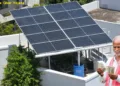
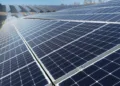
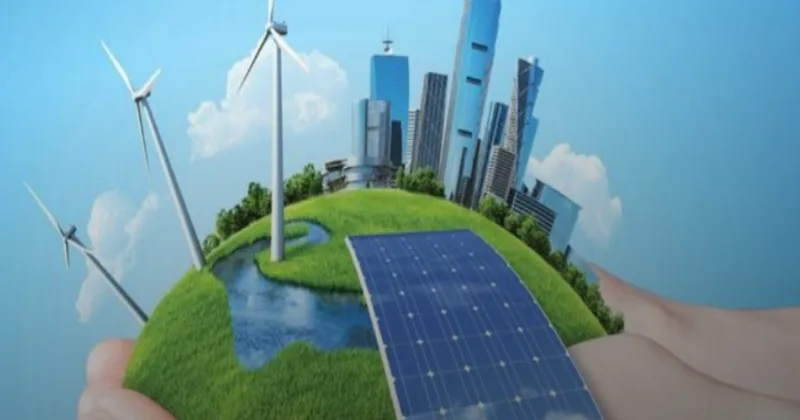
Bharat’s energy sector is undergoing a significant shift due to the growing emphasis on renewable energy sources. The Modi government aims to install 500 GW of non-fossil electricity capacity by 2030. The National Green Hydrogen Mission, PM Surya Ghar Muft Bijli Yojana, Pradhan Mantri Kisan Urja Suraksha evam Utthaan Mahabhiyan (PM-KUSUM), and the National Programme on High-Efficiency Solar PV Modules have all been implemented. To assist project developers in completing these projects as soon as possible, a plan to create Ultra Mega Renewable Energy Parks is being implemented. Additionally, through the Viability Gap Funding (VGF) program, the government has approved the installation and commissioning of 1 GW of offshore wind energy projects. PLI initiatives are offering incentives for the production of batteries valued at ₹18,100 crore and solar modules valued at ₹24,000 crore. As of October 31, 2025, solar power accounted for 64.87% of all renewable capacity at 129.92 GW, making up 39.66% of Bharat’s installed power capacity. Bharatiya companies plan to invest Rs. 67,42,400 crore (US$800 billion) on electric vehicles, green hydrogen, renewable energy, and semiconductors by 2034. In terms of installed capacity for wind, solar, and renewable energy, Bharat remained in fourth place as of FY25, maintaining its position from FY24.
Bharat is enabling MSMEs and startups to expand their use of clean energy. Smaller businesses are being positioned as major forces behind the energy revolution through decentralized and effective solutions thanks to innovation support from the Ministry of New and Renewable Energy. Bharat’s renewable energy capacity has surpassed 227 GW, a 4,000% increase in solar capacity, according to Union Minister of Commerce and Industry Mr. Piyush Goyal. He added that Bharat is perhaps the first G20 country to achieve its NDC targets under the Paris Agreement.
In Bharat, power generation from solar and wind projects is probably going to be more affordable than thermal power generating between 2025 and 2030. Bharat is now the third-largest generator of solar energy in the world, officially surpassing Japan. Bharat produced more solar energy (1,08,494 GWh) than Japan (96,459 GWh), according to figures from the International Renewable Energy Agency (IRENA). The Department of Promotion of Industry and Internal Trade (DPIIT) reports that FDI inflows into Bharat’s non-conventional energy industry totaled Rs. 2,04,341 crore (US$23.04 billion) between April 2000 and June 2025.
With ONGC starting more than 45 exploration and development wells in early 2025 and LNG terminal capacity at Dabhol rising from 5 to 6.3 MMT annually, the oil and gas business is still expanding quickly. By 2030, the proportion of natural gas in the energy mix is expected to increase from 6% to 15%, substantially bolstering Bharat’s sustainability and energy security. Another pillar of Bharat’s oil reduction strategy is electric mobility. EV uptake has been greatly aided by the FAME-II program (Faster uptake and Manufacturing of Hybrid & Electric Vehicles).
Green hydrogen may be the solution where EVs fall short, particularly in heavy industry, shipping, and long-distance transportation. With the help of 125 GW of additional renewable energy, the National Green Hydrogen Mission, which was started in January 2023, seeks to develop a green hydrogen capacity of 5 million metric tonnes annually by 2030. Aiming for 25 GW of electrolyzer production, the mission also includes pilot projects like IOCL’s production plant in Mathura and NTPC’s green hydrogen buses in Leh. Furthermore, export channels to the EU and Japan have identified Gujarat and Rajasthan as hydrogen centers (India-EU Clean Energy Partnership).
Additionally, the mission hopes to generate 6 lakh employment and ₹8 lakh crore in investments. It targets hard-to-decarbonise industries and positions Bharat as a global exporter and home consumer of hydrogen-based fuels. Bharat’s shift involves reinventing energy strategy in addition to reducing oil imports. The revised NDC targets for Bharat include a 45% reduction in GDP emissions intensity from 2005 levels and a 50% non-fossil capacity by 2030. In order to become a petrochemicals powerhouse by 2030 and supply up to one-third of the world’s capacity increases, Bharat intends to invest Rs. 3,28,227 crore (US$37 billion) in capital expenditures.
It is anticipated that recent modifications to the Oilfields (Regulation and Development) Act, 1948 will promote increased involvement from both domestic and foreign entities. Additionally, the revisions expand the definition of mineral oils to include shale gas, oil shale, coal bed methane (CBM), and naturally occurring hydrocarbons.In essence, this action allows businesses to investigate not only oil but also more recent resources like coal bed methane and shale gas, which may help Bharat lower its oil costs. Additionally, this increases Bharat’s appeal to international investors and technology companies that focus on shale and CBM extraction.
The nation has pledged to achieve net-zero emissions by 2070, 50% of energy capacity from renewable sources by 2030, and a 45% reduction in the GDP’s carbon intensity. Bharat’s installed non-fossil power capacity was 217.6 GW as of January 2025. Growing energy demands, rural electrification, and population growth are accelerating the development of Bharat’s power sector. Adoption of clean energy is lowering pollution and reliance on fossil fuels, allowing towns to become self-sufficient. Solar costs could drop from current levels by as much as 66% with advancements in battery storage. The nation might save Rs. 54,000 crore (US$8.43 billion) a year by switching from coal to renewable energy.
The objective is to lessen the risks associated with excessive reliance on oil, not to completely stop using it. One step at a time, Bharat is constructing a more resilient and independent energy future by combining smart imports with cleaner energy bets.