When Shishira Ruthu departs, Vasantha Ruthu arrives with all its grandeur, signalling nature’s renewal. The barren plants shake off their laziness and sprout lush green leaves, signifying rejuvenation of life. The Burans in the Himalayas, Palasha, Mango, Neem, and Bakula in the plains, and jasmine everywhere, bursting with myriads of flowers and vibrant colours, with their enchanting beauty and sweet fragrance that uplifts our spirits. The grander of nature proclaims the arrival of Vasantha Ruthu, which is a New Year in a true sense. After the winter dormancy, both our body and mind look forward to finding joy in the true spirit as nature does. Hindus strongly believe that humans are integral to nature, and we tune our activities to align with Mother Nature. So, the first day of Vasantha Ruthu, that is Padya of the Lunar calendar, is a time for us to unite with nature to celebrate the New Year. It is known as Varsha Pratipada, or Ugadi (Yuga + Adi), which symbolises the start of a new cycle. Every sixty years, a specific name is assigned to the year; this year is Parabhava Nama Samvatsara, and the previous year it was called Viswavasu nama Samvatsara. The New Year festivities extend over nine days, from Padya to Navami, known as Chitra Navaratri, involving religious rituals and celebrations. It is believed that on the Navami Sri Rama was born in Ayodhya. This period emphasises spiritual reflection and joy, reinforcing the deep connection between nature and cultural traditions.
Celebration of the Festival
To start with, people get up in the early morning, take an oil bath, and in regions where Hindus live near river beds, they take a holy dip to start Chaitra Navaratri. The tradition emphasises purity and spiritual renewal, setting a sacred tone for the commencement of the new year. Following this, wearing new clothes symbolises fresh beginnings, aligning with the festival’s theme of rejuvenation and prosperity. The tradition says a pinch of turmeric should be applied to one corner of the new cloth as Shagun before wearing it.
One Celebration, different Names
- Gudi Padwa (Maharashtra): Celebrated on the first day of Chaitra month; marked by hoisting a ‘Gudi’ (garlanded silk cloth on a stick)
- Ugadi/Yugadi (Andhra Pradesh, Telangana, Karnataka): Celebrated on the same day as Gudi Padwa, marking the beginning of a new age (Yuga)
- Baisakhi/Vaisakhi (Punjab & Northern part of Bharat): Solar new year celebrated as a major harvest festival with community singing and dancing
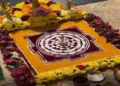
- Puthandu (Tamil Nadu): The first day of the Tamil month of Chittirai, involving elaborate, colorful rice powder patterns (kolams) and traditional feasts.
- Vishu (Kerala): The Malayalam New Year, observed with the ‘Vishukkani’ ritual (viewing auspicious items upon waking) and fireworks
- Poila Boishakh (Bengal): The Bengali New Year, marked with processions, fairs, and new business account books
- Cheti Chand (Sindhi Community): The New Year for Sindhis, which is also the birth anniversary of Jhulelal, their patron saint
- Navreh (Kashmiri Pandits): The lunar new year celebrated in Kashmir, dedicated to Devi Sharika
- Bohag Bihu (Assam): The Assamese New Year and spring festival, featuring traditional music and dance
The culmination of the pooja involves offering and consuming a special Prasadam—a mixture of neem and jaggery. In some remote Himalayan regions, people take Thirtha infused with neem juice and consume a milk-based sweet along with it. The eldest family member typically distributes this Prasadam, accompanied by a traditional blessing: shathayur vajradehaya sarva smampathkarayacha Sarvarista vinashaya nibakam dala bakshanam. This blessing wishes for a long life of strength, wealth, and freedom from ailments. The act of eating neem with jaggery is a widespread practice across India, symbolising the acceptance of life’s dualities—joy and sorrow, sweetness and bitterness emphasising the importance of balancing bitter and sweet experiences in life. They remind individuals that joy and sorrow are inevitable and must be embraced with equanimity. When children make faces while eating neem, elders often advise them to develop mental resilience and accept reality without shunning it.
Panchanga Shravana
A vital ritual followed by Pooja is Panchanga Sravanam on Ugadi, involving the reading of the annual calendar. Devotees typically visit temples to listen to the Panchanga Sravana, predictions delivered by Purohits or elders. This ritual shares astrological forecasts for the upcoming year, including natural events like eclipses and rain. The Hindu Panchanga comprises five elements, forming a scientific basis for predicting celestial and natural phenomena. Despite the availability of digital Panchangas, many prefer printed versions, which they adorn with vermilion and flowers before opening. This act symbolises seeking divine blessings and aligns with traditional practices, emphasising the importance of this ritual in spiritual and cultural contexts.
Delicacies of the festival – During Ugadi/Varsha Pratipada, traditional delicacies are prepared that hold cultural and culinary significance. Among these, certain sweets and dishes stand out for their rich flavours, nutritional value, and festive importance. Especially in regions like Karnataka, Andhra Pradesh, Telangana, and Maharashtra, one of the most cherished sweets is prepared, known as Obbattu, Holige, or Pooranpoli, which is a protein-rich delicacy made with wheat flour rolls stuffed with a mixture of lentils and jaggery.
There are nine States in the Hindi heartland of India, which celebrate New Year as Chitra Navaratri, Karnataka, Andhra, Telangana as Ugadi; Sajibu Nongma Panba in Manipur, Thapna in Rajasthan, Navreh in Kashmir, Gudi Padwa in Maharashtra. There are several States that follow the Solar calendar to celebrate the New Year, usually in the fall of Vishaka masa, a month after Chitra masa. Putandu in Tamil Nadu, Vaishakhi in Panjab, Bihu in Assam, Pahela Baishakh in Odisha and Bengal, Vishu in Kerala, all of which reflect a similar culture. Whether it is east or west, north or south, the new year for all Hindus falls on the arrival of spring. On the whole, the Varsha Pratipada is celebrated more or less similarly, with the only difference being a change of place.