
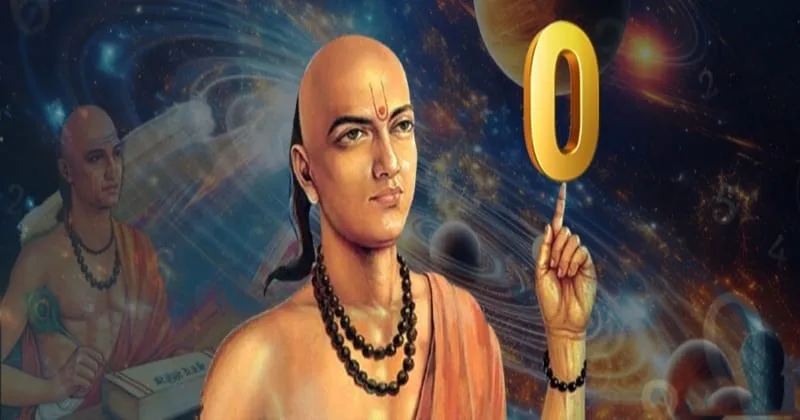
Ancient India’s remarkable mathematical discoveries
June 5, 2026
  • Read Ecopy
  • Circulation
  • Advertise
  • Careers
  • About Us
  • Contact Us
Android AppiPhone AppArattai
Organiser
  • ‌
  • Bharat
    • Assam
    • Bihar
    • Chhattisgarh
    • Jharkhand
    • Maharashtra
    • View All States
  • World
    • Asia
    • Europe
    • North America
    • South America
    • Africa
    • Australia
  • Editorial
  • International
  • Opinion
  • RSS @ 100
  • More
    • Op Sindoor
    • Analysis
    • Sports
    • Defence
    • Politics
    • Business
    • Economy
    • Culture
    • Special Report
    • Sci & Tech
    • Entertainment
    • G20
    • Azadi Ka Amrit Mahotsav
    • Vocal4Local
    • Web Stories
    • Education
    • Employment
    • Books
    • Interviews
    • Travel
    • Law
    • Health
    • Obituary
  • Subscribe
    • Subscribe Print Edition
    • Subscribe Ecopy
    • Read Ecopy
  • ‌
  • Bharat
    • Assam
    • Bihar
    • Chhattisgarh
    • Jharkhand
    • Maharashtra
    • View All States
  • World
    • Asia
    • Europe
    • North America
    • South America
    • Africa
    • Australia
  • Editorial
  • International
  • Opinion
  • RSS @ 100
  • More
    • Op Sindoor
    • Analysis
    • Sports
    • Defence
    • Politics
    • Business
    • Economy
    • Culture
    • Special Report
    • Sci & Tech
    • Entertainment
    • G20
    • Azadi Ka Amrit Mahotsav
    • Vocal4Local
    • Web Stories
    • Education
    • Employment
    • Books
    • Interviews
    • Travel
    • Law
    • Health
    • Obituary
  • Subscribe
    • Subscribe Print Edition
    • Subscribe Ecopy
    • Read Ecopy
Organiser
  • Home
  • Bharat
  • World
  • Operation Sindoor
  • Editorial
  • Analysis
  • Opinion
  • Culture
  • Defence
  • International Edition
  • RSS @ 100
  • Magazine
  • Read Ecopy
Home Bharat

From Zero to Infinite Series: The remarkable mathematical discoveries of ancient Indian scholars

Ancient India was home to some of the earliest and most influential breakthroughs in mathematics, many of which continue to shape modern science and technology. Long before these ideas appeared elsewhere, Indian scholars had already developed concepts ranging from zero and the decimal system to trigonometry, algebra, and early forms of calculus

Nandini NairNandini Nair
Mar 14, 2026, 01:30 pm IST
in Bharat, Culture
Follow on Google News
Representative image

Representative image

FacebookTwitterWhatsAppTelegramEmail

For centuries, the history of mathematics has often been narrated through Greek and later European achievements. However, long before many of these developments appeared elsewhere, scholars in ancient India were making remarkable discoveries in mathematics that laid the foundation for modern science. From the concept of zero to advanced trigonometry and early ideas resembling calculus, Indian mathematicians produced ideas that continue to influence mathematics today.

Not just Fibbonacci series, Indians discovered:

– Pythagorean theorem and geometric constructions (Baudhayana Sulba Sutras)

– Binary patterns, binomial coefficients, Pascal’s triangle (Pingala’s Chhandas Shastra)

– Positional decimal numeral system that we use today (Vedic… pic.twitter.com/Sa88u94jxj

— Aravind (@aravind) March 8, 2026

Early Geometric Knowledge in the Baudhayana Sulba Sutras

One of the earliest mathematical texts in India is the Baudhayana Sulba Sutras, written around the first millennium BCE. These texts were primarily concerned with the construction of ritual altars, but in the process, they contained sophisticated geometric knowledge.

The sutras describe a rule equivalent to what is now known as the Pythagorean theorem, stating that the diagonal of a rectangle produces both areas which the two sides produce separately. This demonstrates that Indian scholars had already recognised the relationship between the sides of a right-angled triangle centuries before the Greek mathematician Pythagoras.

Pingala and the Early Foundations of Binary and Combinatorics

Another remarkable figure in ancient Indian mathematics was Pingala, who wrote the Chhandas Shastra, a treatise on Sanskrit prosody. While studying poetic meter, Pingala developed systematic methods to count patterns of long and short syllables. In doing so, he effectively introduced ideas that resemble the modern binary number system, combinatorics, and the structure later known as Pascal’s Triangle. His work shows how mathematical thinking emerged naturally from linguistic and poetic analysis in ancient India.

The Decimal Number System

Perhaps the most influential contribution of Indian mathematics is the decimal numeral system that the world uses today. Indian scholars developed the positional value system, where the value of a digit depends on its place. This system was used in India during the Vedic period and later refined by mathematicians such as Aryabhata in the 5th century CE. Through trade and scholarly exchange, the system later spread to the Islamic world and Europe, becoming the basis of modern arithmetic.

The Revolutionary Concept of Zero

The development of zero (mathematics) as a number is widely regarded as one of the greatest intellectual breakthroughs in human history. References to the concept appear in ancient Jain texts around 300 BCE, but the first clear mathematical rules governing zero were provided by Brahmagupta in his 7th-century work Brahmasphutasiddhanta. Brahmagupta explained how zero interacts with positive and negative numbers in arithmetic operations, establishing rules still used today.

Also Read: Sanskrit Beyond India: How ancient Buddhist monasteries in Termez preserved a transregional language of devotion

Negative Numbers and Algebraic Thinking

Brahmagupta also introduced systematic rules for negative number operations. He described positive numbers as fortunes and negative numbers as debts, offering intuitive explanations for how they combine in calculations. His work also included general methods for solving quadratic equations, making him one of the pioneers of algebra.

Aryabhata and the Rise of Trigonometry

The 5th-century mathematician and astronomer Aryabhata made major contributions to trigonometry and astronomy in his famous text Aryabhatiya. He introduced detailed tables for sine values and developed trigonometric relationships that later influenced both Islamic and European mathematics. Aryabhata also calculated an impressive approximation of pi, demonstrating remarkable numerical precision for his time.

Madhava and the Kerala School’s Proto-Calculus

Several centuries later, the mathematician Madhava of Sangamagrama, associated with the Kerala School of Astronomy and Mathematics, made discoveries that resemble early calculus. Madhava developed infinite series expansions for π, sine, cosine, and arctangent—ideas that would appear in Europe much later in the works of Isaac Newton and Gottfried Wilhelm Leibniz. His work demonstrated an advanced understanding of limits and infinite processes.

Foundations for Modern Mathematical Thought

The cumulative contributions of Indian mathematicians extended across multiple fields, including number theory, algebra, trigonometry, and early forms of calculus. These achievements were not isolated discoveries but part of a continuous intellectual tradition spanning centuries. Through translations and scholarly exchanges, many of these ideas eventually spread across Asia, the Middle East, and Europe, shaping the development of global mathematics.

A Legacy Worth Recognising

The history of mathematics is deeply interconnected across civilisations. Ancient Indian scholars played a critical role in advancing mathematical thought, introducing ideas that remain fundamental to science, engineering, computing, and everyday calculations.

Recognising this heritage not only corrects historical oversights but also highlights how knowledge developed through diverse cultures and traditions. The mathematical legacy of India stands as a testament to the ingenuity and intellectual curiosity of its scholars, whose discoveries continue to influence the modern world.


 

Topics: Ancient Indian mathematicsMadhava of SangamagramaBaudhayana Sulba Sutrasdiscovery of zeroIndian contributions to mathematicsAryabhataBrahmagupta
Nandini Nair
Nandini Nair
Nandini Nair is a Subeditor-cum-Content Manager at Organiser Digital with more than 3.5 years of experience covering international, national, cultural and current affairs. Also tracks and develops impactful stories emerging from social media discourse, delivering engaging digital reporting [Read more]
ShareTweetSendShareSend
✮ Subscribe Organiser YouTube Channel. ✮
✮ Join Organiser's WhatsApp channel for Nationalist views beyond the news. ✮
Previous News

Fake Address! Congress Leader Sreenadevi Kunjamma’s Ration Card Cancelled in Kerala, Panchayat Seat at Risk

Next News

Dattatreya Hosabale issues statement on 650th birth anniversary of Sant Ravidas; calls him guiding force for Dharma

Related News

India’s timeless contributions to mathematics, from zero to the decimal system, continue to shape modern science and technology

When India Gave the World Zero: A legacy celebrated at the United Nations

Fathers of Science (Image Source: X0

From Aryabhata to Charaka: 36 visionary sants who shaped the foundations of modern science and knowledge

Representative Image

NCERT Textbooks Correct Historical Distortions: Ancient Indian Mathematicians Aryabhata & Brahmagupta regain due credit

Representative image

Vedic sages scientific and technological research diligence and innovative thinking

Book Review: Encapsulating multifaceted legacy

Meet Dr Vikram Sarabhai, the Father of the Indian space programme

Meet Dr Vikram Sarabhai, the Father of the Indian space programme

Load More

Latest News

World Environment Day: A green future demands more than planting trees

RSS Sarsanghchalak Dr Mohan Bhagwat

The time of Bharat has arrived; we need to expedite our preparation: Dr Bhagwat at RSS Karyakarta Vikas Varg 2

Padma Bhushan awardee and noted industrialist Kumar Mangalam Birla Kumar Mangalam Birla addressing the Samapana Samaroh (Valedictory Function) of the Rashtriya Swayamsevak Sangh Karyakarta Vikas Varg – Dwitiya at Nagpur, on June 4, 2026

“RSS always stood by the society and nation”, Kumar Mangalam Birla at RSS Karyakarta Vikas Varg 2 in Nagpur

Arunachal Pradesh seals all 15 illegal Mosques; Bandh called off by APIYO

MK Stalin with Sonai Gandhi; MK Stalin with Rahul Gandhi (File Photos) (Left to Right)

Tamil Nadu: DMK says no to INDIA Alliance meet in Delhi, blames Congress for political backstabbing

Union Finance Minister Nirmala Sitharaman

Karnataka: All-Women team powers Yadgir’s groundnut revolution; Nirmala Sitharaman inaugurates NABARD Unit

Keralam: Jamaat-e-Islami event features Hamas and Muslim Brotherhood ideologues, raises concerns over Political Islam

Representative Image (This is an AI Generated image)

Uttar Pradesh CM Abhyudaya Scheme: Apply for free civil services, JEE and NEET coaching from June 5

House worth Rs 2 crore of drug peddler bulldozed in J&K

Anti-narcotics campaign in J&K: Police demolish Rs 2 crore residential property linked to drug peddler Sheikh Tasaduq

As fuel shortages rippled across Asia, New Delhi expanded supplies to its neighbours while Beijing sought to turn energy security into strategic influence.

The Hormuz Test: How India’s energy assistance outshines China’s conditional approach

Load More
  • Privacy
  • Terms
  • Cookie Policy
  • Refund and Cancellation
  • Delivery and Shipping

© Bharat Prakashan (Delhi) Limited.
Tech-enabled by Ananthapuri Technologies

  • Home
  • Search Organiser
  • Bharat
    • Assam
    • Bihar
    • Chhattisgarh
    • Jharkhand
    • Maharashtra
    • View All States
  • World
    • Asia
    • Africa
    • North America
    • South America
    • Europe
    • Australia
  • Editorial
  • Operation Sindoor
  • Opinion
  • Analysis
  • Defence
  • Culture
  • Sports
  • Business
  • RSS @ 100
  • Entertainment
  • More ..
    • Sci & Tech
    • Vocal4Local
    • Special Report
    • Education
    • Employment
    • Books
    • Interviews
    • Travel
    • Health
    • Politics
    • Law
    • Economy
    • Obituary
  • Subscribe Magazine
  • Read Ecopy
  • Advertise
  • Circulation
  • Careers
  • About Us
  • Contact Us
  • Policies & Terms
    • Privacy Policy
    • Cookie Policy
    • Refund and Cancellation
    • Terms of Use

© Bharat Prakashan (Delhi) Limited.
Tech-enabled by Ananthapuri Technologies