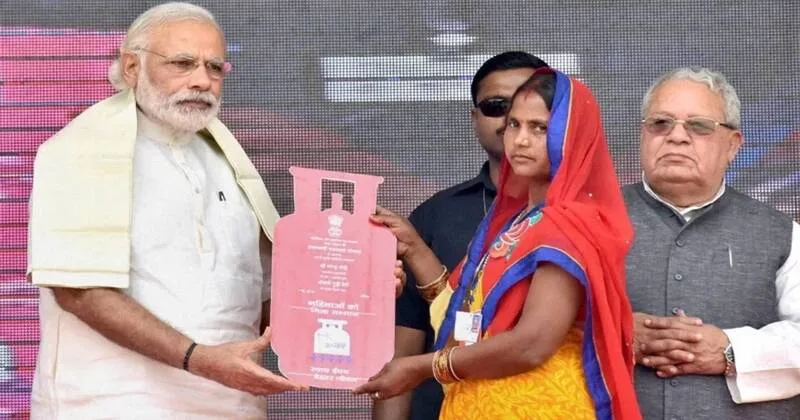
For decades, the image of a gas cylinder in Bharat was not one of a basic utility, but of a hard-won trophy. Those who lived through the pre-2014 era remember it vividly: the serpentine queues that began at 4:00 AM, the humiliating “recommendation letters” from local netas just to get a connection and the ubiquitous shadow of the black market. Today, as a section of the media and opportunistic political players attempt to conjure a “crisis” out of thin air, it is time to remind ourselves how far we have come, and who is trying to drag us back into the shadows of uncertainty.
The current “LPG issue” is not a failure of supply; it is a clinical case study in manufactured panic. While the Government of Bharat has increased domestic production by 28 per cent in the wake of the West Asian conflict and maintained a delivery cycle of just 2.5 days, a narrative of scarcity is being force-fed to the public. To understand why this deception is so dangerous, we must first look at the “Red Tape Raj” that Bharat has successfully dismantled and how the current chaos is being fuelled by those who despise Bharat’s energy independence.
The dark ages of scarcity: A legacy of red tape and corruption
Before 2014, an LPG connection was a symbol of “Lutyens privilege” and institutionalised exclusion. In a nation of over a billion people, only 14.52 crore households had access to clean cooking gas. The rest, the “Other Bharat”, were left to choke on the fumes of firewood, coal and cow dung. This was not due to a global shortage of gas, but a local abundance of corruption and inefficiency. Getting a new gas connection was a bureaucratic nightmare where a citizen had to produce a mountain of paperwork, undergo physical verifications that took months, and often pay “speed money” to middlemen. A gas connection was treated like a state secret, guarded by a phalanx of corrupt officials and distributors. Families would wait for years, their applications gathering dust in some damp government office, while they continued to cook on hazardous traditional stoves.
The biggest tragedy of that era was the systemic leakage where subsidies meant for the poor were routinely diverted. Industrial units and commercial hotels were running on domestic cylinders, while the common man was told that stocks were exhausted. Estimates suggest that nearly 4 crore “ghost connections” existed, fake identities used to siphon off subsidised gas into the black market. This was a direct theft from the pocket of the Bharatiya taxpayer and a slap in the face of the needy. Furthermore, connections were distributed as political favours. Members of Parliament had “quotas” for gas connections, turning a basic necessity into a tool for political leverage. This was the “Red-Tape Raj” in its purest form, where the citizen was a beggar at the gates of the state, and the state was a gatekeeper of misery.
The 2014 Paradigm Shift: From scarcity to saturation
When the current administration took over, the mandate was clear: Energy Justice. The goal was not just to increase supply, but to democratize access and kill the “scarcity mindset” that had crippled Bharat for generations. Launched in 2016, the Pradhan Mantri Ujjwala Yojana(PMUY) didn’t just add numbers; it restored dignity to the Bharatiya woman. By 2026, the number of LPG connections has surged to over 33 crore, representing a growth of more than 125 per cent in a decade. Over 10 crore of these connections belong to the poorest of the poor, women who were previously ignored by the power centres of Delhi. The number of LPG distributors in rural Bharat has jumped from a mere 1,802 in 2014 to nearly 12,000 today. This is not just a statistic; it is a social revolution that has saved millions of women from respiratory diseases and back-breaking labour.
The dismantling of red tape was achieved through the bold application of Digital Bharat. By moving the subsidy directly into bank accounts through the PAHAL(DBTL) scheme, the government eliminated the middleman. The incentive to create “ghost connections” vanished overnight because the money followed the person, not the cylinder. Using Aadhaar-based biometrics, the government purged millions of fake connections, saving billions of rupees for the national exchequer. This money was then reinvested in expanding the network. The era of the “register” and the physical queue was replaced by IVRS, GPAY and other mobile apps. Today, a citizen in a remote village can book a cylinder with a call. Transparency is the ultimate antidote to red tape, and the Government of Bharat has made transparency the cornerstone of LPG distribution.
The Ripple Effect: How panic buying destroys normalcy
To understand why we see queues today despite record production, we must understand the psychology of panic buying. Imagine a small village with 10 houses. Every house uses one gas cylinder that lasts exactly 30 days. The local distributor is efficient and brings in 10 cylinders every month—one for each house. Usually, House A finishes its gas on the 1st, House B on the 3rd and so on. The system works perfectly, and everyone has gas when they need it. This is how the national supply chain is designed: to meet regular, predictable needs.
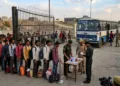
However, imagine a rumour spreads through this village that a war in a distant land will stop all gas supplies next week. Suddenly, even though House E, House F and House G still have half a cylinder left, they all rush to the distributor on the same day to buy a spare “just in case”. Now, the distributor who usually delivers one cylinder a day is faced with seven people demanding gas at once. Because the distributor only has their daily stock, three people are told to wait. These three people then tell their neighbours that “the gas is finished”, and by evening, the remaining three houses also rush to the shop. Suddenly, a village that had plenty of gas has a “crisis”. The shortage isn’t real; the gas is just sitting unused in the basements of House E, F and G, while the person who actually ran out of gas today has to wait in a line. This is exactly what is happening across Bharat today. By booking cylinders we don’t need immediately, we are creating a bottleneck that hurts our fellow citizens.
The 2026 Reality: A robust system under manufactured stress
Despite the noise, the facts provided by the Ministry of Petroleum and Natural Gas(MoPNG) tell a story of incredible resilience. In response to global volatility, all refineries in Bharat have been directed to maximise LPG yield, resulting in a 28 per cent spike in production in just the last week. Bharat is not just importing gas; it is refining it at a record pace. Furthermore, our diversification of oil imports means we are not dependent on a single route. Approximately 70 per cent of our imports are now shielded from the disruptions in the Strait of Hormuz. We are sourcing from over 40 countries, ensuring that a conflict in one region does not darken the kitchens of Bharat.
The national average for delivery remains a stable 2.5 days. If there is a delay in your neighbourhood, it is a logistical logjam caused by the “village example” described above. By booking out of turn, people are inadvertently hurting the supply chain and preventing the system from prioritising those who are actually out of gas. To counter this, the government’s decision to increase the minimum booking gap to 25 days is a masterstroke in logistics management. It is a protective measure to ensure that gas goes to the needy and the genuine consumer, rather than being hoarded by those driven by fear. This is “Sabka Saath, Sabka Vikas” in action, protecting the collective interest over individual panic.
The Saboteurs: Media sensationalism and political vultures
The real culprits in this “crisis” are not the oil companies or the government, but the narrative-spinners who thrive on chaos. Sections of the media, still mourning the loss of their “Lutyens access” and the era of government-sponsored junkets, are using looped footage of small crowds to suggest a national collapse. They ignore the 50 lakh (5 million) cylinders being delivered every single day across the length and breadth of Bharat. They choose to highlight a temporary delay in a commercial supply line and present it as a failure of the entire domestic energy sector. This is not journalism; it is psychological warfare against the peace of the common man. Their goal is clicks and TRPs, even at the cost of national stability and the mental well-being of the elderly who worry about their next meal.
Equally disappointing is the role of the political opposition and anti-Bharat forces. Instead of acting as a responsible watchdog, they are acting as “fear-vultures.” By spreading rumours of an “imminent fuel collapse,” they are actively encouraging hoarding and black marketing, the very evils we defeated after 2014. They want to recreate the “scarcity mindset” of the 1970s because they know they cannot win in a Bharat of abundance and self-reliance. To criticise Bharat’s foreign policy during a global conflict, while the government is successfully securing our energy borders, is a classic example of putting partisan interests above the national interest. They are rooting for a crisis because they have nothing else to offer the electorate but a return to the days of queues and corruption.
Trust the resilience of Bharat
As a nation, we must understand that Bharat is no longer the fragile, import-dependent economy of the past. We are now the fourth-largest refining nation in the world, and our LPG infrastructure is a global benchmark of efficiency. The current global disruption is being handled with strategic action plans. The Government of Bharat has prioritised domestic households, hospitals and schools above all else, ensuring that the wheels of society keep turning. The kitchens of the poor are shielded under the massive umbrella of the Ujjwala scheme and every link in the supply chain is being monitored 24/7 by a dedicated war room.
We must remember that when the entire world came to a grinding halt during the COVID-19 pandemic, it was Bharat that not only survived but thrived. While developed nations saw their systems collapse, our government provided free vaccines to millions and ensured free rations for over 80 crore citizens. If we could navigate a once-in-a-century pandemic that froze global trade, we can certainly navigate the current energy fluctuations. The current situation is nowhere near as dire as the lockdown days, yet the same government that stood by us then is at the helm now.
The latest reports confirm that our strategic maritime planning is working; ships are successfully navigating the Strait of Hormuz, and our dedicated LPG cargoes are on schedule. The red tape of the past is dead, buried under the weight of digital transparency and political will. The scarcity of the past is a ghost, conjured up by those who miss the “Commission Raj” and the era of middlemen. Bharat today is an energy powerhouse, led by a government that views the citizen not as a mere voter, but as Janatha Janardhan, the people as a reflection of the Divine.
They have proven their mettle during the darkest days of the pandemic; they will not betray that trust now. What we must guard against is the virus of misinformation. The flame in your kitchen is steady. Do not let the winds of rumours blow it out. Trust the system, wait for your genuine turn, and call out the fear-mongers. Normalcy is not being taken away by a lack of gas; it is being given away to fear. Let us choose facts over fear and Bharat over the disruptors.