What thoughts does the name ‘Babar’ evoke in people’s minds? What was his conduct through his various episodes as an invader? To begin with, what were the credentials of Babar to erect the Babri Masjid? Without delving deep into the history of the entry of Islam into India (known then as the Golden Bird), it should be enough to mention Babar’s ancestry eying India. Iconoclast activity of Islam had begun in 11th Century (Mahmood of Ghazni), Qutubuddin Aibak (1192-96) constructed Quwwat-ul-islam Mosque in Mehrauli near Delhi, now popularly known as Qutub Minar, later extended by Iltutmash and Ala-ud-din Khilji; a large signboard planted near the entrance proudly describes that the Masjid was erected over a Hindu Jain Mandir with remains of over 27 older Jain and Hindu Mandir!
Then came the turn of Babar’s ancestor, Timur of Samarkand. Using his campaign of Jihad, he invaded India, captured several places on his way, massacring many inhabitants on the way to Delhi and in December 1398, butchered about 100,000 adult male captives in cold blood. Ultimately, he returned to Samarkand in March 1399 “after inflicting on India more misery than had ever been inflicted by any conqueror in a single invasion.” (Majumdar, Raychaudhuri and Kalikinkar Dutta).
From his ancestor, Timur, Babar had inherited the Principality of Farghana. In a local power struggle, Babar was defeated and driven out of Farghana. Inspired by Timur’s vision, Babar planned to capture Punjab. He invaded India five times; on the fifth attempt, he captured the Delhi Sultanate throne from Ibrahim Lodi in 1526. That attempt and victory was caused by the treachery and collusion of Ibrahim Lodi’s own men in power, viz. Daulat Khan, etc., with Babar.
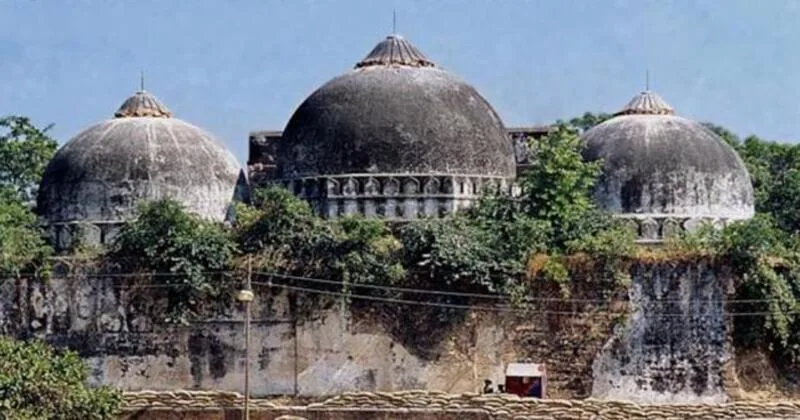
Daulat Khan was a relative and Courtier of Ibrahim Lodi – the same old story of treachery for personal gain. Babar conferred no benefits on Daulat Khan! Within two years (1528), Babar overran the territory of Ayodhya (then popularly known as Awadh) with his military commander Mir Baqi in the lead, who drove off Avadh’s local Chief, Sheikh Bayazid, who defied the might of Babar. Mir Baqi destroyed the Hindu Mandir standing at site and erected the Babri Masjid with the consent of Babar, a book authored by myself contains a detailed narration about this. (Yearning for Ram Mandir & Fulfilment).
Erecting New Babri Masjids
Babri Masjid, constructed at the sacred birthplace of Bhagwan Shri Ram in Ayodhya, was demolished on December 6, 1992. Muslims have been made to believe that the demolition promoted the structure to the rank of Islamic Shaheed (martyr). Certain Muslim zealots, especially of Murshidabad, West Bengal, have declared their intention of erecting new Babri Masjids through various parts of India. These zealots have the support of such political parties as they believe that the votes of Muslims will help them either continue in power or seize power elsewhere.
One of the names in the running is Humayun Kabir. Five hundred years ago, Babar used to be the father of ‘then’ Humayun; the present nomenclature affinity of interest is understandable! But the present Humayun is also Kabir. Humayun Kabir may like to elect one of the two.
Firstly, Humayun, who demolished many Hindu Mandirs as the right-hand man of Babar during his efforts to spread Islam by force; secondly, Kabir, who was a Saint greatly appreciative of Hindu Philosophy, as his various hymns clearly make out. In any case, the name ‘Babar’ can never be accepted by the Nation for glorifying an invader of Bharat, inflicting untold misery on the People.
Another illustrious person is the undefeatable Member of Lok Sabha, learned Asaduddin Owaisi, the President of All India Majlis-e-Ittehad-ul-Musalmeen (AIMIM), who takes special care to prefix the word ‘Shaheed’ to Babri Masjid whenever he speaks about it. It has been a sustained mission of his life to promote the welfare and political power of Muslims in India.
We have eminent Muslim scholars (Maulanas strictly wedded to Shariat), more homely scholars (Maulanas with Bharatiya aspirations) and the common Muslim citizens who follow the prevailing trends of social life. Most of them are not sure that Babri Masjid achieved martyrdom.
In fact and in law, Babri Masjid was a wholly illegal structure impermissible under Islamic law because it was constructed at a place where Hindus had been offering worship since time immemorial as the birthplace of Bhagwan Sri Ram, where, for the simple well-recognised reason, Namaz offered could never be acceptable to Allah. Since the Namaz was wholly illegal and unacceptable to Allah, a Masjid at its site could never become a Shaheed (Martyr). To cite one of the authorities, the monumental theological work, Fatwa-e-Alamgiri (Sheikh) mentions a rule that “It is not permissible to build mosques on unlawfully acquired land. There may be many forms of unlawful acquisition. For instance, if some people forcibly take somebody’s house (or land) and build a mosque, even a Jama Masjid on it, then the Namaz in such a mosque will be against Shariat.” This aspect has been discussed in detail in Chapter VI of this author’s book, captioned (Kamleshwar Nath).
Thus far, the legal existence of Babri Masjid has been negated. What emotions afloat in today’s secular Bharat on account of attachment of the name of Babar to the proposed construction of some new mosque in Babar’s name needs deep introspection.
Such being the background, the name Babri Masjid is only a ghost-name infecting the minds of those who want to demonstrate superior might over the followers of Bhagwan Sri Ram at whose birthplace the illegal Babri Masjid was erected. Devotees of Ram have rightly stood against the attempt to name or construct any Mosque in the name of Babar in India.