
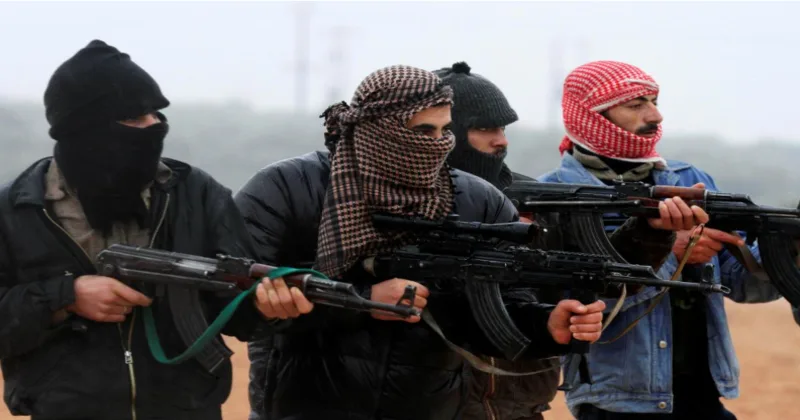
A thorough examination of the underlying causes and potential consequences of the current unrest involving Iran, Israel, the United States, Afghanistan, and Pakistan is necessary. It is crucial to comprehend terrorism, radicalism, and extremism in light of Khamenei’s killing and Iran’s onslaught on Islamic countries in West Asia. When a country has extreme religious beliefs and a self-serving desire to seize power and abuse others, it puts the world in peril. Millions of people perished, natural resources were exploited, terrorism, naxalism, and wars devastated many economies, societies and the environment. To prevent similar forces from growing in the future, we must identify the underlying reason and take appropriate action.
Extremist religious fantasies by Iran, Pakistan, and Turkey are the main cause of turmoil worldwide. These three countries are responsible for the spread of extreme Islam among young people, terrorism, and efforts to eradicate other nations and religions in order to impose Sharia, Ummah or other harmful ideologies with anti-humanitarian goals.
Even if Iran, Pakistan, and Turkey disagree on a number of subjects, they are all very clear about their desire to impose Sharia, Ummah and Islamic extremism in non-Islamic countries. To this aim, they cooperate with China, the United States, and Russia as needed. These countries are responsible for the terrorism in Syria, Iraq, Yemen, Russia, Israel, Bharat, China, Many European nations and USA. Millions of innocent people were massacred by terrorist groups including ISIS, Jaish e Mohammad, Al Qaeda, Lashkar e Taiba, Tehrik e Taliban Pakistan, and several more that emerged over time. Millions of women and childrens have been sexually assaulted, mistreated, and even killed by these terrorist groups.
The majority of victims of terrorist violence are civilians. It finds them in the midst of their everyday existence, at a place where nobody needs to be on guard. Anyone, anywhere, at any time. An intolerable feeling of perpetual vulnerability is brought forth by terrorists and their Masters. Peace might appear like war for a few days, weeks, or even longer. As a logical result of the decrease in interstate violence, people in the democratic world are more traumatised by terrorist attacks since they have inherited an interfaith culture. However, because democracies are a soft political order founded on freedom and human rights, they are also more powerless.
Thousands of civilians, police, and military personnel died as a result of Pakistan, Iran, and Turkey radicalising young people in the Kashmir Valley. Many Kashmiri Hindus were murdered, sexually assaulted, mistreated, converted to Islam, and forced to flee their homes and properties in 1990 alone, making their lives miserable and horrible. Humanitarian international leaders must teach these radicalised, extremist, and terrorist-building nations a lesson because their violent rallies in Bharat and many other areas of the world have claimed many innocent lives, raped, and assaulted women.
The report below demonstrates how these radicalised fanatics pose a threat to humanity in addition to the carnage and wars they and terrorists have caused throughout the world, notably in Islamic countries, where thousands of Muslims have been killed. This data primarily concerns terrorist attacks rather than violence and war victims, even though the number is lower than the real numbers for a variety of reasons.
According to Dominique Reynié (dir.), Fondation pour l’innovation politique, October 2024, the Islamist terrorist attacks in the world 1979-2024 report says,
Between 1979 and April 2024, we recorded 66,872 Islamist attacks worldwide. These attacks caused the deaths of at least 249,941 people. The military is the main target (34%) of Islamist terrorists, ahead of civilians (27.7%) and police forces (15.3%).
• 1979-2000: military (343 attacks, 15.6%), civilians (530 attacks, 24.1%), police forces (408 attacks, 18.6%).
• 2001-2012: military (1,410 attacks, 17.1%), civilians (2,506 attacks, 30.3%), police forces (1,424, 17.2%).
• 2013-April 2024 : military (20,556 attacks, 37.2%), civilians (15,111 attacks, 27.4%), police forces (8,217 attacks, 14.9%).
West Asia and North Africa, South Asia and Sub-Saharan Africa accounted for 96.7% of Islamist attacks between 1979 and April 2024.
Within the European Union, France was the country most affected by Islamist terrorism, with 85 attacks committed on its soil between 1979 and April 2024. At least 334 people were killed in these attacks. Since 2004, Europe has been confronted with a wave of attacks of a new magnitude. On 11 March, in Madrid, four trains exploded almost simultaneously. Claimed by Al-Qaeda, these attacks killed 191 people. On 7 July 2005, four explosions hit public transportation in London, killing 56 people and wounding 784. Al-Qaeda claimed responsibility for these attacks
The United States and Russia have also been hit by jihadist terrorism. During the period 1979-April 2024, there were 60 attacks in the United States and 3,121 deaths, and 86 attacks in Russia, resulting in 988 deaths.
The series of attacks on September 11, 2001, remains the deadliest in the history of terrorism, with 3,001 dead and 16,493 injured. However, the attacks of October 7, 2023, represent the second most deadly Islamist terrorist event, causing the death of at least 1,195 people, injuring more than 3,400, and organising the kidnapping of 2513. These attacks were the largest against Israel on its own soil since its creation in 1948. The October 7 program was characterised by unprecedented violence: assassinations, torture, rape and hostage-taking of women, children and the elderly.
It should be noted that these figures underestimate the reality since they do not take into account the Islamist terrorist attacks perpetrated in countries with a non-Muslim majority where Muslim populations are concentrated in certain provinces. This is the case, for example, in southern Thailand, where Muslims are in the majority in the provinces of Satun, Yala, Pattani and Narathiwat, but also in the Philippines, in the region of Mindanao; in Bharat, in the province of Jammu and Kashmir; and in China, in the Uyghur autonomous region of Xinjiang.
The impact of terrorist violence in a global public space within the reach of individual media
Access to visibility reached previously unheard-of levels starting in the mid-1990s. The impact of terrorist acts was multiplied tenfold by the digital public sphere. The repercussions of Islamist violence were exacerbated by the Web’s integration with ongoing news feeds. Launched in 1996, Al Jazeera is a Qatari channel that broadcasts in about 30 countries and operates informational websites in a few languages accessible to most people worldwide. The most modest of these terrorist organisations can use social media and other secure messaging apps to organise, recruit, communicate, and spread propaganda. The smartphone extends to the individual at the end of the chain, giving them access to all networks and the ability to master these potent instruments. The traditional media—agencies, television, radio, and the press—always cover the attacks, but they are no longer the primary source of information. Production information is completely distributed in the universal public space. The human multitude now has the influence of many media outlets and the strength of a news agency with 2.8 billion correspondents, thanks to the Web and smartphones. In the era of individual media, Islamic terrorism flourishes. Any attack has the potential to spread worldwide in a matter of minutes due to the strength of the images, the depth of the network, and algorithmic manipulation.
The leadership and anti-humanitarian ideologies of Pakistan, Turkey, and Iran are blatantly indicative of extremism, terrorism, and radicalism. The United States, China, Russia, and a few European countries should realise that funding anti-humanitarian fanatics for self-serving, short-term goals will put them in the most deadly game of catastrophe. Isolating these countries and taking decisive action to promote global peace and prosperity will be a tremendous humanitarian achievement.