
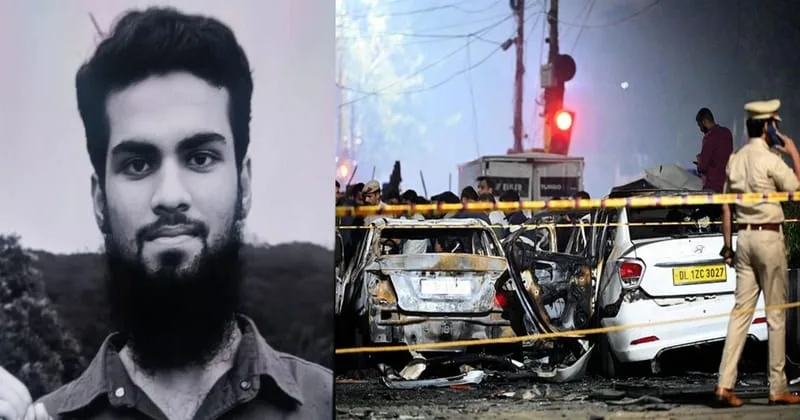
New Delhi: Exactly five months after the deadly Red Fort car bomb attack on November 10, 2025, that killed 15 people and exposed a sophisticated terror network, another case has reignited concerns over a disturbing trend.
On March 10, 2026, the arrest of Mumbai-based computer science student Ayan Yusuf Sheikh has once again highlighted how educated and technically skilled individuals are increasingly appearing in investigations linked to extremist networks.
Exactly 5 months after the devastating Delhi Red Fort car bomb attack (10 November 2025), which killed 15 and exposed a "white-collar terror ecosystem" involving highly educated individuals like MBBS/MD doctor Dr Umar-un-Nabi and others linked to Jaish-e-Mohammed (JeM) and Ansar… pic.twitter.com/Slp9MA9Jzl
— The Indian Matrix (@indianmatrix) March 10, 2026
Authorities allege that Sheikh was in contact with operatives connected to Jaish-e-Mohammed and ISIS, using encrypted messaging platforms to receive instructions. Investigators claim his role involved recruiting university students, circulating propaganda, and assisting in planning potential attacks.
The Changing Face of Radicalisation
For decades, public perception has often associated Islamic terrorism with poverty, lack of education, or social marginalisation. However, a growing body of cases suggests a more complex reality: Islamists with advanced degrees and professional training are increasingly appearing in radical networks.
The November 2025 Red Fort bombing investigation had already revealed a network that reportedly included highly educated individuals. Among those arrested was Dr Umar-un-Nabi, an MBBS and MD doctor allegedly linked to Ansar Ghazwat-ul-Hind, a militant outfit associated with Zakir Musa.
Investigators described the network as a “white-collar terror ecosystem,” where professionals used their education, technological expertise, and social credibility to conceal and facilitate extremist activities.
The arrest of Ayan Yusuf Sheikh, a high-performing BTech student from a middle-class family in Mumbai, appears to reinforce that pattern. According to investigators, Sheikh allegedly communicated with handlers through encrypted Telegram channels designed to avoid detection. Security officials say such platforms have become central to modern extremist recruitment strategies, allowing ideological indoctrination to occur quietly in private online spaces.
A Pattern Among Highly Educated Individuals
The emergence of educated Muslims in radical networks is not entirely new, but the frequency with which such cases appear has prompted renewed scrutiny. Several Muslims linked to extremist movements or controversial political investigations have had strong academic backgrounds:
Sharjeel Imam – BTech, MTech, PhD
Gulfisha Fatima – MBA
Meeran Haider – BTech, MBA, MPhil, PhD scholar
Safdar Nagori – Former leader associated with Students Islamic Movement of India
Riyaz Naikoo – BSc graduate
Yakub Memon – MCom, Chartered Accountant, convicted in the 1993 Bombay bombings
Manan Bashir Wani – PhD scholar who later joined Hizbul Mujahideen
Afzal Guru – Medical studies (incomplete), convicted in the 2001 Indian Parliament attack
Security analysts note that these Islamists represent diverse educational backgrounds, ranging from engineering and medicine to social sciences and commerce.
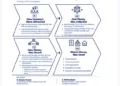
An in-house analysis of more than 113 profiles reportedly conducted by the research group Indian Matrix highlights a striking distribution:
32.74 per cent Engineering and Technology
32.74 per cent Humanities and Social Sciences
9.73 per cent Medical
9.3 per cent Commerce
3.53 per cent Media
8.40 per cent Other fields
This suggests that radicalisation is not limited to any single discipline but spreads across multiple professional sectors.
Digital Pathways to Extremism
Experts say the digital environment has transformed how extremist ideologies spread. Earlier recruitment often relied on physical networks or local contacts. Today, encrypted messaging apps, anonymous forums, and algorithm-driven social media feeds allow recruiters to identify and groom potential sympathisers without geographical constraints. Platforms like Telegram have been repeatedly cited in global counterterrorism investigations for hosting private channels where propaganda, ideological texts, and operational instructions are circulated.
The latest developments have reignited discussions about the need for vigilance in universities, digital platforms, and communities.
Experts suggest that effective counter-radicalisation strategies should include:
* Monitoring extremist recruitment on encrypted platforms
* Promoting critical thinking and media literacy in educational institutions
* Strengthening community engagement to identify early warning signs
* Developing deradicalisation and rehabilitation programs
The arrest of Ayan Yusuf Sheikh, coming just months after the Red Fort terror attack investigation, illustrates how the challenge of homegrown extremism continues to evolve.