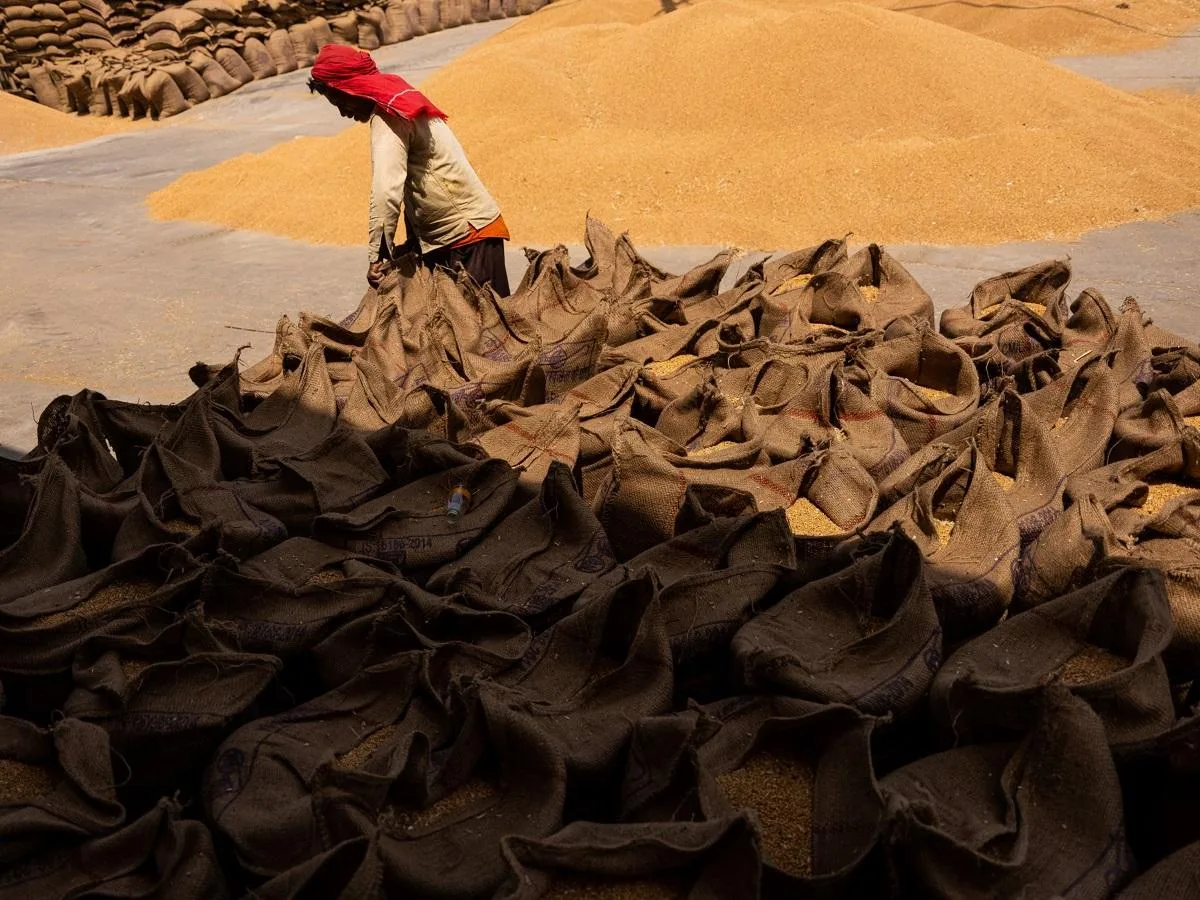
India’s agricultural sector continues to demonstrate resilience and expansion, with the Ministry of Agriculture and Farmers Welfare projecting record foodgrain production for the 2025-26 crop year.
The Second Advance Estimates for major agricultural crops indicate a strong performance across both Kharif and Rabi seasons, reflecting favourable weather conditions, improved farming practices, and increased adoption of modern technologies by farmers.
The estimates were approved by Union Agriculture and Farmers’ Welfare Minister Shivraj Singh Chouhan, who noted that the sector continues to make steady progress under the leadership of Prime Minister Narendra Modi.
According to the ministry, the country’s total foodgrain production outlook remains highly positive, driven by strong yields in key staple crops including rice, wheat, maize, pulses, and oilseeds.
Strong growth in Kharif and Rabi foodgrain output
The estimates project that foodgrain production during the Kharif season will reach 1,741.44 lakh metric tonnes (LMT). This represents an increase of approximately 46 LMT, or 2.8 percent, compared with the production recorded during the previous agricultural year.
Similarly, foodgrain output for the Rabi season is estimated at 1,745.13 LMT, marking a rise of 53 LMT, or 3.2 percent, over last year’s figures.
These increases underline the steady expansion of India’s agricultural productivity despite challenges such as climate variability and rising input costs.
The Ministry of Agriculture noted that the estimates are based on detailed data provided by state governments. These figures were further validated through multiple scientific methods, including remote sensing technologies, crop weather monitoring systems, and yield data derived from Crop Cutting Experiments (CCEs).
Officials stated that the Third Advance Estimates, which will be released later in the year, will also incorporate production data from the summer cropping season, providing a more comprehensive picture of total agricultural output.
Rice continues to remain the backbone of India’s foodgrain production system.
According to the estimates, Kharif rice production is projected at 1,239.28 LMT, slightly higher than the 1,227.72 LMT recorded in the previous year.
Rice grown during the Rabi season is also expected to contribute significantly to the overall output. The government estimates Rabi rice production at 167.20 LMT, reflecting sustained cultivation across irrigated regions.
The stable performance of rice production highlights the continued importance of the crop for both domestic food security and export markets.
Record wheat production expected
Wheat production is projected to reach a new record in the 2025-26 agricultural year.
The Second Advance Estimates place wheat output at 1,202.10 LMT, marking an increase of 22.65 LMT compared to last year’s production of 1,179.45 LMT.
This increase is attributed to favourable climatic conditions during the growing season, expansion of wheat cultivation areas in certain regions, and the adoption of improved seed varieties.
Wheat remains one of India’s most critical food security crops, particularly for the public distribution system and domestic consumption.
One of the most notable trends in the latest estimates is the significant growth in maize and other nutri or coarse cereals.
Kharif maize production is estimated at a record 302.47 LMT, while Rabi maize production is projected to reach 159.03 LMT, both representing the highest levels recorded so far.
Overall production of nutri or coarse cereals is estimated at 425.89 LMT during the Kharif season and 213.41 LMT in the Rabi season.
The growing emphasis on these crops reflects increasing awareness of their nutritional benefits and their resilience to climatic stress.
Among these crops, Shree Anna, commonly known as millets, continues to gain prominence. Production of millets is estimated at 123.43 LMT in the Kharif season and 30.98 LMT during the Rabi season.
Millets have received renewed policy focus in recent years due to their climate resilience and high nutritional value.
Pulses production continues to strengthen
Pulses, an essential source of protein in the Indian diet, also show encouraging production levels in the latest estimates.
Tur production is estimated at 34.55 LMT, while gram (chickpea) production is projected at 117.92 LMT.
Lentil production is estimated at 17.33 LMT, reflecting stable output across key producing states.
The government has been promoting pulses cultivation through various schemes to reduce import dependence and improve domestic availability.
Oilseed production in India also appears strong in the 2025-26 estimates.
Kharif oilseed output is projected at 265.33 LMT, while Rabi oilseed production is estimated at 144.65 LMT.
Groundnut production during the Kharif season is expected to reach 112.94 LMT, surpassing last year’s output. Rabi groundnut production is estimated at 7.97 LMT.
Soybean production is projected at 127.20 LMT, while rapeseed and mustard production is estimated to reach a record 133.31 LMT.
These crops play a crucial role in India’s edible oil sector, which remains a strategic focus for policymakers seeking to reduce import dependence.
The Second Advance Estimates also point to strong production levels in major commercial crops.
Sugarcane production is projected to reach a record 5,001.97 LMT, reflecting robust cultivation across major producing states such as Uttar Pradesh, Maharashtra, and Karnataka.
Cotton production is estimated at 290.91 lakh bales, with each bale weighing 170 kilograms.
Jute production is projected at 81.27 lakh bales, each weighing 180 kilograms.
These crops contribute significantly to India’s agro-based industries and export economy.
Final estimates may change
Despite the optimistic outlook, the Ministry of Agriculture emphasised that some yield assessments are still underway.
In particular, production figures for crops such as tur, sugarcane, and castor are still being evaluated.
Officials noted that final production numbers may undergo revisions in subsequent estimates as additional Crop Cutting Experiment data becomes available and state governments submit updated reports.
The latest estimates underline the continued importance of agriculture in India’s economic and social landscape.
With foodgrain production projected to reach record levels, the sector appears well-positioned to support national food security, stabilise prices, and sustain rural livelihoods.
At the same time, policymakers emphasise the need for continued investment in irrigation, agricultural research, climate-resilient farming practices, and supply chain infrastructure.
As India moves toward releasing the Third Advance Estimates later in the year, the current projections suggest that the country’s farmers are once again set to deliver a strong agricultural performance, reinforcing India’s position as one of the world’s leading food producers.