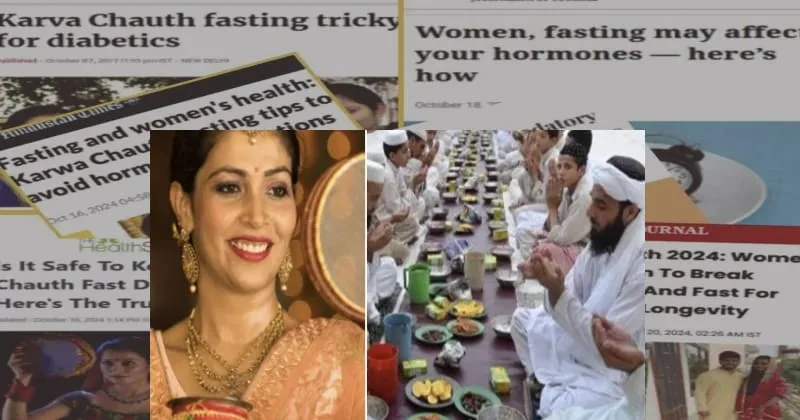
The Indian media landscape between 2016 and 2026 has been defined by a glaring ideological asymmetry in the coverage of religious festivities. A systematic analysis of major news outlets reveals a consistent pattern: Hindu festivals, specifically Holi, are viewed through a clinical, pessimistic lens, often reduced to environmental hazards, health risks, and public nuisances. Simultaneously, Islamic traditions like Ramzan are granted a celebratory and protective narrative, where ritualistic practices are rebranded as modern wellness trends and spiritual triumphs. This duality does more than just report the news; it actively works to pathologise the cultural heritage of the majority while insulating minority practices from the very same “scientific” or “ethical” scrutiny it applies elsewhere.
The prevailing narrative across 12 major Indian media outlets from 2016 to 2026 reveals a stark and systemic ideological bias, where Hindu festivals are routinely subjected to “reformist” scrutiny while Islamic traditions are shielded by a veneer of secular glamourisation. During Holi, the discourse frequently shifts from cultural celebration to environmental alarmism, framing the use of colours and water as societal hazards and public health risks. Conversely, the same media ecosystem consistently portrays Ramzan through a hagiographic lens, extolling the physiological virtues of fasting and the spiritual sanctity of the month, while conspicuously omitting any ethical critique of the industrial-scale animal slaughter that characterises the period. This persistent duality suggests a calculated effort to pathologise indigenous traditions under the guise of progressivism while maintaining a protective, celebratory silence around the environmental and ethical footprints of minority religious practices.
This report analyses articles published during Holi and Ramadan across 12 major Indian media outlets from 2016 to 2026, highlighting a trend where Holi celebrations are framed as dangerous to health and society due to water wastage and synthetic colours, while Ramadan is consistently portrayed as a holy month through articles that glamourise the health benefits of fasting.
TOI’s Calculated Bias: Pathologising Holi while Sanitising Ramadan
Media Outlet: Times of India (TOI)
The Times of India continues to exhibit a blatant double standard in its seasonal reporting, selectively deploying “science” to dampen Hindu festivities while acting as a PR machinery for Islamic practices. In March 2024, TOI targeted Holi with the alarmist headline, “Holi Heat Hazards: Safeguarding against heatstroke and dehydration during festive celebrations,” effectively framing an ancient cultural celebration as a public health liability. By focusing strictly on dehydration and heatstroke, the publication sought to instill a sense of fear and caution around the outdoor celebrations of the majority community.
In stark contrast – and despite the identical weather conditions of the Indian spring – TOI’s coverage of Ramazan 2025 took a complete 180-degree turn. In its article “Ramazan 2025: Healthy fasting habits to follow,” the outlet chose to glamourise the month by emphasising the “benefits” of fasting. While Holi revellers were warned of the dangers of the sun, those observing a month-long fast involving total abstinence from water during daylight hours were met with a guide on “healthy habits.” This selective concern reveals a deep-seated editorial prejudice: where Hindu traditions are treated as hazards to be mitigated, minority religious practices are curated as wellness trends to be promoted, ignoring the very dehydration risks they highlighted just days prior.
India Today’s Selective Science: Pathologising Holi while Glorifying Ramazan
Media Outlet: India Today
The editorial stance of India Today presents a textbook case of narrative manipulation, where Hindu festivals are treated as a medical crisis to be managed, while Islamic rituals are presented as a spiritual lifestyle to be admired. In its February 2026 coverage, India Today issued a stern “warning” to the public with the headline “Holi 2026 warning: How synthetic colours can harm skin, eyes and lungs.” By leaning heavily on medical jargon and highlighting risks to the respiratory and ocular systems, the publication effectively framed the Festival of Colours as a hazardous event, overshadowing its cultural significance with a cloud of biological anxiety.
Yet, when the calendar turned to Ramazan, the “scientific” rigour and medical concern of India Today’s editors vanished. In the 2025 feature “Ramazan 2025: Everything you need to know about fasting, traditions & celebrations,” the outlet abandoned its role as a health watchdog to become a cultural cheerleader. There were no warnings about the physiological impact of prolonged dehydration or the risks of dry fasting for those with underlying conditions – concerns that would be “scientific” equivalents to the Holi skin warnings. Instead, the piece focused exclusively on the sanctity of the month and the beauty of its traditions. This discrepancy highlights a clear ideological agenda: deconstructing Hindu heritage through the lens of modern “risk” while granting a total medical and ethical pass to the practices of the minority community.
Business Today’s Toxic Narrative: Demonising Holi while Sanctifying Ramazan
Media Outlet: Business Today
Business Today has perfected the art of “secular” gaslighting, where Hindu traditions are treated as toxic liabilities while Islamic rituals are repackaged as modern wellness miracles. In its February 2026 report, the publication issued a scathing “Holi health alert: The hidden health risks of synthetic Holi colours.” By weaponising medical jargon like “heavy metals” and “respiratory harm,” the outlet reduced a vibrant, ancient civilisational celebration to a mere chemical hazard. This alarmist framing serves a singular purpose: to cultivate a sense of biological dread around the very act of celebrating one’s heritage.
Just two days later, the same editorial team pivoted from being clinical critics to enthusiastic propagandists. In the feature “From Ramazan tables to research labs: The date’s quiet power play,” Business Today bypassed any mention of the physiological strain of dry fasting, choosing instead to elevate a specific religious practice to the status of a scientific breakthrough. By citing “anti-inflammatory properties” and “bone health,” the outlet transformed a ritualistic food choice into a pharmaceutical-grade “power play.” This selective use of science – where Holi is a source of “poison”, and Ramazan is a source of “power” – unmasks a deep-seated ideological agenda designed to undermine the cultural confidence of the majority while providing a curated, high-status gloss to minority religious observances.
Indian Express’ Regulatory Reporting: Policing Holi Sweets while Promoting Ramazan Feasts
Media Outlet: Indian Express
The Indian Express continues its tradition of “secular” surveillance, where Hindu festivities are treated as a public health crisis requiring strict regulation, while Islamic rituals are met with helpful, supportive lifestyle curation. In its March 2024 coverage, the publication targeted the traditional sweets of Holi with a cautionary lecture: “How to control blood sugar while having Holi treats.” By framing the festival’s culinary joy through the clinical lens of “blood sugar control” and dietary restraint, the outlet effectively turned a moment of cultural celebration into a source of medical anxiety, lecturing the majority community on the “dangers” of their heritage treats.
The editorial tone shifted dramatically for Ramazan 2025. Instead of warning about the metabolic shocks of binge-eating after day-long dehydration, the Indian Express published “6 foods for better digestion during Ramazan.” Here, the media house shed its role as a stern health inspector to become a helpful dietary consultant. Rather than policing sugar intake or highlighting the health risks of irregular eating cycles, the outlet chose to “support” the observer, presenting the month’s dietary habits in an overwhelmingly positive and nurturing light. This blatant disparity – where Hindu traditions are met with restrictive “warnings” and Islamic practices with “helpful tips” – unmasks an editorial mindset dedicated to problematising the majority’s joy while facilitating the minority’s rituals.
The Hindu’s Intellectual Dishonesty: Pathologising Hindu Joy vs Spiritual Shielding for Ramzan
Media Outlet: The Hindu
The Hindu continues its long-standing tradition of treating Hindu festivals as a biological hazard while acting as a theological PR firm for Islamic rituals. In its March 2025 report, “Ahead of Holi, understanding the impact of colours on skin health,” the publication stripped the festival of its cultural soul, reducing it to a list of toxicological threats, including “heavy metals” and “allergic reactions.” This clinical obsession with “skin health” is a thinly veiled attempt to stigmatise a millennia-old tradition as unhygienic.
Conversely, its 2026 coverage of Ramzan, “Ramzan begins as Muslims unite in fasting, spiritual reflection,” was draped in hagiographic reverence. There was no “scientific” inquiry into the physiological impact of month-long dry fasting, nor was there any mention of the ethical or environmental footprint of the massive animal slaughter that accompanies the period’s feasts. By switching from a sceptical medical lens for Holi to a purely devotional lens for Ramzan, The Hindu exposes a deep-seated editorial bias that seeks to “reform” the majority while insulating the minority from any critical scrutiny.
The Quint’s Asymmetric Activism: Holi as an Eco-Threat vs. Ramzan as a Superfood Miracle
Media Outlet: The Quint
The Quint’s editorial strategy is a masterclass in asymmetric narrative building: it frames Holi through the lens of “restriction” and Ramzan through the lens of “elevation.” In March 2024, it lectured Hindus with “7 Tips To Celebrate Eco-Friendly Holi,” effectively rebranding a joyous celebration as an environmental crime involving “excessive water use” and “chemical products.” The focus was entirely on what Hindus should stop doing.
In the very same month, however, The Quint pivoted to a celebratory health-guru persona for Ramzan. In “7 Amazing Health Benefits of Ramzan Fasting Everyone Must Know,” the outlet bypassed the “eco-friendly” concerns it forced upon Holi to instead praise fasting for “improving metabolism” and “brain function.” While Holi was a threat to the planet, Ramzan was presented as a miracle for the body. This blatant hypocrisy – demanding ecological austerity from one community while promoting the biological “superiority” of another’s ritual-unmaskes The Quint’s blatant anti-majority agenda.
Scroll’s Guilt-Tripping Narrative: Holi Water Scarcity vs. Ramzan Linguistic Romance
Media Outlet: Scroll
Scroll has consistently weaponised Bharat’s environmental challenges to guilt-trip Hindu celebrants while offering a protective, academic embrace to Islamic traditions. Its 2016 headline, “As India gets ready for Holi, a reminder of our dire water problems,” was a calculated strike designed to make every Hindu feel responsible for national droughts. By linking the festival to crop failures in Marathwada and Bundelkhand, Scroll effectively labelled a day of celebration as an act of environmental negligence.
Fast forward to its Ramzan coverage, “Roza, Ramazan, Ramzan: There is more to the month of fasting than how it is spelled,” and the “dire problems” of the country suddenly vanish. Instead of investigating the water footprint of the meat industry or the environmental impact of festive logistics, Scroll retreated into a safe, flowery exploration of spiritual dimensions and linguistics. For Scroll, Holi is a sociopolitical problem to be solved, while Ramzan is a cultural treasure to be admired and protected from critique.
The Telegraph’s Selective Crusade: Policing Holi Water vs Glamourising Ramzan Feasts
Media Outlet: The Telegraph
The Telegraph’s coverage reveals a persistent effort to “minimize” Hindu traditions while “maximizing” the visual and cultural appeal of Islamic ones. Through headlines like “Play Holi with tilak, save water” and “Tilak Holi on a water crusade,” the publication attempted to strip Holi of its vibrant, communal nature, reducing it to a dry, solitary mark on the forehead under the guise of “resource preservation.” This “crusade” selectively targets the one day of the year Hindus use water collectively.
However, when reporting on Ramzan in 2026, the crusade ended abruptly. In “Ramazan ushers in a month of fasting, worship and charity for Muslims, in photos,” the outlet swapped its lecture notes for a camera lens, focusing on the beauty of community gatherings and worship. There were no crusades against the environmental costs of festive waste or the ethical questions surrounding the millions of animals slaughtered during this window. By aestheticising Ramzan while clinicalising Holi, The Telegraph continues to participate in the media’s coordinated effort to pathologise the majority’s culture.
Mint’s Clinical Fearmongering: Holi as a Viral Vector vs. Ramazan as a Metabolic Miracle
Media Name: Mint
In a recurring pattern of medicalised bias, Mint has consistently framed Hindu celebrations as public health liabilities while presenting Islamic rituals as cutting-edge wellness science. In March 2023, Mint targeted the festival of colours with the alarmist headline, “H3N2 virus infection in India: How to stay safe while playing Holi,” effectively branding a major cultural event as a primary vector for disease. By centring the entire narrative on “expert tips” to avoid infection, the publication sought to dampen the spirit of the majority community with a cloud of biological dread.
Conversely, Mint’s 2026 coverage of Ramazan took a celebratory, pseudo-scientific turn. In the article “Ramadan fasting 2026: Bengaluru-based doctor explains how your body burns fat for energy,” the “risks” and “virus infections” were nowhere to be found. Instead, the outlet glamorised the practice of dry fasting, focusing exclusively on its metabolic “fat-burning” virtues. This stark disparity- where Holi is presented as a source of contagion and Ramazan as a biological optimisation tool—reveals a calculated editorial intent to pathologise Hindu joy while sanitising and promoting minority rituals.
Hindustan Times’ Selective Scrutiny: “Hidden Dangers” of Holi vs. “Complete Transformation” of Ramazan
Media Name: Hindustan Times
Hindustan Times continues to play the role of a stern health inspector for Hindu traditions while acting as a lifestyle coach for Islamic ones. In March 2025, the outlet published “Holi 2025: The hidden dangers of waterborne infections,” a report designed to instil fear regarding the use of water and colours. By highlighting “illnesses” and “hidden dangers,” HT reduced a thousand-year-old celebration to a list of potential hospital visits, ignoring the social and spiritual cohesion the festival provides.
However, just days prior, the same publication adopted a purely promotional tone for Ramadan. Its headline, “Benefits of intermittent fasting during Ramazan 2025: Everything you need to know for complete physical transformation,” reads like a health supplement advertisement. While Holi water was “dangerous,” the month of fasting was sold as a path to “complete physical transformation.” This blatant hypocrisy ignores the potential medical risks of day-long dehydration, choosing instead to present one faith’s practice as a medical miracle while treating the other’s as a hygiene hazard.
CNBC-TV18’s Eco-Austerity: “Waterless” Holi vs The “Holy” Silence on Mass Slaughter
Media Name: CNBC-TV18
CNBC-TV18 has mastered the art of “green” gaslighting, where Hindu water usage is treated as an environmental sin while the massive ecological and ethical footprint of other festivals is carefully ignored. In February 2026, the outlet pushed for a “Holi without water,” promoting an “eco-friendly” style that effectively seeks to strip the festival of its traditional character. This “save water” propaganda is selectively applied to the one day Hindus celebrate with water, framing their heritage as an environmental threat.
Yet, in its coverage of Ramazan, the environmental “crusade” is replaced by hagiographic praise. In “Fasting during Ramazan: Understanding the spiritual and health benefits of the holy practice,” CNBC-TV18 extols the “holy” and “beneficial” aspects of the month. Conspicuously absent is any mention of the environmental impact or the ethical questions surrounding the slaughter of millions of animals that characterise the period’s festive meals. For this outlet, a bucket of water on Holi is an ecological crisis, but industrial-scale slaughter in the name of “taste” during a “holy” month is beyond critique.
Mid-Day’s Law and Order: Policing Holi Safety vs Glamorising “Dry Fasting” Detox
Media Name: Mid-Day
Mid-Day’s editorial stance presents a jarring contrast between its desire to criminalise Holi revelry and its eagerness to promote Ramazan as a superior health choice. In 2026, the publication demanded “stringent penalties” and strict measures in its piece “Have a safe Holi and ensure everyone else does, too,” framing the festival through the lens of safety violations and “propaganda” about water wastage. The tone was one of policing and restriction, treating Hindu celebrants as a demographic in need of state-enforced “discipline.”
In stark contrast, Mid-Day’s 2024 report on Ramadan, titled “Dry fasting doubles detox speed: Expert guide to fast during Ramazan”, was an exercise in pure glorification. It presented the total abstinence from water as a “detox” miracle that “boosts metabolism” and improves “discipline.” There were no calls for penalties or warnings about the physical strain of dry fasting in heat; instead, it was sold as an “expert” lifestyle choice. This narrative duality- treating Holi as a threat to be policed and Ramazan as a “holy” detox to be emulated – unmasks the deep-seated ideological bias inherent in modern Indian media.
The evidence gathered across these twelve prominent media houses underscores a coordinated effort to reshape the public perception of Indian traditions. By weaponising “expert opinions” and “eco-consciousness” only when it concerns Hindu celebrations, the media effectively creates a hierarchy of faith where one is a problem to be solved, and the other is a virtue to be praised. The silence on the ethical implications of mass animal slaughter and the physical toll of dry fasting, contrasted against the aggressive policing of Holi’s colours and water, unmasks a profound editorial bias. Ultimately, this reporting trend serves an ideological agenda that seeks to diminish the cultural confidence of the majority community while maintaining a curated, unquestionable sanctity for the practices of others.