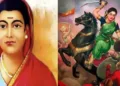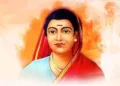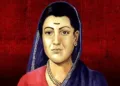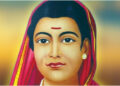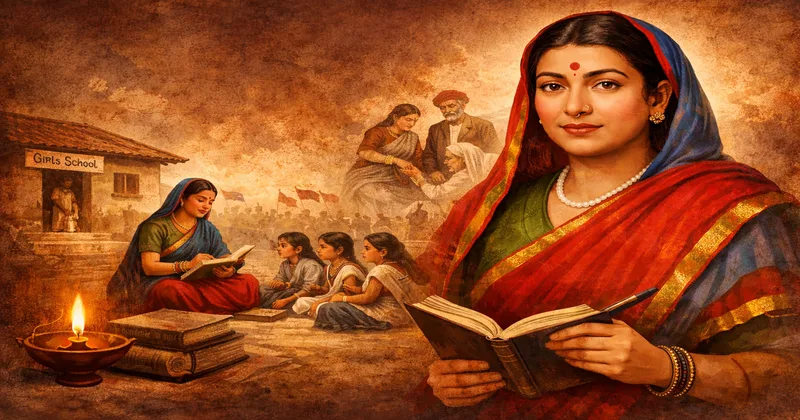
India remembers Savitribai Phule on her death anniversary on March 10, honouring a reformer whose contributions fundamentally reshaped the history of education and social justice in the country. Recognised as India’s first female teacher, Savitribai Phule devoted her life to promoting education for girls and marginalised communities at a time when such ideas were fiercely opposed.
Her work in the nineteenth century challenged deeply rooted beliefs about caste and gender, helping lay the foundation for a more inclusive education system. More than a century after her death in 1897, Savitribai Phule remains a powerful symbol of courage, equality and social transformation.
Early Life and Education
Born on January 3, 1831, in Naigaon in present-day Maharashtra, Savitribai grew up in a society where education for women was rare and often discouraged. Like many girls of her time, she was married at a young age to Jyotirao Phule.
Recognising her potential and the transformative power of education, Jyotirao Phule began teaching Savitribai to read and write at home. With his encouragement, she later received formal training as a teacher at institutions in Ahmednagar and Pune. At a time when women’s participation in public life was extremely limited, her decision to become a teacher marked a remarkable departure from prevailing social norms.
Establishing the First School for Girls
In 1848, Savitribai and Jyotirao Phule took a historic step by establishing one of India’s first modern schools for girls at Bhide Wada in Pune. The initiative was revolutionary because it challenged the widely held belief that formal education should be reserved for upper-caste men.
The school welcomed girls from different communities, including those from socially marginalised backgrounds. By offering lessons in subjects such as mathematics, science and social studies, the institution provided a comprehensive education that was rare in India during that period.
The success of the first school encouraged the couple to expand their work. By 1851, they had established several schools for girls and children from marginalised communities across Pune, creating a network of educational institutions that promoted learning regardless of caste or gender.
Confronting Social Resistance
Savitribai Phule’s pioneering efforts were met with intense hostility from conservative sections of society. Many people believed that educating girls would disrupt traditional family structures and social hierarchies.
As she walked to school each day, she reportedly faced verbal abuse and humiliation. Stones, mud and even cow dung were sometimes thrown at her by those who opposed her work. Despite these attacks, Savitribai remained determined to continue teaching.
Historical accounts suggest that she often carried an extra sari so she could change after reaching school, demonstrating her unwavering commitment to education even in the face of public hostility.
Championing Inclusive Education
Savitribai Phule and Jyotirao Phule believed that education was a powerful tool to challenge caste discrimination. Their schools welcomed students from communities that had historically been excluded from formal education, including the Mahar and Mang castes.
By opening classrooms to children from marginalised backgrounds, the Phules sought to dismantle social barriers and create opportunities for those denied access to knowledge for generations. Their approach represented a radical shift in thinking and laid the groundwork for later educational reforms in India.
Advocacy for Women’s Rights
Savitribai Phule’s activism extended beyond education. She worked to support widows and women facing severe social stigma in nineteenth-century Indian society.
In 1863, the Phules established the Balhatya Pratibandhak Griha, a shelter that provided care and protection for widows and helped prevent female infanticide. The centre offered refuge to vulnerable women who were often ostracised by their families and communities.
Through this initiative, Savitribai Phule addressed social issues that were rarely discussed openly during that era, demonstrating her commitment to improving the lives of women in distress.
Literary Contributions
Apart from her work as an educator and reformer, Savitribai Phule was also an accomplished writer. Her poetry collections, including Kavya Phule (1854) and Bavan Kashi Subodh Ratnakar (1892), explored themes such as social justice, gender equality and the importance of education.
Through her writings, she encouraged readers to challenge oppressive traditions and pursue knowledge as a path toward empowerment and freedom.
Role in the Satyashodhak Movement
Savitribai Phule also played a key role in the Satyashodhak Samaj, an organisation founded by Jyotirao Phule to promote social equality and oppose caste discrimination.
After Jyotirao Phule’s death in 1890, Savitribai continued supporting the organisation’s efforts and remained actively involved in social reform initiatives. Her leadership ensured that the movement’s ideals of equality and justice continued to influence society.
A Life of Service Until the End
Savitribai Phule’s commitment to humanitarian service remained unwavering throughout her life. During the 1897 plague outbreak in Pune, she worked tirelessly to help affected families and assisted in running a clinic for patients.
According to historical accounts, she personally carried an infected child to a medical facility while providing care to plague victims. In the process, she contracted the disease and passed away on March 10, 1897.
Her death while serving others reflected the same spirit of compassion and dedication that defined her life’s work.