





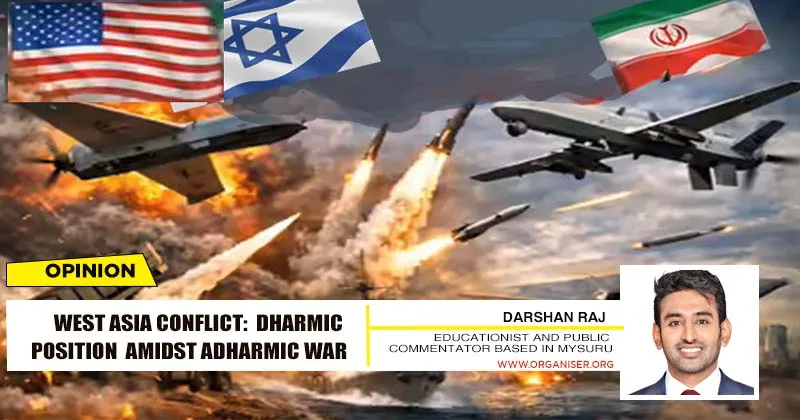
Before I say anything about the war now unfolding in Iran, let me state something that seems to get lost the moment this topic comes up: this conflict does not have a villain on one side and victims on the other. It has multiple actors, each with blood on their hands, each with legitimate grievances buried under decades of terrible decisions. Anyone who tells you this is simple is either lying or hasn’t read enough history. I have spent the last several days going back through the records, and what I find is this — the mess in West Asia was made by many people, over many decades, and sorting out who started it depends entirely on which page of history you open first.
Massacre Orchestrated by Hamas
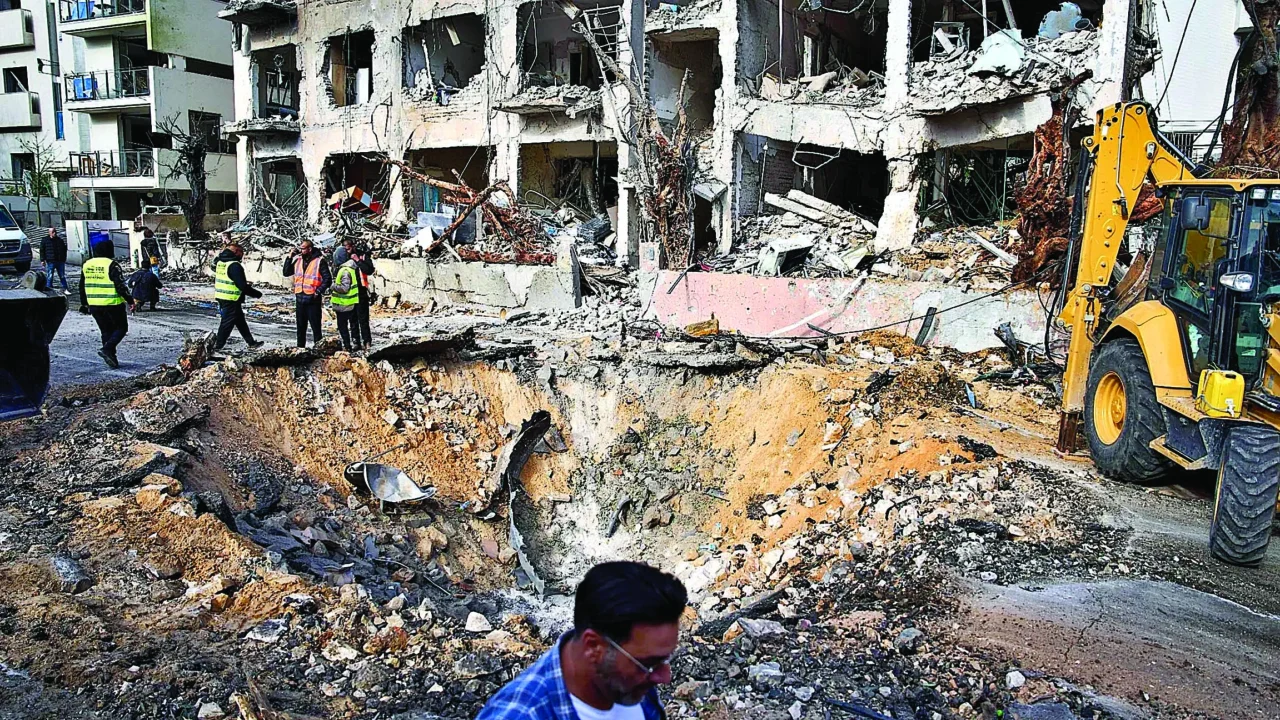
Let me start with Israel, because that is where intellectual honesty requires us to start. On October 7, 2023, Hamas militants crossed into southern Israel and massacred 1,200 people — men, women, children, elderly. They took 250 hostages. It was the single deadliest day for Jewish people since the Holocaust. I want to sit for a moment before we discuss anything else. A people who had already survived genocide, who built a country in a hostile neighbourhood, who have been told repeatedly by their neighbours that their country should not exist — those people woke up on a Saturday morning and faced organised slaughter. The idea that Israel’s subsequent actions happened in a vacuum, that its military responses are unprovoked aggression, is a position that requires enormous selective memory to maintain.
Iran’s Pernicious Hand
And it was not just October 7. Iran’s Supreme Leader Ayatollah Khamenei has called for Israel’s elimination — not its policy change, its elimination — on multiple occasions. These are public statements, on record. Iran spent decades funding, training and arming Hamas in Gaza, Hezbollah in Lebanon, the Houthis in Yemen, and various Shia militias across Iraq and Syria. This was not secret. This was Iran’s stated foreign policy — building what it called the Axis of Resistance to surround and eventually destroy the Jewish state. A country does not need to wait until the missiles actually land before it develops an existential anxiety. Israel was watching its borders being systematically militarised by a neighbour that had pledged its destruction. That is not paranoia. That is reading the situation correctly.
Multiple Nuclear Warheads
Then there is the nuclear question. The International Atomic Energy Agency (IAEA), reported that Iran had enriched enough uranium for nine nuclear warheads. Nine. Iran had not signed the Additional Protocol. It was blocking inspectors. And this was a country whose leadership had publicly said, in those exact words, that Israel should be wiped from the map. If you are sitting in Tel Aviv reading that report, what exactly are you supposed to do? Wait and hope? So yes — Israel had reasons. Real ones. Not manufactured ones.
Now, having said all of that, America’s role in creating the conditions for this entire catastrophe over seven decades is also not in dispute — or should not be. In 1953, the CIA removed Iran’s democratically elected Prime Minister Mosaddegh in a coup, reinstalled the Shah, and spent the next 26 years propping up a monarchy that tortured its own citizens. When the Islamic Revolution came in 1979, it came riding a wave of anti-American fury that had been building for a generation. The hostage crisis, the nuclear standoff, Khamenei’s entire worldview — none of it emerged from nowhere. It emerged from 1953. And the tragedy is that a different Iran was possible — a democratic, modernising Iran — until American and British oil interests decided otherwise.
Afghanistan follows the same pattern. The CIA armed the Mujahideen in the 1980s to bleed the Soviets. Reasonable strategy, perhaps. Except that network became the Taliban and Al-Qaeda. Iraq: America supported Saddam Hussein while he gassed Kurdish civilians in 1988, then invaded Iraq in 2003 on the basis of weapons of mass destruction that never existed. The result was not democracy. The result was ISIS. Libya: NATO helped remove Gaddafi in 2011 and left behind an open slave market and a failed state. Hillary Clinton laughed on camera and said “We came, we saw, he died!”. The slaves did not laugh.
I am not drawing moral equivalence here. Israel defending itself against Iranian proxy attacks is not the same as America launching regime-change wars on fabricated intelligence. These are different things. What I am saying is that West Asia has been treated for seventy years as a chessboard by powers — American, British, Iranian, Saudi — who move pieces without counting the bodies. The ordinary people of Iran, of Gaza, of Iraq, of Lebanon did not choose this. They inherited it.
And then there is a question that rarely gets asked in polite company: why is it that Arab states — Jordan, UAE, Bahrain, Saudi Arabia — quietly helped intercept Iranian missiles aimed at Israel in 2024? Why did Sunni Muslim nations stand, in practice if not in public statement, closer to Israel than to Iran? Because the Muslim world is not a monolith. Arab states, most of them Sunni, fear Iranian Shia expansionism — Iran’s funding of proxies in their own backyard — far more than they fear Israel. The Bahrain Government crushed a Shia uprising with Saudi tanks in 2011. Iran had its fingerprints on that uprising. The Gulf states know exactly what Iran’s “Axis of Resistance” means for their own stability. The optics of Muslim brotherhood do not match the geopolitical reality, and the Gulf monarchies know it even if they cannot say it publicly. So where does Bharat stand? And this is where I want to say something clearly that I believe deserves to be said without hedging: Prime Minister Narendra Modi and External Affairs Minister S. Jaishankar are, right now, conducting the most sophisticated foreign policy of any major democracy on earth. I say this not as flattery but as a factual observation.
Think about what India has managed to hold simultaneously. We buy Russian oil at a discount while sitting inside the Quad with America, Japan and Australia. We have deep defence and technology ties with Israel — Modi was the first Indian Prime Minister to visit Israel in 2017, a historic moment — while calling for restraint and Palestinian rights. We operate Chabahar port in Iran under an American sanctions waiver that Jaishankar personally negotiated in Washington.
We have nine million Indians working in Gulf states whose remittances power our economy, and we have maintained those relationships even as the Gulf burns around us. We abstained at the UN on Ukraine. We were criticised. Nobody stopped buying our generic medicines. Nobody stopped outsourcing their IT to Bengaluru.
This is not fence-sitting. Fence-sitting is cowardice dressed as neutrality. What India is doing is something older and more disciplined — it is Chanakya’s mandala theory given modern institutional form. You do not surrender your strategic options to any single patron. You maintain functional relationships at every node of the network. Weakness seeks permanent alliance. Strength maintains strategic ambiguity. Jaishankar has said it in plain English: this is a “multi-aligned” world and India intends to be “multi-aligned” within it. That is not a slogan. That is a doctrine.
Modi’s Government has also done something that does not get enough credit in the context of this crisis — the systematic push on renewable energy. When the Strait of Hormuz is threatened, as it is today, every country that imports oil through it panics. India imports forty to fifty per cent of its crude that way. That vulnerability is real. But every solar plant commissioned in Rajasthan, every gigawatt added to our domestic grid, is a hedge against exactly this moment. Energy independence is not just climate policy. It is national security. Modi understands this, and the investment patterns of the last decade show it.
Compare India’s position with Britain — which has followed Washington into every military adventure since 2001 and is now a diminished country whose strategic opinion nobody particularly seeks. Compare with Pakistan — which outsourced its foreign policy entirely to American and Saudi patronage and is today fighting a war on its own Afghan border, economically ruined, internationally isolated. The countries that clung to single-patron dependency are today’s cautionary tales.
The people who will pay the highest price for the current war — as always — are ordinary Iranians, who never voted for Khamenei’s nuclear adventurism and have been protesting his government for years, at the cost of their lives. And ordinary Israelis, who have lived under the anxiety of existential threat since 1948 and deserve, finally, the security that keeps eluding them. And the Indian workers in Dubai and Abu Dhabi, whose flights were suspended and whose livelihoods hang on whether Gulf states can stay out of the crossfire.
None of them started this. All of them are living inside someone else’s strategic logic.
I have no tidy conclusion to offer. The honest position — the only intellectually defensible one — is that this conflict has multiple authors, none of them clean. Iran built a proxy army to encircle Israel. Israel faces a genuine, documented, nuclear-armed existential threat. America created the conditions for Iranian radicalism in 1953 and has spent seventy years mistaking military solutions for political ones. And somewhere in all of that are a hundred and fifty million ordinary people — Iranian, Israeli, Lebanese, Iraqi, Yemeni — who simply wanted to live.
What India can do, and what this Government appears to be doing, is refuse to be pulled into any one narrative. Keep all channels open. Push for de-escalation. Protect our diaspora. Secure our energy supply. And let the great powers exhaust themselves on a chessboard they have been misreading for seven decades, while we quietly build the kind of weight that means their decisions, eventually, cannot be made without our consent.
That is not a small ambition. It is, in fact, the only one worth having.










