
AHMEDABAD: India’s emphatic victory underlined their dominance throughout the tournament, with both their batting and bowling units delivering on the biggest stage. The match fittingly concluded with a boundary-line self-relay catch and the wicket of New Zealand’s James Neesham, sealing a memorable win that showcased India’s depth and consistency across the competition.
Samson’s Record-Breaking Knock
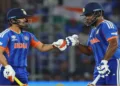
At the heart of India’s triumph was a spectacular innings from wicketkeeper-batter Sanju Samson. The 31-year-old produced a blistering 89 runs off just 45 balls, setting the tone for India’s aggressive approach from the very beginning. Samson’s attacking stroke play placed immense pressure on the New Zealand bowlers and ensured India maintained a commanding run rate throughout the innings.
His knock also rewrote the record books. Samson’s 89 is now the highest individual score ever recorded in a T20 World Cup final, surpassing the previous best of 85 not out by Marlon Samuels in 2016 and 85 by Kane Williamson in 2021.
The Indian batter also achieved another milestone by hitting his 24th six of the tournament, setting a new record for the most sixes in a single T20 World Cup campaign. He overtook the previous record held by Finn Allen, who had struck 20 sixes in an earlier edition.
Perhaps even more remarkable was Samson’s overall contribution to India’s batting dominance in the final. For the first time in T20 World Cup history, the top three batters in a team’s innings all crossed the 50-run mark in the same match, highlighting the sheer strength of India’s batting lineup.
Consistency Throughout the Tournament
Samson’s performance in the final was the culmination of an extraordinary run of form. The Kerala-born batter joined an elite list of players who have scored half-centuries in both the semi-final and final of a T20 World Cup. Before him, only Shahid Afridi in 2009 and Virat Kohli in 2014 had achieved the feat.
He also matched another rare record for consecutive fifty-plus scores in the tournament, registering three successive scores of 50 or more. This places him alongside some of the format’s most consistent performers, including Mahela Jayawardene, Babar Azam, and KL Rahul.
In another major milestone, Samson became the highest-scoring Indian in a single edition of the T20 World Cup, surpassing Virat Kohli’s long-standing record of 319 runs set during the 2014 tournament.
What makes the achievement even more impressive is the fact that Samson was not part of India’s playing XI at the start of the competition. Despite featuring in only five matches during the tournament, he emerged as one of the standout performers of the campaign.
Bowlers Seal Dominant Victory
While India’s batting laid the foundation for victory, the bowlers ensured the match never slipped away. Leading the attack was pace spearhead Jasprit Bumrah, who delivered a masterclass in death bowling.
Bumrah dismissed James Neesham with a trademark slower yorker to finish with four wickets, recording the best bowling figures by a fast bowler in a T20 World Cup final. His overall tournament performance was equally impressive, ending with 13 wickets at an average of just 13.23 and an economy rate of 6.37.
Another key contributor was left-arm pacer Arshdeep Singh, who concluded the tournament with nine wickets. One of his most memorable moments came during a crucial 19th over against the West Indies cricket team earlier in the tournament, when he conceded only six runs while defending a high total.
Historic Milestones for India
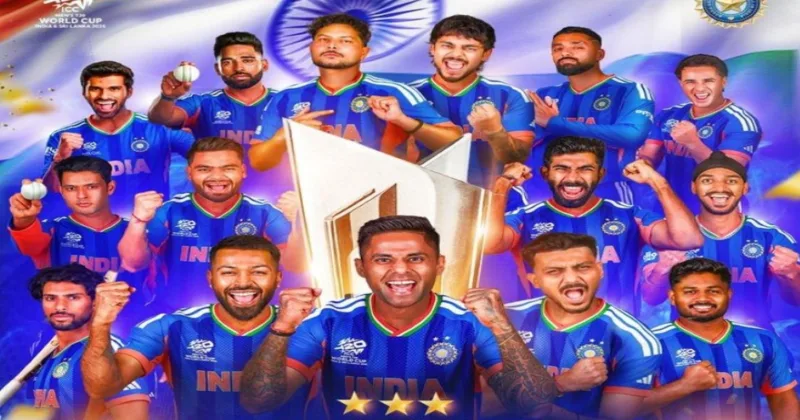
India’s triumph also marked several historic milestones for the team. With this victory, India became the first team in T20 World Cup history to successfully defend the title. The win also gave them a record third championship in the tournament.
Significantly, it was also the first time India had won a T20 World Cup on home soil, making the triumph even more special for the players and fans alike.
As celebrations erupted across the stadium and beyond, India’s dominant campaign will be remembered as one of the most comprehensive performances in the history of the tournament.