
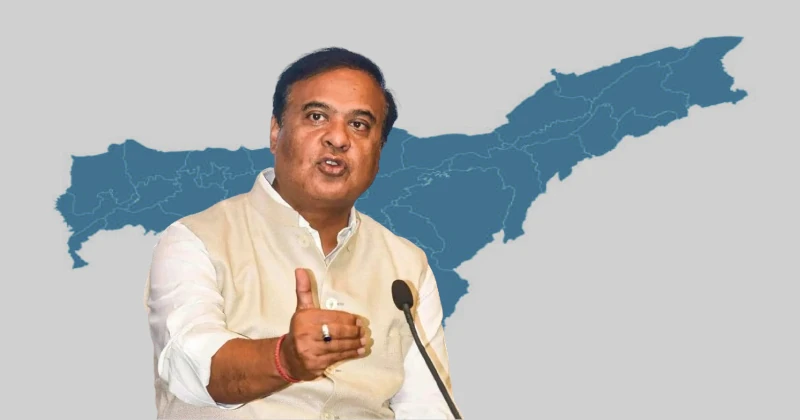
Over the past decade, the economic narrative of Assam has undergone a remarkable transformation. Once viewed largely as a peripheral economy with structural constraints, the state is now steadily emerging as one of the most dynamic growth centres in Northeast India. This shift is not accidental. It is the result of deliberate policy decisions, disciplined financial management, and an assertive development vision led by Chief Minister Himanta Biswa Sarma.
The most striking indicator of this transformation is the rapid expansion of the state’s Gross State Domestic Product (GSDP). Over the last decade, Assam’s economy has nearly tripled in size, reflecting a consistent double-digit growth trajectory. Such momentum signals not only economic expansion but also deeper structural change. Growth in production, investments, and infrastructure has begun to diversify the state’s economic base, moving it beyond its traditional dependence on agriculture and resource extraction.
Fiscal discipline as the foundation of growth
One of the most critical yet often overlooked pillars of Assam’s transformation has been fiscal discipline. Economic expansion is sustainable only when supported by sound financial management. In this regard, Assam has demonstrated notable prudence. By adhering to the framework of the Fiscal Responsibility and Budget Management guidelines, the state has managed to maintain a stable debt-to-GSDP ratio while continuing to increase developmental expenditure.
Such fiscal responsibility has strengthened investor confidence. Stability in government finances signals credibility to industries and financial institutions. It assures investors that the state possesses both the administrative capacity and financial reliability necessary for long-term infrastructure projects and industrial expansion. Equally important is the steady increase in Assam’s own tax revenue. Through digitalisation and improved tax administration, the government has expanded the tax base while reducing leakages. The growth of GST collections and other revenue streams reflects both administrative efficiency and expanding economic activity.
Institutions such as the Reserve Bank of India have also highlighted Assam’s impressive growth performance among Indian states, reinforcing the perception that the region is becoming a key contributor to India’s broader economic progress.
Infrastructure: The engine of transformation
Economic development cannot take root without robust infrastructure. Recognising this, the Assam government has placed infrastructure development at the centre of its policy agenda. Road connectivity across districts has improved significantly, linking rural markets with urban centres and facilitating trade. Investments under programmes like the Rural Infrastructure Development Fund have strengthened rural connectivity, enabling farmers and small businesses to participate more actively in the regional economy.
At the same time, large-scale capital expenditure has expanded across sectors such as power, transportation, and urban development. These investments are not merely construction projects; they represent long-term economic assets designed to attract industries and generate employment. The push for infrastructure has also been supported by central initiatives such as the Special Assistance to States for Capital Investment scheme. By leveraging such programmes effectively, Assam has accelerated the pace of development without overburdening its fiscal position.
Digital governance and administrative reform
Another major component of Assam’s economic resurgence is administrative modernisation. Digital governance initiatives have brought greater transparency and efficiency to financial management and public service delivery. The integration of treasury systems, procurement platforms, and digital financial monitoring tools has allowed the government to track spending more effectively and reduce administrative delays. Platforms such as the Government e-Marketplace have transformed public procurement by improving transparency and increasing competition among suppliers.
This digital shift has two major benefits. First, it reduces corruption and leakages in government spending. Second, it enhances the speed and efficiency of project implementation an essential requirement for sustaining economic growth. These reforms demonstrate a broader trend: the transition of Assam from a traditionally bureaucratic administrative structure toward a more technology-driven governance model.
Sectoral expansion and economic diversification
The economic transformation of Assam is also evident in the diversification of its industrial sectors. While tea, oil, and agriculture remain important pillars, the state is gradually expanding into new areas. Mining, petroleum exploration and natural gas production continue to generate substantial revenues. Recent discoveries and increased exploration activities indicate that the region’s energy sector will remain an important economic driver in the coming years.
Simultaneously, sectors such as services, small-scale manufacturing, and construction are gaining momentum. Rising vehicle registrations, expanding real estate activity, and growing service-sector revenues reflect increasing consumer demand and rising income levels across the state. The financial sector has also shown encouraging signs of expansion. Improvements in the credit-deposit ratio suggest that banks are lending more actively to businesses and entrepreneurs. This indicates stronger financial intermediation and increased economic confidence within the state.
Inclusive growth and human development
Economic growth alone cannot define development; it must translate into improvements in human well-being. Encouragingly, Assam has also made progress in key social indicators. Life expectancy has improved significantly over the decades, supported by better healthcare infrastructure and expanded public health initiatives. Investments in maternal and child healthcare, vaccination programmes, and rural medical services have contributed to these gains.
The state has also taken steps toward inclusive budgeting by incorporating gender-responsive and socially sensitive financial planning. Such policies ensure that development benefits reach marginalized communities, including women, children, and persons with disabilities. These measures highlight a critical dimension of Assam’s development strategy: economic progress combined with social justice.
Assam’s emerging role in India’s growth story
The broader significance of Assam’s economic transformation lies in its strategic importance for India’s northeastern region. For decades, the Northeast struggled with infrastructural gaps, limited industrialisation, and geographical isolation. Today, Assam is positioning itself as the economic gateway to the region.
Improved connectivity, stronger fiscal management, and expanding industries are gradually turning the state into a hub for trade and investment in Northeast India. This transformation is also aligned with India’s broader Act East policy, which envisions the Northeast as a bridge between India and Southeast Asia. If the current momentum continues, Assam could evolve into one of the most important economic corridors in eastern India.
A model for regional development
The story unfolding in Assam offers a valuable lesson in regional development. Sustainable economic progress requires more than short-term policies; it demands long-term vision, fiscal discipline, and administrative innovation.
Under the leadership of Himanta Biswa Sarma, the state has combined these elements to create a growth framework that is both ambitious and pragmatic. Infrastructure investment, digital governance, and inclusive development policies are working together to reshape the economic landscape of Assam.
The road ahead will undoubtedly bring new challenges from maintaining fiscal stability to managing rapid urbanisation. Yet the foundations being laid today suggest that Assam’s growth story is not merely a temporary surge but the beginning of a long-term transformation.
For a state once considered economically peripheral, this shift represents more than development statistics. It signals a new chapter of confidence, opportunity, and regional leadership for Assam in the decades to come.