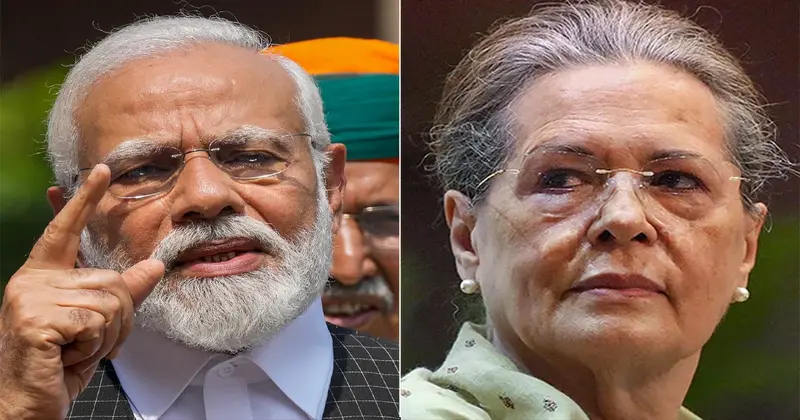
Sonia Gandhi, in an Editorial, has accused the Government of India of “abdication” and “silence” over the assassination of Iran’s Supreme Leader. The charge is dramatic and morally loaded. But foreign policy cannot be assessed through rhetorical intensity. It must be judged through facts, context and strategic consequence. The allegation of silence collapses immediately when one examines the Prime Minister’s actions during this West Asia crisis. Prime Minister Narendra Modi engaged directly and swiftly with leaders across West Asia. He spoke with King Abdullah II of Jordan, conveying India’s deep concern about the evolving situation and reaffirming support for peace, security and the well-being of the Jordanian people, while expressing gratitude for the protection extended to the Indian community.
He discussed the situation in detail with Crown Prince of Saudi Arabia, HRH Mohammed bin Salman, explicitly condemning attacks on Saudi Arabia in violation of its sovereignty and territorial integrity and stressing the urgent need for restoration of regional peace and stability. He held a productive conversation with King Hamad Bin Isa Al Khalifa of Bahrain, condemning attacks on Bahrain and expressing solidarity in difficult times. He spoke with Israeli Prime Minister Benjamin Netanyahu, conveying India’s concerns over recent developments, emphasising the safety of civilians and reiterating the need for an early cessation of hostilities. He also spoke with UAE President Sheikh Mohamed bin Zayed Al Nahyan, strongly condemning the attacks on the UAE, condoling the loss of lives and standing firmly in solidarity, while thanking him for safeguarding the Indian community. This is not silence; this is calibrated, multi-directional diplomacy in real time.
The editorial also omits a crucial regional reality. Foreign policy is not an exercise in moral exhibitionism. It is the disciplined management of national interest. India today maintains defence and technology partnerships with Israel, strategic connectivity interests with Iran including the Chabahar port project, expanding economic engagement with the United States and deeply institutionalised trust with Gulf monarchies. A hasty denunciation directed at one side would not have demonstrated courage; it would have risked India’s strategic leverage and the safety of its diaspora.
The selective invocation of international law in the criticism also demands scrutiny. Article 2(4) of the UN Charter is indeed foundational. But consistency matters. Was the same urgency displayed when cross-border terrorism targeted India for decades? When territorial aggression occurred elsewhere? International law cannot become an instrument of partisan positioning. Moreover, the parties involved in the present crisis have articulated self-defence claims, which, whether accepted or contested, render the situation legally complex. India’s role is not to serve as instantaneous adjudicator in disputes between major powers but to preserve stability and protect its interests.
The Congress party’s invocation of non-alignment reflects nostalgia rather than realism. During the Cold War, non-alignment often translated into moral posturing without strategic leverage and economic vulnerability and without compensatory strength. Today’s India practices strategic autonomy. It engages simultaneously with BRICS and the Quad, maintains strong ties with Israel and Iran, deepens partnerships with the Gulf and expands cooperation with Western economies. This is not abandonment of principle; it is multi-alignment grounded in capability.
Yes, Iran played a constructive role in 1994 in preventing the internationalisation of the Kashmir issue at the UN Human Rights Commission. That historical fact is acknowledged. But foreign policy cannot function on sentimental accounting. Iran’s contemporary regional posture, including expanded missile activities and deeper ties with China, is part of today’s strategic landscape. India continues engagement with Tehran, but it does so with sober assessment rather than romantic recollection.
Over the past decade, Prime Minister Modi has fundamentally transformed India’s engagement with the Arab world. Comprehensive partnerships with the UAE, deep defence and energy cooperation with Saudi Arabia and robust ties with Qatar, Oman, Bahrain and Jordan reflect sustained diplomatic investment. This architecture of trust did not materialise by accident; it was built deliberately. When missiles strike Gulf nations that host millions of Indians and underpin India’s energy security, India must stand by its partners. That is not ideological alignment; it is strategic responsibility.
India’s credibility in the Global South has not been constructed through press releases but through action: evacuating citizens from war zones, providing vaccines during a global pandemic, leading the G20 with enhanced Global South representation and expanding development partnerships across Africa and Asia. Nations respect reliability and capacity, not rhetorical flourish.
The invocation of Vasudhaiva Kutumbakam is welcome, but its meaning must be understood properly. Family does not imply impulsive condemnation; it implies responsibility, restraint and prevention of escalation. Publicly choosing sides in a volatile conflict would have diminished India’s diplomatic leverage. Maintaining channels with all actors preserves the possibility of stabilising influence.
Ultimately, the core question remains: what would a loud condemnation have achieved? It would not have reversed events. It would not have reduced tensions. It might have endangered Indians in the Gulf. It could have weakened strategic partnerships essential to India’s security and growth. Responsible leadership must evaluate consequences, not headlines.
India today is not the economically constrained state of the 1970s nor the rhetorical champion of Cold War non-alignment speeches. It is a rising civilisational state navigating a multipolar world, which is marked by volatility and rapid power shifts. Prime Minister Modi, expressed concern, condemned violations of Gulf sovereignty, emphasised civilian safety, called for cessation of hostilities, engaged leaders across the region, safeguarded diaspora interests and preserved strategic autonomy.
Strategic restraint is not abdication. Measured language is not silence. Responsible diplomacy is not moral weakness. In a region on fire, India chose stability over theatre and statesmanship over sentiment. That is not a retreat from legacy. It is its evolution in the service of national interest.