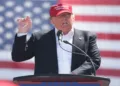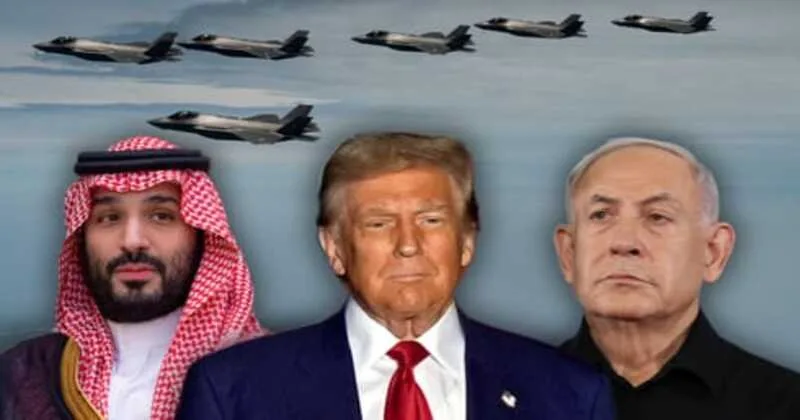
Washington: US President Donald Trump’s decision to authorise Operation Epic Fury against Iran on Saturday, carried out jointly with Israel, followed weeks of sustained and largely discreet pressure from Israel and Saudi Arabia, the Washington Post reported on Sunday, citing officials and regional sources. While Israeli Prime Minister Benjamin Netanyahu openly advocated military action, Saudi Arabia’s involvement was described as more layered and strategically calibrated.
According to the report, Saudi Crown Prince Mohammed bin Salman made multiple private phone calls to Trump over the past month, urging him to proceed with military strikes on Iran. This lobbying reportedly continued even as Riyadh publicly supported diplomatic efforts and called for de-escalation. At the same time, Saudi Arabia issued an official statement asserting that it would not permit its territory or airspace to be used for any attack on Iran.
Sources cited by the Washington Post said the crown prince warned US officials that any further delay would embolden Tehran. He reportedly conveyed that if the strike did not occur soon, Iran would emerge stronger and more dangerous, potentially altering the regional balance of power.
Saudi diplomacy and strategic signalling
The apparent dual-track approach by Riyadh, privately encouraging action while publicly backing diplomacy, highlighted the stark division in the Ummah. Saudi Arabia sought to maintain its regional posture while avoiding direct entanglement in the operational aspects of the strike. Following the launch of Operation Epic Fury, Trump explained his reasoning in remarks to Axios. He said the decision was driven by two principal factors: the breakdown of US-Iran nuclear negotiations in Geneva and intelligence assessments that Iran had begun rebuilding nuclear facilities damaged during the Israel-Iran war in June. “The Iranians got close and then pulled back – close and then pulled back. I understood from that that they don’t really want a deal,” Trump explained.
While preparing his address to the nation announcing the operation, Trump instructed his team to compile a comprehensive record of Iranian-linked attacks worldwide over the past 25 years. He later said the review showed that “every month they did something bad, blew something up or killed someone.” Despite its earlier assurances about neutrality, Saudi Arabia was soon drawn into the fallout. In retaliation for the US-Israeli strikes, Iran launched missile and drone attacks targeting the UAE’s Abu Dhabi and Dubai, Qatar’s Doha, and Saudi Arabia’s Riyadh, dramatically escalating tensions across the Middle East.
Regional coordination after retaliation
In response to the Iranian strikes, Saudi Arabia’s Foreign Ministry issued a sharply worded statement condemning Tehran’s actions. “The Kingdom of Saudi Arabia expresses its rejection and condemnation in the strongest terms of the blatant and cowardly Iranian attacks,” the statement said. It further stressed that the assaults “cannot be justified under any pretext or in any way, and which came despite the knowledge of the Iranian authorities that the Kingdom has affirmed that will not allow its airspace or territory to be used to target Iran.” According to Arab News, Crown Prince Mohammed bin Salman moved swiftly to coordinate with regional leaders after the retaliatory attacks. He held discussions with UAE President Sheikh Mohammed bin Zayed Al-Nahyan, Bahraini King Hamad bin Isa Al-Khalifa, Qatari Emir Sheikh Tamim bin Hamad Al-Thani, Kuwaiti Emir Sheikh Mishal Al-Ahmad Al-Jaber Al-Sabah, and King Abdullah II of Jordan. During these conversations, the crown prince expressed solidarity and pledged support. He affirmed “Saudi Arabia’s readiness to mobilise all its resources to assist them in responding to the Iranian attacks they suffered, which undermine the region’s security and stability.”
The conflict took a dramatic turn with the confirmed death of Iran’s Supreme Leader, Ayatollah Ali Khamenei, who was killed in a major strike conducted by Israel and the United States. Iranian state television and the state-run IRNA news agency announced early Sunday that the 86-year-old leader had died.
Trump had revealed the news hours earlier, declaring that Khamenei’s death provided Iranians with their “greatest chance” to “take back” their country. Khamenei’s death has plunged the Islamic Republic into uncertainty and intensified fears of wider regional instability.