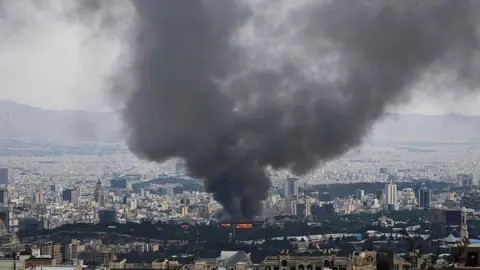
When plumes of smoke began rising over Tehran’s Pasteur district on a bright Saturday morning, it marked more than just the start of another military operation. It signalled a deliberate break from decades of established aerial warfare doctrine. Operation Epic Fury known in Israel as Operation Roaring Lion was launched in full daylight, a tactical move that stood in contrast to the long-standing preference for night-time air campaigns.
Military planners traditionally favour darkness to conceal aircraft movement, disrupt enemy surveillance, and complicate defensive responses. Yet the US-Israel coalition reversed that logic. The daylight assault was widely interpreted as a calculated decision designed to maximise psychological shock, exploit vulnerabilities in Iran’s defensive posture, and shape global perception in real time.
Exploiting expectation bias
One of the most immediate strategic considerations was what reports describe as “expectation bias.” Historically, major Western strikes on Iranian targets, including the 12-day air campaign in 2025, began between 2 am and 4 am local time. Iran’s air defence systems, particularly those overseen by the Islamic Revolutionary Guard Corps (IRGC), were conditioned to anticipate attacks during those hours.
By striking at approximately 8:10 am local time, the coalition targeted a moment of potential vulnerability. According to security assessments circulating in diplomatic circles, Iranian defence units had reportedly maintained heightened readiness throughout the night and were transitioning shifts or lowering alert levels at dawn, assuming the most likely attack window had passed.
The daylight launch may therefore have combined surprise with timing, disrupting defensive coordination at a critical juncture.
Psychological shock and public visibility
Beyond tactical surprise, the choice of daylight carried immense symbolic weight. Unlike previous limited or “surgical” strikes, the 2026 offensive unfolded against a backdrop of heightened political messaging from Washington and Jerusalem.
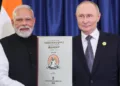
U.S. President Donald Trump and Israeli Prime Minister Benjamin Netanyahu issued coordinated statements calling the operation as a decisive moment in confronting Tehran’s leadership. Both leaders urged the Iranian people to consider the future of their governance, language widely interpreted as signalling support for political transformation inside Iran.
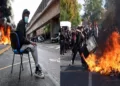
A daylight strike ensured that the impact would be visible not only to military but to ordinary citizens. Explosions near central administrative zones and security compounds were captured on smartphones and broadcast across social media platforms within minutes. Smoke rising over the skyline during peak commuting hours carried a powerful psychological dimension: it publicly challenged the perception of state invulnerability.
Reports argue that visibility was central to the operation’s logic. A night-time strike, while militarily efficient, would have limited real-time visual confirmation for domestic audiences inside Iran. Daylight ensured that the narrative unfolded in public view.
Precision in dense urban terrain
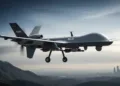
Another critical factor was operational accuracy. Tehran’s Pasteur and adjacent districts are densely populated areas housing government institutions, diplomatic missions, and residential complexes. Despite advances in thermal imaging and night-vision systems, daylight conditions still offer superior optical clarity for pilots and drone operators navigating tightly clustered urban environments.
Reports suggest that the coalition sought to reduce collateral damage by relying on enhanced visual verification during daylight hours. In high-density political districts, even marginal targeting errors could carry severe diplomatic and humanitarian consequences.
Satellite imagery later showed extensive damage to select compounds while adjacent civilian structures appeared largely intact. If accurate, that outcome would support claims that daylight conditions aided precise targeting.
Demonstration of air superiority
Daylight operations also conveyed a strategic message internationally. By striking openly, the US and Israel effectively signalled confidence in their air superiority. Operating without reliance on darkness implied that Iranian radar and missile systems were either degraded, outmatched, or unable to pose a credible threat.
The presence of a large naval strike group, including aircraft carriers such as the USS Gerald R. Ford and USS Abraham Lincoln, further show the scale of the deployment. Conducting the assault under direct sunlight suggested a willingness to operate with minimal concealment.
Such a display carries geopolitical implications beyond Iran. Regional actors and global powers alike monitor operational patterns for signals of capability and resolve. The daylight assault projected both.
Information warfare in the digital age
Modern warfare increasingly unfolds not only on battlefields but across digital platforms. The coalition’s choice of timing may reflect an understanding that real-time imagery can shape global narratives more effectively than delayed night footage.
Within minutes of the first explosions, images of smoke columns and damaged compounds were circulating across international media and social networks. In the information age, visibility amplifies impact. A strike seen by millions in real time can alter diplomatic calculations, investor confidence, and domestic political sentiment.
Information dominance, the ability to control or influence the narrative has become a strategic objective in its own right. Daylight maximised that potential.
The regime stability question
The operation occurred amid reports of domestic unrest in Iran. Protests had reportedly intensified in several cities in late 2025 and early 2026, driven by economic pressures and political grievances. Against that backdrop, the daylight strike may have been calibrated to reinforce perceptions of regime vulnerability.
As per the reports, by targeting highly symbolic centres of authority during peak hours, the coalition appeared intent on creating a visible rupture in the aura of state control. The psychological effect of seeing smoke rise over official districts could resonate differently than learning of strikes conducted quietly at night.
Risk and escalation
Choosing daylight also entailed risks. Increased visibility can raise the potential for civilian panic and broader instability. Moreover, striking during working hours heightens the stakes of any targeting error.
Iran has vowed retaliation, with officials describing the strikes as an act of aggression that will not go unanswered. The potential for escalation remains significant, particularly if further daylight operations continue.
Reports note that daylight warfare compresses reaction times. Diplomatic channels have less space to manage fallout when images of conflict circulate instantly across the globe.
A shift in modern warfare doctrine?
The shift toward daylight operations may reflect broader changes in military doctrine. As surveillance technology improves and radar detection becomes increasingly sophisticated, the protective advantage of darkness may diminish.
At the same time, modern conflicts are as much about perception as destruction. Visibility can function as a force multiplier. A strike that is seen, shared, and debated in real time can influence outcomes far beyond the immediate battlefield.
If Operation Epic Fury represents a doctrinal pivot, it shows a new reality: that psychological dominance and narrative control are as critical as kinetic power.
A calculated gamble
Ultimately, the decision to strike under the sun appears to have combined tactical timing, symbolic messaging, precision requirements, and geopolitical signalling. It was not merely a military maneuver but a multi-layered strategic statement.
Whether the daylight assault reshapes the balance of power in the Middle East or triggers prolonged escalation will depend on developments in the days and weeks ahead. What is clear is that the choice of timing was neither incidental nor symbolic alone, it was central to the operation’s design.
In modern warfare, visibility itself can be a weapon. And in this instance, the coalition chose to wield it in full view of the world.