West Asia, a region historically known for hard-nosed contests and break-neck speed conflicts to seek oil hegemony, to fulfill ideological goals and strategic ambitions. Ofcourse, the United States is a vital stakeholder that acts as a key stencil in redefining the great power competition of West Asia. The sharp confrontation between Israel, US and other allies of the region with Iran on the other side is a repeated conundrum that erupts periodically to the surface of the geopolitical landscape like the tip of an iceberg. However, the unseen part of the iceberg is massive which is constantly brewing to consolidate hegemonic footprint across the strategic lexicon of West Asia.
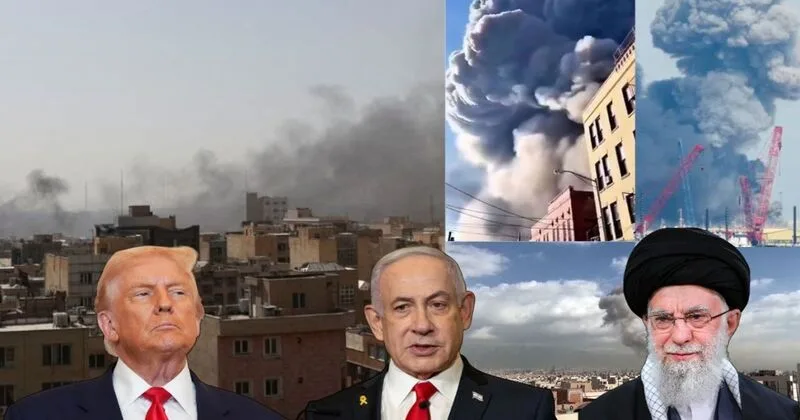
In the latest context, the fragile geopolitical iceberg of West Asia has not just resurfaced to the public spot but has bombarded, thus severely fracturing the entire security structure of the region. The West Asian security flank is completely disrupted. The conflict has not just been confined to Israel and Iran. But has blown out into a larger regional conflict with Tehran targeting US bases and other regions of West Asia who are the allies and partners of Washington DC. This overarching escalation has culminated in the death of the Supreme Leader of Iran, Ayatollah Ali Khamenei who unequivocally held the helm of Tehran for more than three decades. Iran has vowed to retaliate and is targeting UAE, Kuwait, Qatar, Bahrain, Jordan, Saudi Arabia and the larger region.
The United States has titled the strikes on Iran as “Operation Epic Fury” and Israel calls it as “Operation Roaring Lion”. The strikes are escalating with Iran targeting not just US and Israel military bases in the region, but also aiming at civilian spaces. Residential apartments, Airports and luxurious hotels of Bahrain, Dubai and other places have been hit by Tehran. Currently, the entire airspace of West Asia is blocked and the civilian flight movements have been completely cancelled and the commuters are stranded in the key airports of West Asia.
What is the trajectory of this conflict which is gaining traction with every passing hour? Will it de-escalate and the waging parties return to dialogue? Does the strategy of Tehran to strike the US allies in the region, thereby indirectly pressurize Washington to stop the war work? Most importantly, what holds for the future of Iran? Who will occupy the apex of Tehran as Khamenei succumbs to Israel-US strikes? Is it an end of clerical rule and is there a ray of democracy amidst the darkness of theocracy? The answers are awaited as West Asia is entangled in a basket of massive security risks and on the brink of a full blown out regional conflict with global ramifications!
Hope of democracy amidst the darkness of Islamic theocracy
As the people of Tehran and other regions celebrate the death of Ayatollah Khamenei who had an iron fist on Iran with his clerical rule and as women particularly resonate the death as a symbol of freedom, an atmosphere of fear and uncertainty prevail across the country. Will it be a new dawn of democracy and freedom from the clerical rule or will the death of the supreme leader lead to further repression. Khamenei held the helm of Tehran from 1989 after the death of the founding father of Islamic Republic of Iran Ayatollah Ruhollah Khomeini. Thus, Ayatollah Ali Khamanei had undisputed control over the country’s politics, judiciary, media, military, intelligence, economic institutions, police and the law & order system.
His death has thus left a deep void in the Islamic theocracy. In the US-Israel strikes even the close aides of Khamenei have been killed. This includes top military officials, IRGC Guards and the family members of Khamenei including his daughter, grandchildren and others. Thus, a clear successor for Khamenei and the Islamic theocracy is vague as of now. Infact, the former President of Iran, Ebrahim Raisi was deemed as the stronghold and successor of Khamanei. However, he was killed in a helicopter crash in 2024. Thus the political structure in Tehran became more weak and fragile.
This also raises the question of whether an internal conflict or competition will emerge among the close aides of Khamenei to occupy the apex position in Tehran. Speculations are also that the son of Ayatollah Khamanei, Mojtaba Khamenei is a potential successor. However, he is predominantly away from the limelight. During the previous 12 day conflict with Israel in June, 2025, it is said that Khamenei had finalised three potential successors, however their names have not been disclosed yet. On the other hand, the constitution of Iran states that if its supreme leader dies, the assembly of experts consisting of 88 elected clerics must appoint a new leader as soon as possible. But, nothing is officially confirmed. Iran has confirmed that President Masood Pazeshkia is running the country now.
The geopolitical experts also speculate that the Iranian Revolutionary Guards Corps(IRGC) may take over the control of the country in moments of steep crisis. However, Iran’s Army Chief Abdolrahim Mousavi and the country’s Defence Minister Aziz Nasirzadeh have also been confirmed dead by state media. Also reported dead was Ali Shamkhani, a long-standing figure within Iran’s national security architecture who had been wounded during the June 2025 conflict. This has espoused a severe crisis in the political and security architecture of Iran. With key leaders and top officials dead, the control is fragile and might trigger an internal conflict for succession, thus further weakening the Islamic theocracy.
Analysts also assert that in the immediate future, the top officials from the IRGC can give a military counter attack to the Israel-US strikes and escalate the conflict. IRGC can also strive to suppress and silence the domestic revolt by the public against the clerical rule. However, who will control Iran in the long-run is an enigma. Another question in front of the globe is will the US take control of the Iranian administration in patterns similar to Venezuela. Will Donald Trump instill a pro-US puppet regime in Tehran? The answer is not clear given the decades of deep hostility between Iran and the US-Israel axis and the confrontational nature of Iran.
Beyond all these, can the people of Iran who aspire for democracy, freedom and the resurgence of Persian monarchy fulfill their dreams. Can the common people of Tehran use the US-Israel strikes as a ground to propel their ambitions and accelerate a comprehensive regime change. Recently, Iran witnessed massive protests triggered by a steep economic crisis and demanded for a regime change. However, it was crushed and hundreds of protestors were killed. Can the people who are celebrating the death of Khamenei, can the women of the country who are questing for liberty bring an overarching regime change, the answer is awaited as the war escalates with repeated bombing across West Asia.
On the other hand, Reza Pahlavi, the son of the last monarch of Iran who is in exile has welcomed the US-Israel strikes. He has described the strikes as a decisive moment in Iran’s history and the hour of freedom will arrive. So, will monarchy return to Tehran and will there be a complete downfall of theocracy? Currently, IRGC and other top officials within the Islamic theocracy are ruling Iran and continuing war with the Israel-US axis. But, what holds in the long-run, an internal rearrangement and rise of new leaders within the clerical regime or a complete rupture of autocracy and the rise of democracy and freedom for the people of Iran? The answer is brewing beneath the bombs and firings.
The West Asian security dwindles as strikes soar
Lately, the conflict in West Asia is gaining momentum with no sign of de-escalation. With massive spill-over effects across the region, the face-off is posing an imminent threat to the security landscape of West Asia and beyond. Commercial flights stranded, airspaces shut and the key energy chokepoints such as the Strait of Hormuz are blocked. Oil tankers across Oman have been hit posing major energy crisis for the wolrd. Red Sea is another potential target that might cause serious repurcussions. IRGC has confirmed missile attacks on 27 US military bases across gulf region. The escalating war is espousing global ramifications in terms of civilian movement, energy crisis and security skirmishes. The confrontation is extending its sphere of influence by anchoring new basket of risks across the geopolitical chessboard.
The Iranian regime had consolidated a Defence Council meeting to chart the future course of the country and new leadership. However, the latest Israeli strikes have hit the meeting venue thus killing the Army Chief and the Defence Minister. On the other hand the speaker of the Iranian Parliament Mohammad-Bagher Ghalibaf and President of Iran Masoud Pezeshkian have vowed to retaliate strongly and teach a lesson for the US-Israel axis. In response, US President Trump has reiterated to respond with “force that has never been seen before”, if Tehran escalates. Simultaneously, renewed explosions have been witnessed across the gulf region including Saudi Arabia capital Riyadh.
At this critical juncture, what will be the strategic proposition of the key powers of West Asia. Will the allies of the United States in the region, interdict the US and Israel to return for dialogue and diplomacy. Will Iran de-escalate itself and go for internal political reconfiguration to secure the regime. Will the Islamic theocratic institutes that empower clerical rule regaim momentum or completely rupture? Will the status quo strategic posture continues to fulfill hegemonic and ideological deeds. As the security landscape of West Asia has hit rock-bottom and the crisis is skyrocketing, what holds for the energy paradigm and collective security of the globe.
Will the fragile geopolitical undercurrents flowing in West Asia rectify itself for the sake of regional peace and global good? Or will there be an embryonic change in the core of Tehran leading to a fundamental shift in the strategic lexicon of Iran, West Asia, propelling global ramifications. What does the great power playbook of West Asia behold for the geopolitical trajectory that is under once-in-a-century transformation? The answer is ambiguous given the escalating phase of the conflict.