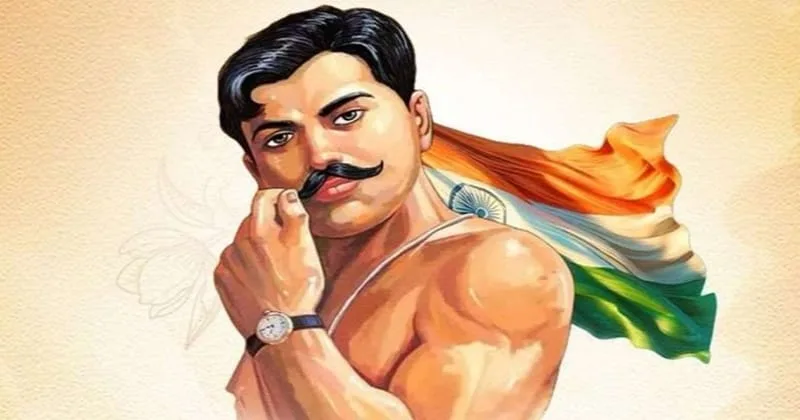
On the death anniversary of Chandrashekhar Azad, the nation remembers the indomitable revolutionary who lived and died for India’s freedom. A symbol of courage and defiance, Azad chose martyrdom over capture, immortalising his name in the annals of the freedom struggle.
February 27 marks the day in 1931 when Chandrashekhar Azad laid down his life at Alfred Park in Allahabad, now known as Chandrashekhar Azad Park. Surrounded by British police, wounded and with only one bullet left, Azad kept his pledge that he would never be taken alive. He shot himself, upholding his vow to remain “Azad”, free, till his last breath.
Born on July 23, 1906, in Bhavra village (present-day Madhya Pradesh), Azad was drawn into the freedom movement as a teenager. At just 15, he was arrested during the Non-Cooperation Movement launched by Mahatma Gandhi. When produced before a magistrate and asked his name, he famously declared it to be “Azad,” his father’s name as “Swatantrata” (Freedom).
However, after the withdrawal of the Non-Cooperation Movement, Azad grew disillusioned with constitutional methods and gravitated toward revolutionary nationalism. He joined the Hindustan Socialist Republican Association (HSRA), working closely with revolutionaries like Bhagat Singh, Ram Prasad Bismil, and Sukhdev Thapar.
Azad played a key role in reorganising the HSRA after the Kakori conspiracy case of 1925, which led to the execution and imprisonment of several revolutionaries. Determined to intensify the armed struggle against British rule, he helped plan actions aimed at challenging colonial authority. Though often operating from the shadows, Azad was the backbone of the revolutionary network in northern India.
He was also involved in the events following the death of Lala Lajpat Rai, who succumbed to injuries after a brutal lathi charge during protests against the Simon Commission. In retaliation, Bhagat Singh and his associates assassinated British officer J.P. Saunders in 1928, an action that Azad supported and helped facilitate as part of the broader revolutionary strategy.
Azad’s life was marked by discipline, secrecy, and unwavering resolve. Despite constant pursuit by the British, he evaded arrest for years. His final encounter came on February 27, 1931, when he was betrayed and cornered in Alfred Park. Engaging in a fierce gun battle, he ensured the escape of a fellow revolutionary before embracing martyrdom.