

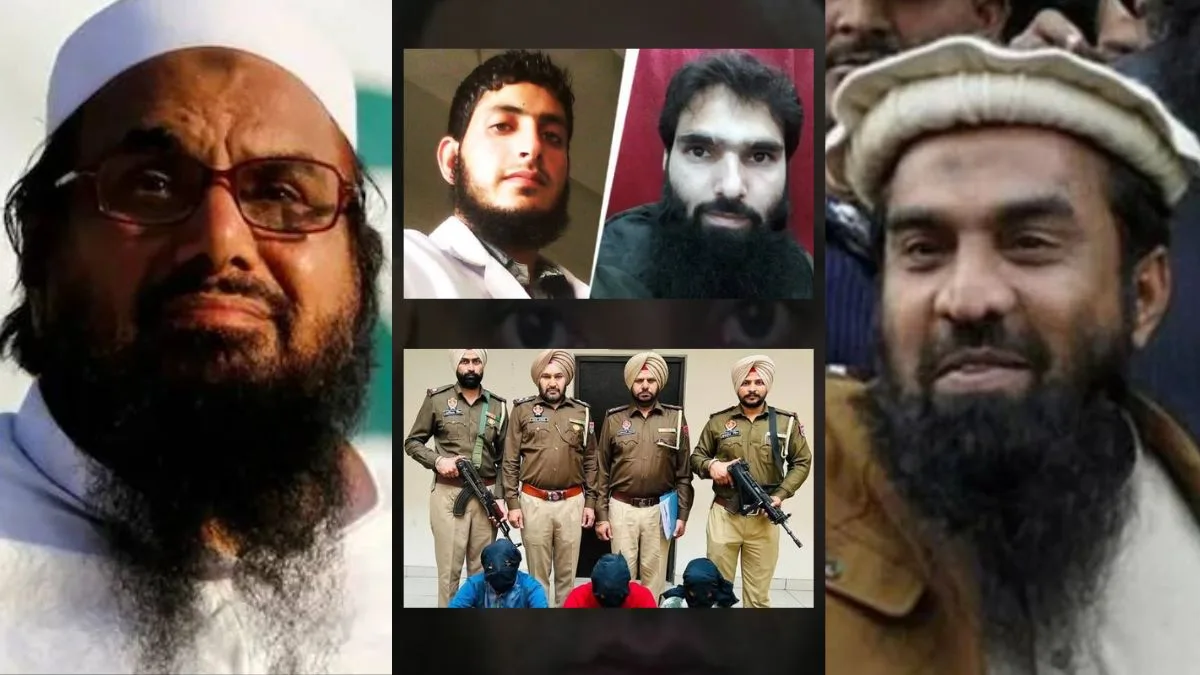
For the past 12 years, Bharat has remained focused on combating terrorism. The approach it has adopted has expanded significantly in scope and effectiveness, becoming more structured and difficult to penetrate. Over time, this strategy has evolved into a more professional, coordinated, and systematic framework for counter-terror operations.
The most significant aspect of this effort is the coordination among different agencies in countering terrorism, guided by a clear focus on early detection and disruption of plots before they are executed. Moreover, the budget allocations for counter-terror efforts between 2014 and 2026 warrant closer examination.
Impressive Budget Allocation for IB from 2014 – 2026
Between 2014-15 and 2026-27, the Intelligence Bureau’s budget rose from ₹1,176.43 crore to ₹6,782.43 crore. In simple terms, that is an increase of ₹5,606 crore over twelve years —- a rise of nearly 476%, translating into almost a fivefold expansion in nominal allocation. This is not just routine expansion. It points to a clear shift in how India views internal security.
Between 2014 and 2026, India focused more on using intelligence to stop terror attacks before they happened. Agencies like the Intelligence Bureau (IB), National Investigation Agency (NIA), state Anti-Terror Squads (ATS), and other intelligence units worked together to break up many terror plots at an early stage.
They targeted ISIS-linked groups, Pakistan-backed networks, Left-Wing Extremist supply chains, and sleeper cells operating in cities.
From Reaction to Prevention: Bharat’s New Counter-Terror Strategy
Over the past decade, the country’s counter-terror strategy has moved away from reacting after an attack to stopping plots before they unfold.
A pattern is visible between 2016 and 2026. Security agencies repeatedly intercepted terror modules before execution. IEDs were recovered before detonation. RDX consignments were seized before deployment. Grenades, detonators, assault rifles and encrypted communication trails were uncovered during intelligence-led raids. It has to be noted that these were not investigations following explosions; they were preventive operations.
Another striking feature is coordination. The Intelligence Bureau, National Investigation Agency (NIA), state Anti-Terror Squads, Special Cells and local police units increasingly worked together. Intelligence sharing triggered simultaneous raids across states. Entire modules were dismantled in one sweep instead of piecemeal arrests. Counter-terror operations became integrated rather than compartmentalised.
Punjab and Pakistan backed Proxy attempts
Between 2022 and 2026, Punjab appears repeatedly in connection with Pakistan-backed proxy attempts. Modules linked to Babbar Khalsa International, ISI-supported grenade plots and handlers operating from Canada, Malaysia and Pakistan suggest renewed cross-border coordination. The objective appears less about large-scale warfare and more about sustained disruption.
Jammu and Kashmir, however, shows a different trajectory. According to the report’s figures, terror incidents fell by around 70 percent during the period. Civilian deaths dropped by roughly 80 percent, and security force casualties declined by nearly 90 percent. Stone-pelting incidents, once numbering over 1,300 in 2018, reportedly fell to near zero. If these figures hold, they indicate a significant shift in ground realities rather than temporary suppression.
From Massive RDX Caches to Micro-Cells: The Changing Face of Terror
The nature of the threat has also evolved. In 2016, cases involved large caches of explosives — 40 kg stockpiles, buried RDX consignments, and substantial quantities of detonators. In more recent years, agencies have increasingly exposed smaller cells planning grenade attacks, using compact IEDs and relying heavily on encrypted platforms for recruitment and coordination.
This reflects a tactical change. Large, coordinated bombings are harder to execute under tighter surveillance. Instead, networks appear to rely on smaller, decentralised modules capable of quick, targeted strikes. These operations are cheaper, harder to trace and often directed remotely.
The intelligence response has adapted accordingly. Greater emphasis is placed on digital surveillance, monitoring encrypted communication, tracking suspicious financial flows and identifying radicalisation patterns online. Pre-emptive arrests have become central to the strategy.
Latest Case Exposes a Shift in Terror Modus Operandi
The February 2026 case in Delhi — where the Special Cell dismantled a Lashkar-e-Taiba-linked module connected to a Bangladesh-based handler — illustrates this shift. Recruitment, propaganda circulation, forged documents and remote command structures are now central features of modern terror logistics. Physical training camps matter less than encrypted messaging channels.
Funding the Shift: How Rising Allocations Back Intelligence Modernisation
The rising budget aligns with these operational demands. Expanding cyber capabilities, investing in signal intelligence, building inter-agency data-sharing systems, strengthening forensic labs and training specialised personnel all require sustained funding. The dramatic increase in allocation likely reflects this modernisation.
Core question: Has higher spending translated into measurable security gains?
One way to assess this is through prevention. Successful interception rarely attracts attention because nothing explodes. But stopping a plot before execution is arguably the clearest indicator of intelligence effectiveness. The repeated busting of modules across multiple states suggests a consistent pattern of early disruption.
Deterrence
Another indicator is deterrence. If hostile networks are forced to operate through fragmented, low-scale cells rather than coordinated mass attacks, it may signal that the cost of large operations has risen significantly for them.
Stability trends also matter. If the reported decline in violence in Jammu and Kashmir is sustained, it would strengthen the argument that intelligence-led policing has contributed to long-term security consolidation.
Below are some of the major operations foiled by security agencies. In total, there have been 22 terror plots thwarted since 2016.
- Punjab CI Busts BKI Linked Extortion and Firing Module in Jalandhar – February 25, 2026
- Delhi Police Bust Lashkar-e-Taiba Module Operating Across States, Bangladesh-Based Handler Linked to Hafiz Saeed – February 22, 2026
- Punjab Police Foil Pakistan Backed Terror Plot, Arrests One with IED – February 11, 2026
- Delhi Police Bust Pakistan Linked Terror Module Planning Grenade Attacks – December 1, 2025
- Punjab Police Bust ISI Pakistan Grenade Attack Module, Arrest 10 Operatives – November 13, 2025
- 2,900 kg Explosive Chemical Seized from Faridabad Doctors Linked to Terror in Faridabad – November 9, 2025
- Jalandhar Police Bust BKI Terror Module, Seize 2.5 kg RDX IED – Oct 09, 2025
- Police recovered over 2075 kg of explosives seized in Jaipur Rural – May 11, 2025
- Al-Qaeda Inspired Terror Module Busted Across Multiple States – August 22, 2024
Taken together, these elements suggest that India’s counter-terror architecture has become more integrated and intelligence-driven over the past decade. The emphasis appears to be on early detection, rapid coordination and disruption before execution.