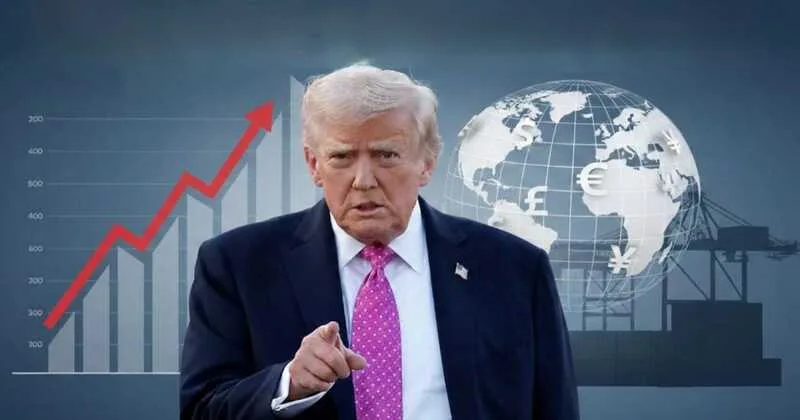
The fallout from the US Supreme Court’s decision to strike down President Donald Trump’s sweeping reciprocal tariffs continues to reverberate across global markets, but the ruling has yet to translate into practical relief for importers. Although the court effectively invalidated the tariffs that Trump had unilaterally imposed on multiple countries, businesses are still paying them. The reason is procedural that US Customs and Border Protection (CBP) has not updated its Cargo Systems Messaging Service to reflect the revised tariff structure. As a result, the previous rates remain operational at ports of entry. According to reports, Customs has only indicated that it is working to modify its systems in line with the newly announced 15 per cent global tariff. At the same time, countries are recalibrating its trade strategy, viewing the legal and political setback faced by Trump as an opportunity to secure more favourable terms in ongoing trade discussions.
India reassesses trade talks as tariff uncertainty deepens
India and the United States were scheduled to hold negotiations in Washington this week on an interim trade agreement. However, reports suggest that India has decided not to proceed with the visit for now, preferring to delay talks until there is greater clarity in Washington. Under the proposed interim arrangement, Trump had earlier reduced tariffs on Indian goods from 50 per cent to 18 per cent. Following the Supreme Court’s ruling, that rate was brought down further to 10 per cent under the broader global tariff structure, before being raised again to 15 per cent. Even this 15 per cent rate may not be final.
Trump announced that a 15 per cent global tariff would be imposed for 150 days under Section 122 of the Trade Act of 1974. However, questions have emerged over whether this provision gives the president the authority to impose blanket tariffs on all countries. The legal ambiguity has added another layer of uncertainty to global trade.
The Supreme Court’s intervention effectively dismantled the advantage Trump had gained by aggressively deploying tariffs against several major economies, including China, the United Kingdom, the European Union, Mexico, and India. The ruling is said to have deeply angered him.
In the wake of the judgment, Indian negotiators are expected to seek additional concessions from the United States in any future interim trade agreement. The central government appears willing to wait until Washington is prepared to offer terms more favourable to Indian interests.
Trump’s frustration was compounded by three major setbacks on the same day: a sharp and unexpected decline in US GDP, a surge in inflation, and the Supreme Court’s decision invalidating key tariffs. He blamed the Democrats for the economic slowdown and accused certain Supreme Court judges of acting in an anti-American manner by striking down the tariff measures.
Markets React: Gold rises, oil slips
Financial markets responded swiftly to the renewed trade uncertainty. With Trump’s tariff strategy thrown into doubt, investors once again turned to gold as a safe-haven asset. Demand strengthened, particularly through gold exchange-traded funds (ETFs), as well as silver ETFs. International gold prices climbed to $5,165 per ounce in early trading, up by more than $105. If this upward momentum continues, gold prices are expected to rise in India as well. Silver prices are also projected to advance. In contrast, crude oil prices fell after Oman announced that the next round of nuclear talks between Iran and the United States would take place in Geneva on Thursday. The prospect of diplomatic engagement eased supply concerns in energy markets.
US West Texas Intermediate (WTI) crude declined by 0.86 per cent to $65.91 per barrel. Brent crude slipped 0.65 per cent to $71.29. UAE’s Murban crude, which Indian companies have been purchasing in significant quantities as an alternative to Russian oil, also edged down to $72.06 per barrel.
Stocks volatile amid trade and geopolitical signals
US equity markets had posted strong gains on Friday following the Supreme Court ruling, as investors initially welcomed the prospect of easing trade tensions. However, futures markets turned negative on Monday amid lingering uncertainty. Although Trump stated that the 15 per cent global tariff would take effect soon, no final executive order has yet been issued. The absence of formal clarity has unsettled investors. In futures trading, the Dow Jones Industrial Average fell 0.2 per cent, the S&P 500 index dropped 0.23 per cent, and the Nasdaq Composite declined 0.34 per cent. Trump’s indication that additional tariffs may be introduced in the coming months has further complicated the outlook.
Many investors had hoped the court’s decision would pave the way for improved relations between the United States and its trading partners. Instead, Trump’s renewed tariff announcement has revived uncertainty. Markets are also closely monitoring the upcoming Iran-US nuclear talks for broader geopolitical signals.
Meanwhile, Indian markets appear poised for gains. With the effective tariff exposure on Indian exports to the US reduced from 50 per cent to at least 15 per cent following the court’s intervention, sentiment has improved. Gift Nifty was trading 190 points higher in early indications, signalling a likely rise in both the Sensex and the Nifty indices.
Overseas markets also reflected cautious optimism about potential tariff relief. South Korea’s KOSPI index rose 1.7 per cent to a record high, marking its third consecutive day of record-breaking gains. Chinese and Japanese markets were closed for the day. Australian stocks advanced 0.17 per cent.
In the cryptocurrency space, Bitcoin fell 5 per cent, slipping below the $65,000 mark.
Taken together, the developments underscore a period of heightened volatility in global trade and financial markets. While the Supreme Court ruling delivered a significant blow to Trump’s tariff strategy, the absence of administrative follow-through and the introduction of a fresh 15 per cent global tariff have prolonged uncertainty. As India recalibrates its negotiating stance and markets react to shifting policy signals, the coming weeks are likely to prove critical for international trade relations and investor confidence.