Budget 2026 calls for stability in the stock market over speculation
July 14, 2026
  • Read Ecopy
  • Circulation
  • Advertise
  • Careers
  • About Us
  • Contact Us
Android AppiPhone AppArattai
Organiser
  • ‌
  • Bharat
    • Assam
    • Bihar
    • Chhattisgarh
    • Jharkhand
    • Maharashtra
    • View All States
  • World
    • Asia
    • Europe
    • North America
    • South America
    • Africa
    • Australia
  • Editorial
  • International
  • Opinion
  • RSS @ 100
  • More
    • Op Sindoor
    • Analysis
    • Sports
    • Defence
    • Politics
    • Business
    • Economy
    • Culture
    • Special Report
    • Sci & Tech
    • Entertainment
    • G20
    • Azadi Ka Amrit Mahotsav
    • Vocal4Local
    • Web Stories
    • Education
    • Employment
    • Books
    • Interviews
    • Travel
    • Law
    • Health
    • Obituary
  • Subscribe
    • Subscribe Print Edition
    • Subscribe Ecopy
    • Read Ecopy
  • ‌
  • Bharat
    • Assam
    • Bihar
    • Chhattisgarh
    • Jharkhand
    • Maharashtra
    • View All States
  • World
    • Asia
    • Europe
    • North America
    • South America
    • Africa
    • Australia
  • Editorial
  • International
  • Opinion
  • RSS @ 100
  • More
    • Op Sindoor
    • Analysis
    • Sports
    • Defence
    • Politics
    • Business
    • Economy
    • Culture
    • Special Report
    • Sci & Tech
    • Entertainment
    • G20
    • Azadi Ka Amrit Mahotsav
    • Vocal4Local
    • Web Stories
    • Education
    • Employment
    • Books
    • Interviews
    • Travel
    • Law
    • Health
    • Obituary
  • Subscribe
    • Subscribe Print Edition
    • Subscribe Ecopy
    • Read Ecopy
Organiser
  • Home
  • Bharat
  • World
  • Operation Sindoor
  • Editorial
  • Analysis
  • Opinion
  • Culture
  • Defence
  • International Edition
  • RSS @ 100
  • Magazine
  • Read Ecopy
Home Bharat

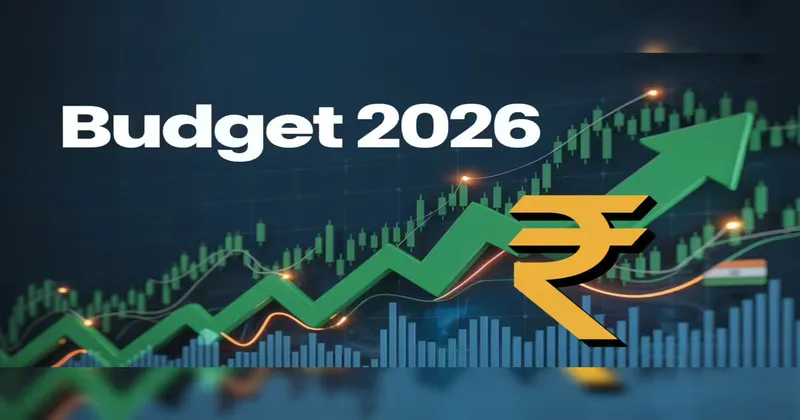
Budget 2026 calls for stability in the stock market over speculation

This is not a budget that aimed to kick-start the markets through speculative trading cycles or provides instant gratification to equity markets. Rather, it is a budget that has its heart set on long-term capital formation, real-sector productivity; focus on key areas of the future economy and a consequent rebalancing of the growth model in India to move away from the dangers of over-financialization

Dr. Rajeev K UpadhyayDr. Rajeev K Upadhyay
Feb 22, 2026, 07:00 pm IST
in Bharat, Analysis, Opinion, Economy
Follow on Google News
Representative Image

Representative Image

FacebookTwitterWhatsAppTelegramEmail

The government has proposed an increase in the Security Transaction Tax (STT) on futures and options trading in the stock market in the Union Budget 2026. STT on futures has been increased from 0.02 per cent to 0.05 per cent, a 150 per cent increase over the existing rate. Similarly, on option trading, there is an increase from 0.1 per cent to 0.15 per cent on the sale of options (premium) and 0.125 per cent to 0.15 per cent on the sale of options(exercised). This triggered a sudden sell-off on Dalal Street on February 1, 2026, the Budget Day, following an increase in STT. This response by the market, at first, may seem to be counterintuitive but is, in fact, completely expected and in line with the long-term goals of the economy and the self-sufficiency of the stock market.

It is important to understand what the Budget has to offer the markets in the short term, but also what it deliberately chose to offer in the long term. This is not a budget that aimed to kick-start the markets through speculative trading cycles or provides instant gratification to equity markets. Rather, it is a budget that has its heart set on long-term capital formation, real-sector productivity; focus on key areas of the future economy and a consequent rebalancing of the growth model in India to move away from the dangers of over-financialization.

Over the last five years, the Indian markets have seen an unprecedented rise in retail participation, especially in the futures and options(F&O) market. Data from SEBI shows that over 90 per cent of retail participants in the derivatives market have been making losses consistently, with average annual losses per participant crossing ₹1 lakh. What is even more alarming is that a significant number of these participants are under the age of 30, using borrowed money or savings that are meant for education, housing, business or consumption. The Budget’s underlying message is that the demographic dividend of India cannot be frittered away in zero-sum games of speculation, masquerading as wealth creation.

Budget 2026 aims at manufacturing and skilling of the youth

Budget 2026, therefore, is a strategic move to detox the youth’s engagement with the financial markets, encouraging more investment in productive sectors rather than in leveraged speculation. This is why traders, especially those aligned with short-term liquidity splashes, tax arbitrage, or policy-driven rallies, were disappointed. The lack of concessions for speculative capital, along with a strong emphasis on infrastructure, skilling, manufacturing and mobilising domestic savings, upset the ‘buy-the-rumour’ market sentiment. It is very important to keep the investors away from the habit of ‘buy-the-rumour’ sentiment, as in the long term, it erodes value rather than creating it.

However, what is important to note is that Budget 2026 marks a transition in trust from volatile foreign capital inflows to more stable domestic institutional capital. Over the past decade, there has been a positive change in the Indian stock market. The Domestic Institutional Investors(DIIs), such as mutual funds, insurance companies and pension funds, have become the pillars of the Indian capital markets. This change is pro-India as the Indian stock market now does not depend completely on Foreign Institutional Investors(FII). There has been a lot of volatility in the Indian stock markets and the average annual return from India stock market has been relatively lower among major economies.

The volatility and relatively lower return were mainly caused by the sudden outflows by the FIIs rather than macroeconomic realities. The increased participation of DIIs has deepened the markets and these DIIs often offset the sudden outflows. For instance, in FY 2025, DIIs invested over ₹2.3 lakh crore in equities, which eventually helped in stabilising the markets. Budget 2026, therefore, implicitly reinforces this trend by emphasising long-term domestic savings, retirement and insurance penetration rather than being sensitive to global risk-on/risk-off cycles.

Also Read: Bharat Unveils Indigenous AI Powerhouse: Sarvam, Gnani.ai and BharatGen lead the sovereign AI revolution

India aims for sustainable productivity gains

Markets, however, are conditioned to react negatively to a policy that emphasises patience over immediacy. A budget that focuses on the real economy by allocating funds for the expansion of human capital, physical infrastructure, industrial capacity, technological upgradation and a futuristic economic structure often doesn’t translate into immediate corporate profits or stock price gains. Anything that does not offer immediate benefits to traders in the market, it attracts a negative response.  However, history shows that a bull market built on sustainable productivity gains and not leverage-driven speculation, is the only one that lasts. The Indian experience during the investment-driven growth era of the early 2000s is testimony to this.

What makes Budget 2026 special is its ideological positioning against the unbridled growth of financialization. There has explosion of financialization of economies across the globe and India has been responding to these changes. In the past decade, India witnessed increased use of complex financial instruments, tokenisation, as well as paper claims of real assets and algorithmic trading, which are often decoupled from the economic value of the assets. The financial sector is an important sector for any economy, but overfinancialization increases risk, which ends up losing its moorings in the real world. Budget 2026’s refusal (increase in security transactions tax) to fuel this trend is a quiet but strong statement on the need to balance finance and production.

Going forward, it is the need of the hour that the government further imbues this spirit. The detoxing of the financial system will require not only discouraging the speculative tendencies of the market but also resisting the early tokenisation of hard assets, managing the leverage of retail trading, and aligning the financial system’s incentives with the long-term needs of the nation. Capital must once again be made the servant of growth, not the master.

In this light, Budget 2026 must not be measured by the market’s performance on one particular day, as the market has already rallied due to the positive news of the US-India trade deal. The true measure of success will lie in its ability to steer the youthful passion from trading screens to labs, factories, startups and skill development centres and in its ability to slowly resist an economy that is drifting towards over-financialization.


Topics: Indian EconomyStock MarketEconomic GrowthinvestmentEquity marketManufacturingUnion Budget 2026
ShareTweetSendShareSend
✮ Subscribe Organiser YouTube Channel. ✮
✮ Join Organiser's WhatsApp channel for Nationalist views beyond the news. ✮
Previous News

Temples in Delhi and UP on terror radar: Intelligence flags Pakistan backed Lashkar-Jaish plot

Next News

From Welfare to Workforce: Rethinking disability inclusion in India’s growth story

Related News

Prime Minister Narendra Modi and New Zealand Prime Minister Christopher Luxon

India-New Zealand Strategic Partnership: A new horizon for New Delhi’s economic diplomacy

Prime Minister Modi pitches greater economic partnership during his visit to Australia

PM Modi’s Australia Visit: Critical minerals, clean energy, semiconductors & AI power futuristic economic partnership

US Justice Department dismisses charges against Gautam Adani; Urges court to drop the case as it is legally flawed

India-Japan Joint Economic Forum, New Delhi

Japan invests 2tn JPY in India; 400K tonne green ammonia push for energy security; PM Modi unveils Japan Business Week

Japanese Prime Minister Sanae Takaichi recieves a ceremonial welcome at Rashtrapathi Bhavan, New Delhi

India-Japan Annual Summit: 150 firms commit $12.5bn investment; Maritime security, economy & tech ties on the agenda

The Alchemy of Autarky: How India rewrote its economic destiny

Load More

Latest News

J&K unit of BJP has filed the defamation case against the CM Omar Abdullah

J&K: BJP serves Rs 100-crore defamation notice to CM Omar for making allegations of bribery to NC legislators

(Left) CDS Gen N S Raja Subramani (Right) Union Defence Minister Rajnath Singh

Bharat’s bold leap towards Integrated Theatre Commands: CDS Gen Subramani pushes historic military reform

A delegation of Hindu Aikyavedi met Chief Minister VD Satheeshan

Keralam: Hindu Aikyavedi delegation meets CM, submits resolutions adopted at Hindu leadership conclave

IED blast targets Assam Rifles Convoy in Nagaland; One martyred

IED attack on Assam Rifles convoy in Nagaland; One soldier martyred, four injured; CM Rio terms it cowardly act

Representative Image

PoJK protests hit White House as Kashmiri diaspora shouts anti-Pakistan slogans; Muzaffarabad rises against abuse

Home Minister Amit Shah laying foundation stone for 125-foot Dr Syama Prasad Mookerjee statue in Kolkata

Dr Syama Prasad Mookerjee: Not just a statue but the foundation of Sonar Bangla

Indian mathematician T A Sarasvati Amma

The Woman Who Rewrote Mathematical History: The extraordinary journey of T A Sarasvati Amma

The people in Pakistan-occupied Jammu Kashmir (PoJK) are rising against Pakistan's brutality

POJK Unrest: Azad or gulam

Prime Minister Narendra Modi (Left) and Indonesian President Prabowo Subianto (Right)

PM Modi’s Indonesia Visit: Threads from the past, transformation for future

PoJK: Uprising against continued colonisation

Load More
  • Privacy
  • Terms
  • Cookie Policy
  • Refund and Cancellation
  • Delivery and Shipping

© Bharat Prakashan (Delhi) Limited.
Tech-enabled by Ananthapuri Technologies

  • Home
  • Search Organiser
  • Bharat
    • Assam
    • Bihar
    • Chhattisgarh
    • Jharkhand
    • Maharashtra
    • View All States
  • World
    • Asia
    • Africa
    • North America
    • South America
    • Europe
    • Australia
  • Editorial
  • Operation Sindoor
  • Opinion
  • Analysis
  • Defence
  • Culture
  • Sports
  • Business
  • RSS @ 100
  • Entertainment
  • More ..
    • Sci & Tech
    • Vocal4Local
    • Special Report
    • Education
    • Employment
    • Books
    • Interviews
    • Travel
    • Health
    • Politics
    • Law
    • Economy
    • Obituary
  • Subscribe Magazine
  • Read Ecopy
  • Advertise
  • Circulation
  • Careers
  • About Us
  • Contact Us
  • Policies & Terms
    • Privacy Policy
    • Cookie Policy
    • Refund and Cancellation
    • Terms of Use

© Bharat Prakashan (Delhi) Limited.
Tech-enabled by Ananthapuri Technologies