
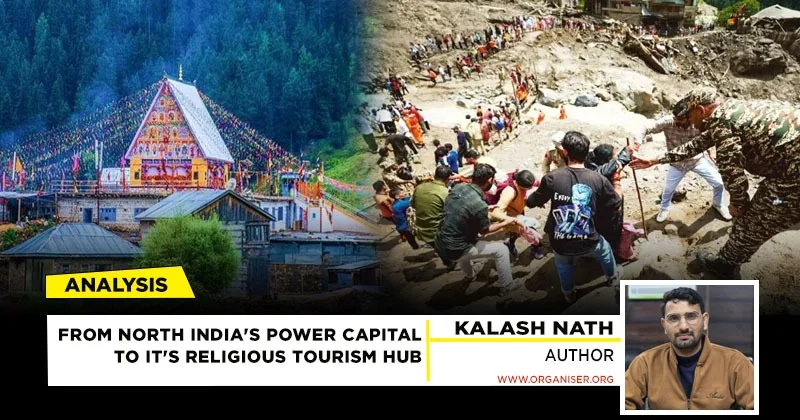
Kishtwar, July 2026: Once celebrated as the “Power Hub of North India” for its massive hydroelectric potential, Kishtwar is now witnessing another remarkable transformation. The district is steadily emerging as one of North India’s most significant religious tourism destinations, with ancient temples, sacred caves, historic pilgrimages and growing tourist footfall contributing to the local economy and preserving the region’s rich cultural heritage.
The Machail Mata Yatra, the largest religious pilgrimage in Jammu & Kashmir, has become the driving force behind this transformation. In 2025, despite adverse weather conditions and cloud burst in which 68died and more then 30 is missing 300 injured, 2,26,725 devotees visited the shrine. This year, even before the official commencement of the yatra, more than one lakh pilgrims had already offered prayers, reflecting the growing faith of devotees from across the country.
Kishtwar – Home to ancient shrines
Kishtwar’s religious importance extends far beyond Machail. The district is home to several ancient shrines, including Sarthal Mata Mandir Shri Ashtadash Bhuja Mata , Gauri Shankar Temple, Hudh Mata Cave Shrine, Bhandarkoot Temple, Bindraban Temple, Parna Ashtadashbhuja Mata Temple and Naidgam Shiv Gufa.
Local traditions also associate parts of Kishtwar with the Pandavas’ exile, while the broader history of the Chandrabhaga Kishtwar itself is a city located on a Chandrabhaga which is symbol of love According to ancient Himalayan folklore and oral history of Lahauli people, Chandra (the daughter of the Moon god) and Bhaga (the son of the Sun god) fell deeply in love.
To fulfill their eternal union, they both descended down opposite sides of the Bara-Lacha La Pass and ran toward each other. They met at Tandi, merging into a single stream to complete their celestial marriage. Chandrabhaga is recorded in historical works such as Rajatarangini by Kalhana and later historical studies of Kashmir.
The Sarthal Mata Temple kul devi of Hindus in Kishtwar region from Signpora, Sinthan to Thatri , situated around 30 kilometres from Kishtwar town, attracts 1,000–2,000 devotees daily, while the annual Sarthal Devi Yatra draws nearly 50,000–60,000 pilgrims.
Many families perform the first haircut ceremony of their children at the temple, and devotees return after the fulfilment of their wishes. Religious tourism has created significant livelihood opportunities, with local families operating homestays, shops and transport services that sustain hundreds of households.
Historic Gauri Shankar Temple
Similarly, the historic Gauri Shankar Temple, located in the heart of Kishtwar town, serves as the traditional starting point for pilgrims visiting Machail Mata, Sarthal Mata and other shrines. More than 2,000 devotees visit the temple every day, benefiting local businesses.
However, the historic lake adjoining the temple requires urgent restoration and conservation to preserve its heritage value. According to Mahant Ram Sharan Dass Ji Maharaj who is the priest of said temple from more than 15 years and now Sanatan Dharam Sabha president of Kishtwar said that this a very powerful destination of spiritual power Centered around the historic Gauri Shankar Temple (also known as the Sarkoot Mandir), it is dedicated to Lord Shiva and Goddess Parvati Historically named after Saint Shri Paul (originally Shrikut), this site serves as the literal launching pad for famous region-wide pilgrimages, including the Sarthal Devi Yatra and the Machail Mata Yatra.
Hudh Mata Trisandhya Yatra in Dachhan
The Hudh Mata Trisandhya Yatra in Dachhan is another major pilgrimage gaining prominence. According to local belief, the cave shrine contains natural ice formations representing Lord Shiva, Goddess Parvati and Lord Ganesha, while the nearby Trisandhya River is revered for its unique flow. The District Administration has organised the 2026 yatra from 15 to 23 July, with thousands of pilgrims participating.
Other important religious centres, including Bhandarkoot, associated in local tradition with Lord Rama and Jatayu, Parna Ashtadashbhuja Mata Temple, and Naidgam Shiv Gufa, continue to attract thousands of devotees annually, highlighting Kishtwar’s immense spiritual heritage.
A few decades ago, Kishtwar remained relatively isolated due to poor connectivity, limited infrastructure, and the security challenges posed by militancy. The district witnessed decades of terrorism, from the killing of Late Subhash Chand on August 19, 1992, to terror-related incidents continuing until November 7, 2024.
Kishtwar district has paid a heavy price for terrorism over the years, with 304 civilians reportedly losing their lives in terror-related incidents. The prolonged violence has triggered migration, weakened the local economy, and hindered the district’s overall development.
Tourism, particularly Hindu religious tourism, has also been severely affected. Many pilgrims and visitors remain hesitant to travel to Kishtwar because of security concerns, while local residents often fear openly promoting their cultural traditions and religious practices.
Following the Pahalgam terror attack, several tourist destinations in Kishtwar, along with many across Kashmir, witnessed a sharp decline in visitors and temporary closures, further impacting the livelihoods of people dependent on tourism.
Today, improved roads, better security and increased government attention have transformed the district into a growing destination for religious tourism. The rise in pilgrim numbers has generated employment for transport operators, shopkeepers, hotel owners, homestays, guides and other small businesses, strengthening the local economy.
I would like to share an incident that has stayed with me. While covering an Army-related event, I met a woman officer who shared a remarkable perspective on Kishtwar. She had often wondered why so many people from Kishtwar and its adjoining areas migrated to metropolitan cities.
According to her, after personally visiting the area, she came to regard Kishtwar as one of the most unique places in India, where one can feel a direct connection with God and attain moksha (salvation).
She said, “I believe those who are born here are already blessed by God. I don’t want to be transferred from here. I want to spend my entire life in Kishtwar and visit more than 90% of its religious sites.”
Kishtwar Poised to Become North India’s Next Major Religious Tourism Hub
Experts believe that Kishtwar has the potential to emerge as one of North India’s leading religious tourism destinations, provided adequate infrastructure is developed and heritage conservation measures are implemented. Key priorities include improving road connectivity to pilgrimage sites, developing quality accommodation, restoring historic temples and water bodies, strengthening sanitation and waste management, establishing medical and emergency facilities along pilgrimage routes, promoting digital tourism, and creating an integrated Kishtwar Spiritual Circuit linking all major shrines.
Training local youth in tourism and hospitality and encouraging eco-friendly development would further enhance the district’s tourism potential. Religious tourism represents not only a source of spiritual fulfilment but also a powerful engine of economic growth.
It creates employment, supports local entrepreneurship and helps preserve cultural heritage. With coordinated efforts by the administration, local communities and stakeholders, Kishtwar can build upon its legacy as the Power Hub of India while establishing itself as North India’s premier religious tourism destination.