

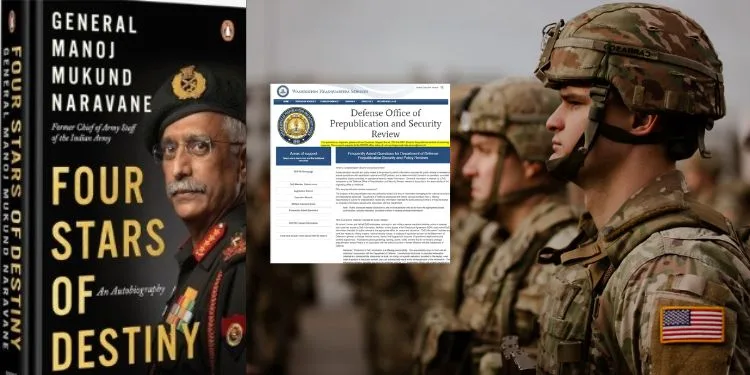
The Centre is reportedly considering a 20-year cooling-off period that would restrict senior serving and retired armed-forces officers from publishing books or memoirs about sensitive subjects for two decades after leaving service. The move follows controversy over a retired Army chief Naravane’s unpublished memoir and aims to close a legal “grey area” governing retirees’ publication. The proposal is said to apply to senior military and government officials and be formalised into rules affecting book publication post-service.
What are the Current Legal Provisions?
Retired officers are not automatically banned from writing books. However, the Official Secrets Act still applies to them even after retirement. Sharing confidential or sensitive information remains a criminal offence. The Official Secrets Act, 1923 already makes it illegal to reveal defence secrets, even after retirement. The Act covers all government employees, including armed forces personnel. Senior officers have access to large amounts of sensitive information.
Serving officers must take official permission before publishing anything. Now, the government is considering whether retired officers should also wait for a fixed period before publishing, to avoid any risk to national security or diplomatic relations.
Now, the government is considering whether retired officers should also wait for a fixed period before publishing, to avoid any risk to national security or diplomatic relations.
India does not have a clear and time-bound system for declassifying military records. In many cases, war records and operational files remain classified for decades.
In 2019, a policy suggested that records older than 25 years should be reviewed before being sent to the National Archives. This shows that official information is often treated as sensitive for a long time.
What is being proposed?
According to reports, the government is examining a framework that would prevent retired senior officers from publishing books or memoirs concerning sensitive operational, strategic or policy matters for up to two decades after demitting office. While serving officers already require prior permission to publish and remain bound by the Official Secrets Act even after retirement, the proposal would formalise a time-bound restriction.
Supporters argue the proposal plugs gaps in the current system. Critics argue it introduces an unprecedented blanket delay.
How other countries handle publications by former military personnel
Many countries control what retired military officers can write to protect sensitive information. They usually do this by asking former officers to submit their books for review before publishing. They may also require lifelong secrecy promises. If someone reveals classified information, they can face punishment under official secrets or espionage laws. Authoritarian countries are generally stricter and place heavier restrictions on such writings.
United States of America
According to the US Department of Defense’s official website for the Defense Office of Prepublication and Security Review (DOPSR), there is no general ban. However, former service members are subject to lifelong prohibitions on revealing classified information. All current, former, and retired DoD employees, contractors, and military service members (whether active or reserve) who have had access to DoD information, facilities, or who signed a Non-Disclosure Agreement (NDA) must submit DoD information intended for public release to the appropriate office for review and clearance.
The Department of Defense runs a pre-publication security review process for manuscripts by current and former personnel; criminal statutes (including sections of the Espionage Act and 18 U.S.C. §798) can apply if classified material is disclosed. Authors must often submit drafts for review; disputes over the scope of review have reached U.S. courts.
United Kingdom
As per the UK Parliament research briefing published on the official Parliament website. The Official Secrets Acts create criminal offences for unlawful disclosure by present and former government employees. Retired military personnel must follow the Official Secrets Act 1989. This law bans them from sharing sensitive information without permission. The rule applies for life. It covers matters related to national security, defence and international relations.
Some personnel, such as those in special forces, may have signed extra agreements. These can require approval from the Ministry of Defence before publishing certain material.
They are free to write on non-sensitive topics. However, books or articles dealing with security matters are usually checked before publication. The UK does not use a blanket post-service publishing ban, but legal obligations and possible prosecution for disclosing protected information act as strong constraints.
Australia
Similar to the UK, restrictions stem from the Crimes Act and Defence-specific rules requiring pre-approval for publications containing classified info. Retired personnel submit materials to Defence for review if sensitive. No long cooling-off period; emphasis is on redaction and clearance for non-sensitive content. Recent laws (e.g., 2023 amendments) focus more on foreign work restrictions than publications.
France
French retired military personnel are bound by the “duty of reserve” under the Code of Defense, prohibiting public expressions that could undermine neutrality or disclose sensitive info. Publications may require Ministry approval if related to military matters.
Conclusion
The debate also comes at a time when India’s strategic footprint is expanding. Greater international engagement, defence partnerships and joint operations increase the sensitivity of certain disclosures.
Some security analysts argue that a structured cooling-off period may help align India’s disclosure regime with emerging global security risks.
At its core, the issue is about protecting sensitive military information, which is unquestionably essential. Military plans, intelligence inputs, operational details, and strategic assessments are not ordinary information. If such details are disclosed, even unintentionally, they can compromise national security, endanger personnel, weaken defence preparedness, and provide adversaries with critical insights.