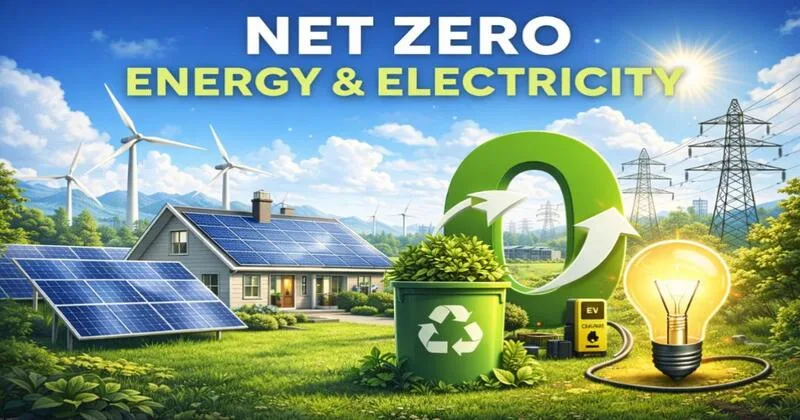
The journey of Bharat towards achieving a developed nation status by 2047, Viksit Bharat, will not be driven only by economic development but by changes in the country’s power sector. The power sector today is not only a service sector but the spine of the development of industry, information technology, transportation and security. The power sector will be the key driver in achieving the net-zero emissions target by 2070.
The recent report by the NITI Aayog Scenarios Towards Viksit Bharat and Net Zero-Sectoral Insights offered a comprehensive vision of how the power sector in India will look in the coming decades. This is an unprecedented challenge. It includes the need to augment the capacity many times over and shift the energy mix to clean energy sources. Upgradation of the transmission infrastructure and adopting world-class technologies such as energy storage systems, digital grids and advanced nuclear technologies by 2047.
Electricity the foundation of economic transformation
The consumption of electricity has always followed the economic development pattern in different countries. In India, the same is happening, with the development of industries, urbanisation, and the use of digital services, the demand for electricity is increasing.
The power capacity in India has increased exponentially from 1.3 GW in 1947 to over 523 GW at present. The production of electricity has also increased from 4 TWh in independence to almost 1,958 TWh per year.
The per capita consumption of electricity in India is still much lower than that of developed countries. It stands at only 1,400 kWh, which is a small fraction of what is consumed in countries such as France or South Korea. This difference indicates the development potential of India as well as the magnitude of future electricity demand.
The NITI Aayog report forecasts that the per capita consumption of electricity in the country is likely to increase to between 7,000 and 10,000 kWh by the year 2070, due to the development of industries, transportation electrification, the development of information and communication technology infrastructure, along with the improvement of living standards. The increased use of electricity will not only help in the development of the country, but it will also influence the entire energy transition process in India.
India Clean Energy Revolution: Renewables take centre stage
India has already shown commendable growth in the development of renewable energy resources. As of December 2025, the total installed renewable energy capacity in the country was around 258 GW, making it the fourth-largest renewable energy market in the world. It is pertinent to note that non-fossil fuels contribute more than 50 per cent to the total installed power capacity, thus helping India meet its climate pledge targets before schedule.
Solar energy has turned out to be the driving force behind this change, which has registered a growth of more than 36 times in the last decade. Wind energy, hydroelectric projects and bioenergy have also played a crucial role in the diversification of the energy mix in the country.
Report makes it clear that the development of renewable energy capacity needs to be accompanied by investment in grid infrastructure, storage and transmission. This is because solar and wind energy are intermittent sources of energy, which are necessary to balance the energy supply with demand.
By 2070, renewables are expected to be the leading source in the Indian power sector, contributing between 90 per cent and 93 per cent of total installed capacity. Solar alone may reach between 3,250 GW and 5,500 GW, while wind energy may surpass 1,000 GW. This will drastically change the face of the Indian energy sector.
Storage and Grid Modernisation: The new foundation of energy security
With the rise of renewables, energy storage will become the new backbone of the energy sector. Battery energy storage and pumped hydro storage will provide a stable power supply by storing excess electricity generated from renewables and feeding it back into the grid when needed. The report forecasts that battery energy storage capacity will increase significantly from a mere 1 GW to as high as 3,000 GW by 2070. The capacity of pumped hydro storage will increase to over 150 GW.
The transmission infrastructure will also see a massive expansion. The transmission infrastructure in India has already seen a massive expansion, making it possible to transfer power efficiently from one region to another. Projects like the Green Energy Corridors are also helping to integrate renewable energy sources into the national grid.
Digitalization will further help to make the grid more efficient. Smart meters, automated control systems and real-time monitoring systems will help to make predictive maintenance possible and there will be less loss of power.
Nuclear Power: Firm and clean power
The renewable energy sources will be the major contributors to the power mix in India, and nuclear power will also have a major supporting role. Nuclear power is a firm source of electricity and will help to stabilise the power grid even when the power output from solar and wind energy sources is intermittent. At present, India has a nuclear power capacity of about 8.8 GW. By the year 2070, the nuclear power capacity in India is expected to exceed 300 GW.
Technologies like Small Modular Reactors (SMRs) will improve the use of nuclear power. SMRs are flexible, safe and scalable, which makes them suitable for supporting a renewable-dominated power grid. Nuclear power will also help in ensuring energy security by cutting down the country’s dependence on imported fossil fuels.
Coal Transitional Role: Balancing growth and sustainability
Even with the fast growth of renewables, coal will remain in a transitional role in the Indian power sector. At present, coal-fired power plants are the source of reliable baseload power and help to ensure the stability of the power grid during peak hours. The emphasis will be on enhancing the efficiency and environmental sustainability of existing coal-fired power plants without falling into the trap of long-term fossil fuel dependence.
Technologies like carbon capture and ultra-supercritical coal technology will help in lowering emissions during the transition phase. In the coming years, the share of coal in electricity production will fall with the growth of renewable and nuclear capacity.
Electrification: Driving demand across sectors
The energy transition in India will be primarily fuelled by the process of electrification. Electric vehicles, industrialisation, electric cooking and digitalisation will lead to a substantial increase in electricity demand.
The share of electricity in final energy consumption is expected to increase from the current level of 21% to almost 60 per cent by 2070 under the net-zero scenario.
This will lead to a decrease in the use of fossil fuels, lower emissions and improved energy efficiency. Also, it will lead to cleaner air, reduced oil imports and improved economic resilience for India.
The energy transition in India will require unprecedented levels of investment. The report has estimated a total investment need of up to $14 trillion by 2070 under the net-zero scenario.
These investments will be used for:
•Development of renewable energy sources
•Deployment of energy storage solutions
•Development of transmission and distribution infrastructure
•Development of nuclear energy
•Development of digital grid solutions
It will be necessary to develop innovative financing solutions for such large investments. India’s policy interventions, such as production-linked incentives, renewable energy auctions and grid modernisation projects. These projects have already attracted substantial domestic and foreign investments.
Strengthening Distribution: The last mile of transformation
Distribution companies (DISCOMs) are essential for electricity distribution to consumers. The financial and operational issues have always impeded their performance. The report highlights the need for smart metering, loss reduction, digitalisation, and better governance to improve DISCOM efficiency.
Upgrading the distribution infrastructure will provide a stable power supply and facilitate the integration of renewable energy sources. Digital technologies will also facilitate dynamic pricing, demand response and effective energy management.
Economic and Strategic Benefits: Beyond climate goals
The change that is going to come in the power sector in India will bring about immense economic and strategic advantages to the country.
• It will bring about energy security by cutting down the import of fossil fuels. The more the use of domestic renewable energy, the less India’s dependence on international fuel prices.
• It will bring about the development of the domestic manufacturing sector. The increased focus of India on solar cells, batteries, wind and nuclear energy will give birth to new industrial hubs in the country.
• It will provide employment opportunities to millions of people in the fields of engineering, manufacturing, construction and research.
• The use of renewable energy sources will help in the development of the regions, especially the rural areas, which have immense potential for renewable energy sources.
• The dominance of India in the field of renewable energy will help increase its strategic power in international climate change negotiations and innovation.
Grid Modernisation and Digitalisation: Enabling the future
Digital technologies are expected to be a major force for change in the Indian power industry. Smart grids, artificial intelligence and big data analytics will help the efficient management of energy. Digitalisation will also empower consumers and help them join the energy market through rooftop solar, electric vehicles and energy storage systems.
The Unified Energy Interface and digital platforms will help in the real-time trading of electricity. This will increase the efficiency of the market. Digital technologies will help in the development of a more resilient and flexible power sector.
Strategic pathway to Viksit Bharat
The changeover in the power sector in India is not just a technological shift; it is a national imperative. Electricity will fuel Indian industries, transportation networks, cities and the digital economy. A clean and stable electricity supply will facilitate sustainable economic development without harming the environment.
According to the report, a cleaner electricity grid is the strongest signal to cut emissions in all sectors. It will facilitate the decarbonization of transport, industry and buildings, which will have multiple benefits in the fight against climate change. The power sector changeover in India also proves that economic development and climate action can complement each other. India is at a critical point in its development trajectory. The success of its economic and climate agendas will depend on its power sector changeover.
Through the development of renewable energy sources, the application of innovative storage solutions, the reinforcement of the power grid and the development of nuclear energy, India is creating a robust and sustainable electricity sector. This shift will not only drive the growth of India but also make it a shining example for the world in the field of clean energy. With India’s progress towards Viksit Bharat 2047 and Net Zero 2070, its electricity sector will light the way.