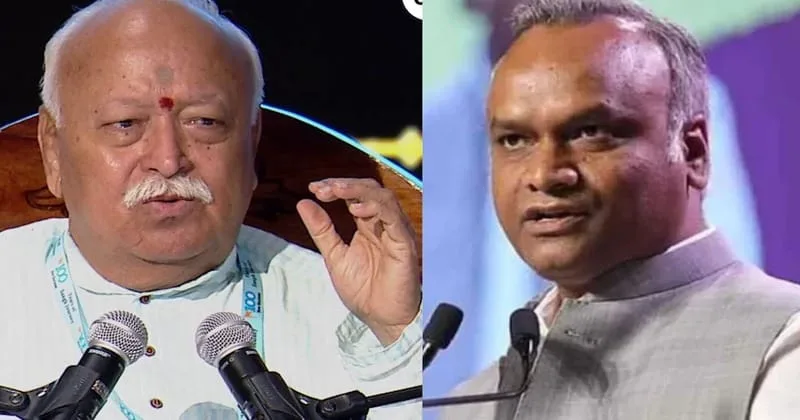
Bengaluru: The Rashtriya Swayamsevak Sangh (RSS) has mounted a strong and detailed defence of its organisational and financial structure following remarks by Karnataka Minister Priyank Kharge questioning its funding transparency. Reiterating its long-standing position, the RSS has once again highlighted a statement by its Sarsanghchalak Mohan Bhagwat that “Gurudakshina is not donation, it is devotion.”
The renewed debate began after Kharge alleged that the RSS has not clearly disclosed its financial sources and questioned whether it pays taxes. Addressing a gathering in Bengaluru, he also raised concerns about the scale of the organisation’s network and suggested that funds may be flowing from foreign countries.
In response, RSS functionaries have categorically dismissed the allegations, stating that the organisation has always functioned through voluntary contributions made by its own swayamsevaks. They point out that Bhagwat had clearly explained the Sangh’s financial model during his visit to Bengaluru last November, where he said the RSS does not accept external donations and does not align itself with any political party.
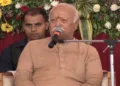
“Our work runs on the spirit of dedication. Swayamsevaks contribute Gurudakshina out of commitment to the nation and society. It is not charity or donation in the conventional sense,” Bhagwat had said, underlining the cultural and ideological roots of the practice. According to RSS leaders, Gurudakshina is a time-honoured tradition that symbolises selfless service and personal responsibility toward societal development.
RSS sources maintain that the organisation operates as a voluntary socio-cultural movement and not as a profit-driven or grant-based institution. They emphasise that the Sangh does not depend on corporate sponsorships or foreign funding, and that its activities are sustained by modest individual contributions from members across the country.
Supporters of the RSS argue that the organisation’s century-long grassroots expansion is a result of disciplined volunteerism rather than financial muscle. With thousands of daily shakhas conducted across India, the RSS claims to focus on character-building, social service, disaster relief, education and rural development initiatives.
Regarding the issue of registration, Sangh sympathisers state that the RSS functions as a voluntary association of individuals and that its structure differs from that of NGOs or corporate entities. They assert that equating it with conventional institutions misunderstands its foundational philosophy.
The organisation has also rejected claims linking it directly to party politics. While individuals associated with the Sangh may later join political parties, RSS leaders insist that the organisation itself remains a socio-cultural body dedicated to national service.
Political observers note that such debates often surface in Karnataka’s charged political climate, particularly when ideological differences come to the forefront. However, RSS representatives maintain that criticism has not altered their approach. “Our focus remains on societal work, not political controversy,” a senior functionary said.
As the exchange of statements continues, the RSS appears determined to project transparency rooted in tradition rather than bureaucratic formality. By reviving Bhagwat’s “devotion, not donation” remark, the organisation has sought to reaffirm its ideological clarity and defend its financial model against what it describes as politically motivated allegations.
For the RSS, the message is clear: its strength lies not in external funding, but in the voluntary commitment of its swayamsevaks, a principle it says has sustained the movement for decades.