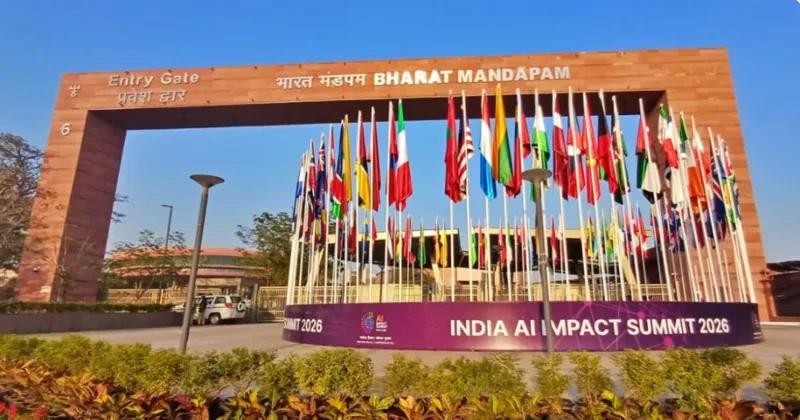
As the world stands at the threshold of a new technological era defined by artificial intelligence, the AI Impact Summit being held in India represents more than a gathering of policymakers, entrepreneurs, researchers, and investors. It signals a decisive moment in the redistribution of technological influence toward the Global South. For decades, innovation ecosystems were concentrated in a handful of Western economies. Today, however, emerging markets are not merely consumers of technology but active architects of its future. The summit embodies this transition, positioning India as both a convener and a catalyst for a more inclusive and development-oriented AI revolution.
The significance of hosting such a summit in India lies in the country’s unique convergence of scale, digital infrastructure, talent, and policy ambition. With one of the largest populations of internet users in the world and a thriving startup ecosystem, India offers a living laboratory for AI solutions that operate at massive scale and under real-world constraints. From digital public infrastructure to fintech inclusion and health tech outreach, Indian innovations have demonstrated that technology can be affordable, interoperable, and people-centric. The AI Impact Summit amplifies these strengths, inviting collaboration across continents to co-create solutions tailored to the needs of developing economies rather than retrofitting models built elsewhere.
For the Global South, artificial intelligence presents both an opportunity and a responsibility. Many countries across Asia, Africa, and Latin America are confronting parallel challenges in agricultural productivity, climate resilience, access to public health services, education delivery, and urbanisation. AI-powered analytics, predictive systems, and automation tools can help bridge gaps in service delivery and accelerate sustainable development. Yet these tools must be trained on diverse datasets and informed by local realities. By convening leaders from across the Global South, the summit creates a platform for shared learning and collective bargaining power, ensuring that AI standards, ethics, and governance frameworks reflect plural perspectives rather than a narrow set of priorities.
India’s role in this emerging order is particularly compelling. The country has demonstrated its capacity to build foundational digital platforms that serve hundreds of millions of citizens, often at low cost and with open architecture. This experience provides valuable insights into how AI systems can be layered responsibly on top of public digital goods. Moreover, India’s deep pool of engineers, data scientists, and entrepreneurs provides it with the human capital needed to shape global AI research and deployment. The summit highlights this talent, fostering partnerships between academia, industry, and government to accelerate innovation while maintaining accountability.
The geopolitical dimension of the AI Impact Summit cannot be overlooked. As artificial intelligence becomes a strategic technology influencing defence, trade, and diplomacy, countries are increasingly aware that leadership in AI translates into broader economic and political influence. By hosting an international forum dedicated to impact-driven AI, India signals its intention to be at the forefront of norm-setting conversations. This includes discussions on data governance, privacy, algorithmic transparency, and equitable access. Rather than positioning itself against established technology powers, India is charting a collaborative path that emphasises interoperability, open standards, and shared growth.
Equally important is the summit’s focus on entrepreneurship and investment. Startups in the Global South often face structural barriers such as limited access to capital, fragmented markets, and regulatory uncertainty. By bringing together venture capital firms, development finance institutions, multilateral agencies, and founders under one roof, the AI Impact Summit reduces these barriers and accelerates cross-border capital flows. Investors gain exposure to high-impact use cases in sectors like agri-tech, climate tech, and health diagnostics, while entrepreneurs gain mentorship and visibility. This virtuous cycle strengthens innovation ecosystems beyond metropolitan hubs and spreads opportunity to tier two and tier three cities.
Education and skilling form another pillar of India’s AI leadership ambitions. The demographic dividend, long discussed in economic forecasts, becomes truly transformative when aligned with frontier technologies. India’s universities and technical institutes are increasingly integrating AI, machine learning, and data science into their curricula. The summit reinforces these efforts by encouraging global research collaborations, faculty exchanges, and open-source contributions. By democratizing access to AI knowledge and tools, India can help ensure that the benefits of automation are widely distributed and that workers are equipped to adapt to evolving job markets rather than being displaced by them.
The ethical dimension of artificial intelligence is central to the summit’s forward-looking agenda. As AI systems become embedded in decision-making processes that affect credit access, healthcare outcomes, hiring, and law enforcement, questions of bias and accountability become urgent. India’s diverse social fabric offers a powerful reminder that fairness cannot be an afterthought. The AI Impact Summit provides space for civil society voices, ethicists, and grassroots innovators to participate alongside technologists and executives. This inclusive approach strengthens trust and signals that leadership in AI is not solely about technical prowess but about stewarding technology in service of human dignity.
Sustainability is another domain where the summit positions India as a global partner. Climate change disproportionately affects countries in the Global South, making resilient infrastructure and adaptive agriculture critical priorities. AI driven climate modelling, resource optimization, and disaster response systems can significantly enhance preparedness and mitigation. By showcasing pilot projects and scalable solutions, the summit encourages replication across borders. India’s experience with renewable energy expansion and digital monitoring tools adds credibility to its advocacy for technology enabled sustainability pathways that balance growth with environmental responsibility.
Beyond contemporary applications, artificial intelligence also holds transformative potential for unlocking India’s civilizational heritage. Advanced machine learning models trained on ancient scripts and inscriptions can assist scholars in deciphering texts written in languages such as Sanskrit, Pali, and Prakrit. By analysing patterns across fragmented manuscripts, damaged inscriptions, and regional variations, AI systems can reconstruct missing passages, standardize transliterations, and generate searchable digital archives. This convergence of technology and humanities not only accelerates academic research but also democratizes access to knowledge that was once confined to specialized institutions. Through such initiatives, India can demonstrate how AI is not merely a tool of economic modernization but also a bridge connecting the past with the future.
Looking ahead, the AI Impact Summit marks the beginning of a longer journey rather than a single milestone event. Its true impact will be measured by the partnerships it seeds, the policies it inspires, and the innovations it accelerates over the coming decade. For India, the opportunity is historic. By aligning its domestic digital transformation with global collaboration, the country can help shape an AI ecosystem that is inclusive, transparent, and development-focused. For the Global South, the summit represents a collective assertion that the future of artificial intelligence will not be written in isolation but co-authored across continents. In embracing this role, India is not only aspiring to become an AI leader; it is inviting the world to build a more equitable technological future together.