India is in discussions with Brazil, Canada, France and the Netherlands to forge agreements on the joint exploration, extraction, processing and recycling of critical minerals, reports say, as New Delhi widens its global outreach to secure reliable supplies of key raw materials vital for its economic and energy transition. The talks are primarily focused on lithium and rare earth elements, which are essential for clean energy technologies, electric vehicles and advanced manufacturing. India is also seeking access to advanced mineral-processing technologies as part of these engagements, according to reports familiar with the confidential discussions.
India’s heavy dependence on China for critical minerals remains a key concern. China dominates global supply chains for several strategic minerals and possesses advanced mining and processing capabilities. This dependence has reinforced the urgency for India to diversify its sources by partnering with multiple countries, particularly as it accelerates its energy transition to reduce emissions, mining experts have noted. However, industry specialists caution that mining projects are long-term endeavours. From initial discovery to commercial production, timelines can stretch over several years. Exploration alone typically takes between five and seven years and often does not result in a viable mine, underscoring the complexity of securing alternative mineral supplies.
Expanding strategic partnerships to secure critical mineral supply chains
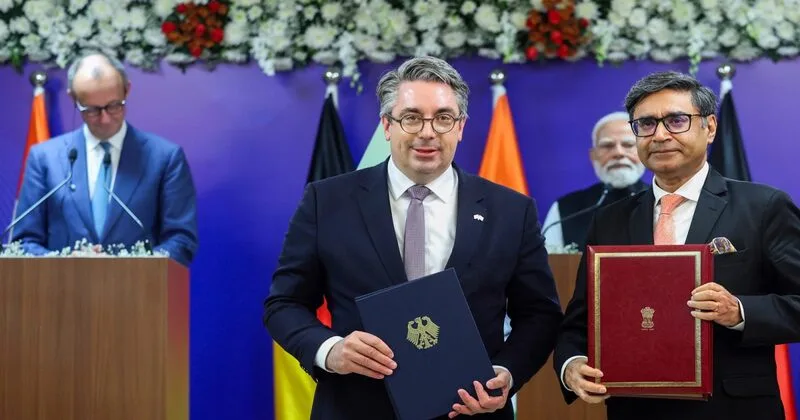
India is seeking to replicate key elements of a critical minerals agreement it signed with Germany in January. That pact covers exploration, processing and recycling, as well as the acquisition and development of mineral assets within both countries and in third countries. Reports indicate that similar frameworks are being explored with other partner nations. Discussions with France, the Netherlands and Brazil are ongoing, while an agreement with Canada is said to be under active consideration. The Ministry of Mines is leading these efforts as part of India’s broader strategy to strengthen supply chains for critical raw materials.
Canada’s Prime Minister Mark Carney is expected to visit India in early March, during which several agreements related to uranium, energy, critical minerals and artificial intelligence are likely to be signed. Canada’s Natural Resources Department has previously stated that both countries had agreed in January to formalise cooperation on critical minerals in the coming weeks.
India has already signed critical minerals agreements with Argentina, Australia and Japan, and is engaged in talks with Peru and Chile on broader bilateral frameworks that also include mineral cooperation. These efforts coincide with growing international concern over supply chain concentration. Finance ministers from the G7 and other major economies met in Washington last month to explore strategies to reduce reliance on China for rare earths. In 2023, India officially identified more than 20 minerals, including lithium, as critical to its energy transition and industrial growth.