Menstruation, dignity and the right to life
September 12, 2026
  • Read Ecopy
  • Circulation
  • Advertise
  • Careers
  • About Us
  • Contact Us
Android AppiPhone AppArattai
Organiser
  • ‌
  • Bharat
    • Assam
    • Bihar
    • Chhattisgarh
    • Jharkhand
    • Maharashtra
    • View All States
  • World
    • Asia
    • Europe
    • North America
    • South America
    • Africa
    • Australia
  • Editorial
  • International
  • Opinion
  • RSS @ 100
  • More
    • World Hindu Congress 2026
    • Op Sindoor
    • Analysis
    • Sports
    • Defence
    • Politics
    • Business
    • Economy
    • Culture
    • Special Report
    • Sci & Tech
    • Entertainment
    • G20
    • Azadi Ka Amrit Mahotsav
    • Vocal4Local
    • Web Stories
    • Education
    • Employment
    • Books
    • Interviews
    • Travel
    • Law
    • Health
    • Obituary
  • Subscribe
    • Subscribe Print Edition
    • Subscribe Ecopy
    • Read Ecopy
  • ‌
  • Bharat
    • Assam
    • Bihar
    • Chhattisgarh
    • Jharkhand
    • Maharashtra
    • View All States
  • World
    • Asia
    • Europe
    • North America
    • South America
    • Africa
    • Australia
  • Editorial
  • International
  • Opinion
  • RSS @ 100
  • More
    • World Hindu Congress 2026
    • Op Sindoor
    • Analysis
    • Sports
    • Defence
    • Politics
    • Business
    • Economy
    • Culture
    • Special Report
    • Sci & Tech
    • Entertainment
    • G20
    • Azadi Ka Amrit Mahotsav
    • Vocal4Local
    • Web Stories
    • Education
    • Employment
    • Books
    • Interviews
    • Travel
    • Law
    • Health
    • Obituary
  • Subscribe
    • Subscribe Print Edition
    • Subscribe Ecopy
    • Read Ecopy
Organiser
  • Home
  • Bharat
  • World
  • Operation Sindoor
  • Editorial
  • Analysis
  • Opinion
  • Culture
  • Defence
  • International Edition
  • RSS @ 100
  • Magazine
  • Read Ecopy
Home Bharat

Menstruation, Dignity and the Right to Life

The availability of gender-segregated, functional and hygienic toilets with water, disposal mechanisms and privacy is equally crucial, particularly in schools, colleges, workplaces and public spaces. Menstrual health education must be integrated into school curricula and community programmes to dismantle myths, normalise conversations and empower young girls with accurate knowledge about their bodies

RajnandaniRajnandani
Feb 3, 2026, 10:10 pm IST
inBharat, Analysis, Law, Health
Follow on Google News
Representative Image

Representative Image

Facebook
Twitter
WhatsAppTelegramEmail

The recent historic judgment delivered by the Supreme Court of India, recognising menstrual health and hygiene(MHH) as an intrinsic part of the Right to Life under Article 21 of the Constitution, marks a transformative moment in the journey toward gender justice and social equity. By affirming menstrual health as a fundamental right, the Court has placed women’s and girls’ dignity, health, education and equality at the very core of constitutional protection. This decision is not merely a legal pronouncement; it is a powerful social statement that challenges decades of silence, stigma and systemic neglect surrounding menstruation in India.

Menstruation has been treated as taboo for centuries, leading to secrecy, exclusion and discrimination against women and girls. Such stigma has restricted their opportunities and mobility, while unsafe practices continue due to misinformation. Limited open dialogue and weak institutional responsibility have led millions to suffer indignity and exclusion despite menstruation being a universal biological process. Before this landmark interpretation under Article 21, menstrual health and hygiene in India existed largely within the realm of welfare schemes, fragmented policies and administrative discretion, rather than as a clearly enforceable right.

Government interventions were typically addressed through programmes in health, sanitation or education, without a unified constitutional framework that guaranteed dignity and accountability. Access to sanitary products, toilets and awareness depended heavily on geography, budgetary priorities and local implementation, leaving millions of girls and women vulnerable to neglect. In the absence of explicit constitutional recognition, menstrual health was often treated as a secondary or “soft” issue, overshadowed by broader development goals and the lack of legal enforceability meant that systemic gaps especially in schools and public institutions remained largely unchallenged.

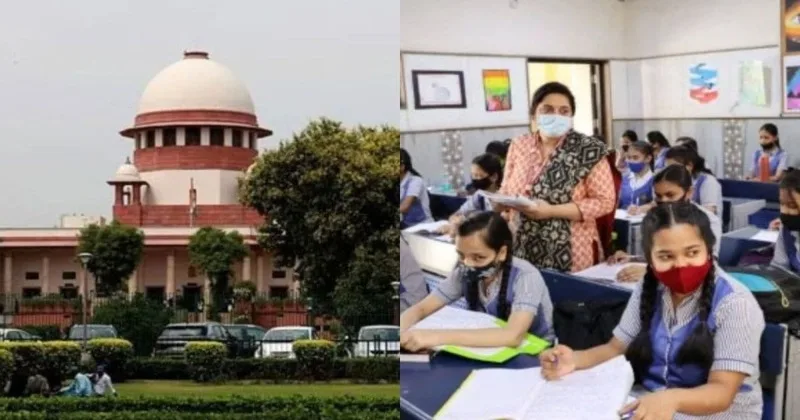
By viewing menstrual health through the lens of constitutional rights, the Supreme Court has reframed it as an issue of public concern, human dignity and state responsibility. This change has major implications for policy and social attitudes, obliging the state to create conditions for safe, hygienic and dignified menstrual management. The Court rightly emphasised that the absence of safe, accessible and hygienic menstrual management facilities particularly in schools amounts to a violation of dignity and equality. Millions of girls across India are forced to miss school during their menstrual cycles due to the lack of clean toilets, sanitary products, water facilities, privacy and awareness.

In many cases, this leads to frequent absenteeism, poor academic performance and eventually school dropouts. The judgment recognises that when girls are compelled to manage menstruation in unsafe or humiliating conditions, their right to education is directly compromised, reinforcing cycles of gender inequality and poverty. Importantly, the Court’s observations acknowledge that menstrual health is closely linked to physical well-being, mental health, privacy and bodily autonomy. Unsafe practices increase health risks and emotional distress. Bringing menstrual hygiene under Article 21 affirms that a dignified life is impossible without basic health facilities for women and girls.

An organised approach involving policy formulation, administrative systems and social awareness to ensure that menstrual health rights are translated into reality on the ground. The responsibility does not lie with a single institution but requires collective effort across education, health, women and child development, sanitation and local governance frameworks. To fulfil the constitutional mandate articulated by the Court, it is essential that every girl and woman has access to free or affordable biodegradable sanitary products, ensuring both health safety and environmental sustainability.

The availability of gender-segregated, functional and hygienic toilets with water, disposal mechanisms and privacy is equally crucial, particularly in schools, colleges, workplaces and public spaces. Menstrual health education must be integrated into school curricula and community programmes to dismantle myths, normalise conversations and empower young girls with accurate knowledge about their bodies. The judgment also highlights the importance of supportive and responsive systems, including emergency provisions such as spare uniforms, innerwear and first aid. The judgment emphasises the need for supportive school systems, such as emergency provisions for uniforms and first aid. These measures help preserve dignity and encourage attendance by addressing practical menstrual needs.

The norms that have long controlled and silenced women’s bodies. By recognising menstrual health as a right rather than a privilege, the Court has affirmed that equality cannot exist without dignity, and dignity cannot exist where natural biological processes are treated as shameful. This judgment also aligns with India’s constitutional vision of a just, inclusive, and compassionate society, where the state actively works to remove structural barriers faced by marginalised groups. Menstrual health intersects with caste, class, geography, and disability, making it a critical issue of social justice. Addressing it holistically contributes to broader national goals of gender equality, human development and educational advancement.

Also Read: Islamist teacher Jan Mohammad used school to brainwash, force namaz and conversions of students in Mathura

As India moves forward, this ruling provides an opportunity to build a future where menstruation is no longer a reason for exclusion, silence, or missed dreams. It reminds us that when a girl’s dignity is protected, her education flourishes; when her education flourishes, society progresses. Realising the spirit of this judgment will require sustained political will, adequate funding, effective implementation and active public participation. Ultimately, this historic decision demands action from each of us. Advocate for menstrual dignity in your communities, support policies that guarantee access to hygiene products and facilities and hold institutions accountable for upholding these rights. Only through collective, sustained effort can we ensure every woman and girl in India lives, learns and thrives with confidence, safety and dignity.


Topics: Supreme CourtHealthArticle 21VerdictMenstrual Hygiene
Rajnandani
Rajnandani
Research Scholar at Banasthali Vidyapith [Read more]
Share
Tweet
SendShareSend
✮ Subscribe Organiser YouTube Channel. ✮
✮ Join Organiser's WhatsApp channel for Nationalist views beyond the news. ✮
Previous News

Tamil Nadu: MK Stalin’s minority appeasement at IUML meet sparks row

Next News

Italian envoy to India welcomes trade deal with the US; Hails it as a “very positive development”

Related News

Registrar of Copyrights in India has rejected an application of computer scientist to make AI as an Author

DABUS loses copyright battle in India: Human author must be named; The tradition of Apūrvatā to Maulikatā

1993 Blasts Case: SC Rejects Abu Salem’s Release Plea

From 1993 Mumbai blasts to Portugal extradition: SC rejects Abu Salem’s bid for early release

Two Supreme Court cases have put India’s constitutional safeguards for tribal land, representation and self-governance under renewed scrutiny

Demography as a Weapon: The Supreme Court’s twin test on tribal protections

SC Backs Eviction from Tamil Nadu Temple Land

SC backs eviction from Tamil Nadu Temple land: Muslim occupants cannot claim rights through illegal sale

Jaipur Terror Case: Supreme Court Refuses to Release Sarwar Azmi

Jaipur Terror Case: Supreme Court refuses to release Sarwar Azmi, cites national security

CJP’s agenda behind “school thik karo campaign” exposed; SC refuses PIL against curbs on filming inside govt schools

Load More

Latest News

Prime Minister Narendra Modi, along with Chinese President Xi Jinping, Russian President Vladimir Putin and other world leaders, poses for a picture at a joint tree plantation initiative during the BRICS Summit

BRICS Summit 2026: India as the voice of Global South, shared responsibilities & scripting inclusive world order

Chinese President Xi Jinping and Prime Minister Narendra Modi

BRICS Summit 2026: PM Modi hold talks with President Xi; Stresses border peace & tranquility as key to India-China ties

Tamil Nadu: Hindu Munnani flags TVK govt’s restrictions on Vinayaka pandals, barring women, children from processions

Lashkar-e-Toiba founder Hafiz Saeed. (File image)

J&K Terror Case: Hafiz Saeed gets second NBW; NIA says he operates from Pakistan

Pakistan’s push for a place in the expanding BRICS bloc faces a difficult diplomatic road ahead, despite backing from key partners.

Pakistan knocking BRICS Door: Why Islamabad’s 2023 membership bid remains elusive despite Chinese and Russian support

BRICS Bazaar

BRICS Bazaar: Global traditions and cultural diplomacy take center stage at New Delhi’s National Crafts Museum

(From Left to Right): Russian President Vladimir Putin, PM Modi & Chinese President Xi Jinping

BRICS New Delhi Declaration | Key Takeaways: Cross-border payment, counter-terrorism to tech ties & supply resilience

New Delhi, Sep 12 (ANI): Prime Minister Narendra Modi, along with Chinese President Xi Jinping, Russian President Vladimir Putin and other world leaders, poses for a picture at a joint tree plantation initiative during the BRICS Summit at Bharat Mandapam, in New Delhi on Saturday. (Narendra Modi Photo Gallery/ANI Photo)

BRICS Summit 2026: Multilateralism through strategic partnership; Charting the roadmap for future

Kerala Governor Rajendra Vishwanath Arlekar inaugurates the silver jubilee celebrations of Mar Baselios College of Engineering and Technology

Jantar Mantar protests highlight erosion of civility; character formation vital for students: Keralam Governor Arlekar

A representative image

Imran Hussain refused to remarry ex-wife after ‘Halala’; Jharkhand HC says it is not a criminal offence, no case filed

Load More
  • Privacy
  • Terms
  • Cookie Policy
  • Refund and Cancellation
  • Delivery and Shipping

© Bharat Prakashan (Delhi) Limited.
Tech-enabled by Ananthapuri Technologies

  • Home
  • Search Organiser
  • Bharat
    • Assam
    • Bihar
    • Chhattisgarh
    • Jharkhand
    • Maharashtra
    • View All States
  • World
    • Asia
    • Africa
    • North America
    • South America
    • Europe
    • Australia
  • Editorial
  • Operation Sindoor
  • Opinion
  • Analysis
  • Defence
  • Culture
  • Sports
  • Business
  • RSS @ 100
  • Entertainment
  • More ..
    • Sci & Tech
    • Vocal4Local
    • Special Report
    • Education
    • Employment
    • Books
    • Interviews
    • Travel
    • Health
    • Politics
    • Law
    • Economy
    • Obituary
  • Subscribe Magazine
  • Read Ecopy
  • Advertise
  • Circulation
  • Careers
  • About Us
  • Contact Us
  • Policies & Terms
    • Privacy Policy
    • Cookie Policy
    • Refund and Cancellation
    • Terms of Use

© Bharat Prakashan (Delhi) Limited.
Tech-enabled by Ananthapuri Technologies