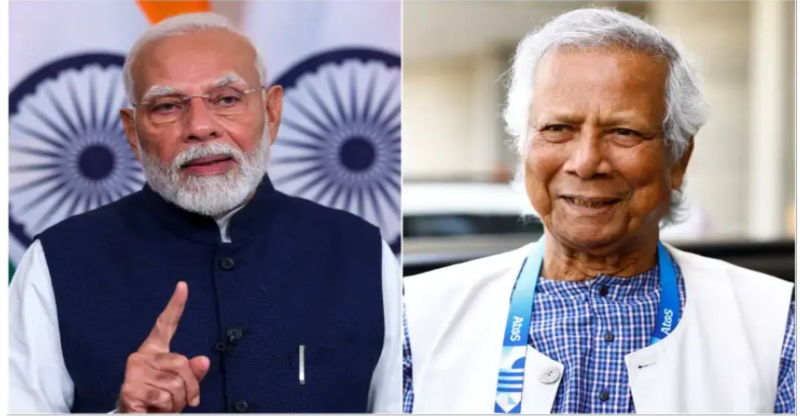
In a notable departure from previous years, the Union Budget 2026-27 has halved India’s financial assistance to Bangladesh while allocating no funds for the Chabahar port project in Iran, reflecting evolving diplomatic equations in India’s immediate and extended neighbourhood.
Presented by Finance Minister Nirmala Sitharaman on Sunday (February 1), the budget reduced aid to Bangladesh from Rs 120 crore in 2025-26 to Rs 60 crore in the upcoming financial year, one of the steepest cuts among India’s neighbouring countries.
The reduction comes at a time when India-Bangladesh relations have reportedly witnessed strain, with growing concerns in New Delhi over internal developments in Bangladesh, including incidents of violence against the Hindu minority. While the government has not officially linked the aid cut to these issues, the timing has drawn attention in strategic and diplomatic circles.
Equally significant is the complete withdrawal of budgetary support for the Chabahar port project in Iran. India had allocated Rs 400 crore for the project in 2024-25 and retained the same amount in the revised estimates for 2025-26. However, the Union Budget 2026-27 makes no provision for the port, despite a 10-year agreement signed in 2024 granting India operational rights over the Shahid Beheshti terminal.
The Chabahar port has long been viewed as a strategic asset for India, providing access to Afghanistan and Central Asia while bypassing Pakistan. The absence of funding has raised questions about the pace and priority of the project amid geopolitical uncertainties in the region, including sanctions-related challenges and shifting regional alignments.
Despite these cuts, the overall allocation under the “Aid to Countries” head has seen a modest increase of around 4 per cent, rising to Rs 5,686 crore from Rs 5,483 crore in the previous year, indicating a selective rather than across-the-board reduction in foreign assistance.
Bhutan continues to remain the largest recipient of Indian aid, with its allocation rising by approximately 6 per cent to Rs 2,289 crore. The increase reflects India’s sustained support for Bhutan’s hydropower projects and infrastructure development, a cornerstone of bilateral cooperation.
Nepal has received a significant 14 per cent hike in assistance, taking its allocation to Rs 800 crore, while Sri Lanka’s aid has increased by nearly one-third to Rs 400 crore, underlining India’s commitment to supporting Colombo’s post-economic crisis recovery.
In the Indian Ocean region, aid to the Maldives has been reduced by about 8 per cent to Rs 550 crore, while Mauritius has seen a 10 per cent increase, bringing its allocation to the same level. The contrasting figures point to New Delhi’s differentiated approach within the strategically sensitive maritime neighbourhood.
Assistance to Afghanistan remains unchanged at Rs 150 crore, largely earmarked for humanitarian aid, while Myanmar’s allocation has been cut by around 14 per cent to Rs 300 crore, reflecting ongoing political instability and implementation challenges on the ground.
Aid to African nations has been retained at Rs 225 crore, while allocations for Latin America have doubled to Rs 120 crore from a relatively low base. Support for Eurasian countries has seen a marginal decline, settling at Rs 38 crore.