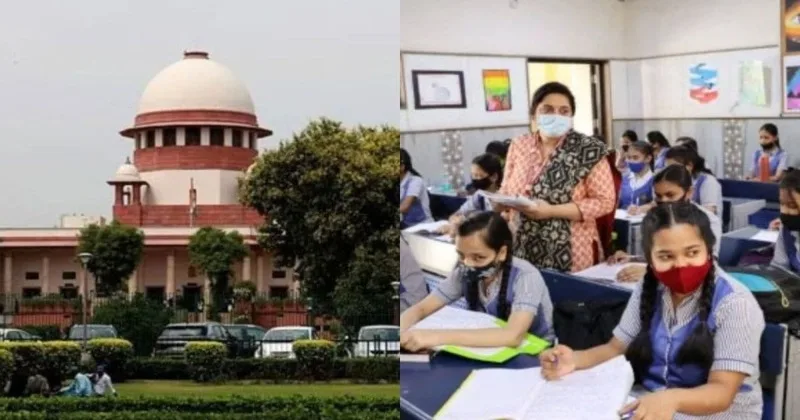
In a historic step toward gender equality and inclusive education, the Supreme Court of India ruled that menstrual health is a fundamental right under Article 21 of the Constitution, which guarantees the right to life and dignity. The apex court directed all states and Union Territories (UTs) to ensure free distribution of oxo-biodegradable sanitary napkins and provision of functional, gender-segregated toilets in all schools, government, aided, and private alike. Delivering the judgment, a bench comprising Justices J. B. Pardiwala and R. Mahadevan described menstrual health as a matter of dignity, equality, and privacy. The court observed that no girl should have to compromise her education or self-respect due to the lack of basic menstrual hygiene facilities.
“A period should end a sentence, not a girl’s education,” Justice Pardiwala remarked, quoting American educator and activist Melissa Berton as he began the 126-page verdict.
Right to menstrual health part of right to life and education
The Supreme Court highlighted that access to safe, effective and affordable menstrual hygiene management is vital for the physical, mental, and emotional well-being of girl students. The bench ruled that menstrual health falls within the broader scope of the right to life (Article 21) and the right to education (Article 21A), both of which aim to secure human dignity and equality of opportunity. The court highlighted that Article 21A, which guarantees free and compulsory education for children between 6 and 14 years, is a “multiplier right” i.e., one that enables the exercise of other human rights. It observed that inaccessibility to menstrual hygiene management measures directly affects a girl child’s ability to attend school, leading to long-term educational and economic disadvantages.
In its reasoning under Article 14 (Right to Equality), the bench emphasized that true equality requires acknowledging and addressing the structural and institutional barriers faced by women and girls. “The State, as a benefactor, is under an obligation to remedy such structural disadvantages,” the court said, laying emphasis that menstrual health management is not merely a health issue but a matter of social justice.
The judgment noted that lack of menstrual facilities undermines a girl’s dignity and restricts her participation in education and public life. It further linked privacy and dignity as inseparable, observing that the State must actively protect privacy by ensuring safe spaces and facilities for girls during menstruation.
Strict directions to the states and schools
The Supreme Court issued detailed directives for implementation within three months of the judgment:
- Free Sanitary Napkins: Every school, government or private, must provide oxo-biodegradable sanitary pads (compliant with ASTM D-6954 standards) free of cost to girl students. The pads must be easily accessible, preferably via sanitary napkin vending machines in toilet areas or designated distribution points
- Gender-Segregated Toilets: Schools must ensure the availability of functional, gender-segregated toilets with proper water connectivity. These toilets must be designed and maintained for privacy, hygiene, and accessibility, including for children with disabilities
- Menstrual Hygiene Management (MHM) Corners: Every school is directed to establish MHM corners, equipped with spare innerwear, uniforms, disposable bags, and other materials to handle menstruation-related needs
- Safe Disposal Systems: Schools must install eco-friendly disposal mechanisms for sanitary waste in line with the latest Solid Waste Management Rules, ensuring both hygiene and environmental compliance
- Handwashing Facilities: Toilets should include functional handwashing stations with soap and water, available at all times
- Awareness and Education: The court instructed NCERT and SCERTs to integrate gender-responsive curricula covering topics like menstruation, puberty, and reproductive health to foster awareness and sensitivity among all students
- Monitoring and Accountability: District education officers are to conduct regular inspections of school infrastructure, ensuring compliance with menstrual hygiene standards. NCPCR and State Child Rights Commissions are tasked with overseeing and reporting on the implementation progress.
The Supreme Court warned that non-compliance would invite stringent action, including derecognition of private schools and direct accountability of state governments for failures in public institutions. The court made it clear that failure to provide menstrual hygiene facilities amounts to violating a child’s right to life, dignity, and education. It emphasized that menstrual health should no longer be treated as a private or taboo subject but as a public health and human rights concern.
To tackle social stigma and misinformation surrounding menstruation, the Supreme Court directed the NCERT and State Councils of Educational Research and Training to incorporate age-appropriate content on menstrual and reproductive health into school curricula. This move aims to normalize discussions on menstruation, reduce shame, and empower students both boys and girls to understand the biological and social aspects of the issue. Teachers will also receive training and orientation to ensure sensitivity while handling menstrual health topics in classrooms.
The bench kept the petition pending to monitor the implementation of its directives and sought a compliance report from the Centre within three months. “The Union Government, along with all States and Union Territories, must ensure full compliance with these directions within three months from the date of this judgment,” the order stated.
The Supreme Court’s verdict is a progressive and compassionate acknowledgment of the barriers faced by millions of girls in India. By recognizing menstrual health as a fundamental right, the court has paved the way for a more inclusive and equitable education system where no girl’s future is compromised due to a biological process. This ruling not only enforces accountability but also sends a powerful message: dignity, education, and health are inseparable and must be guaranteed to every child, without exception.