India’s electronics sector has consolidated its position as one of the fastest-growing pillars of the manufacturing economy, driven by rising domestic production, sustained export expansion, and targeted policy interventions, according to the Economic Survey 2025-26 tabled in Parliament on January 29.
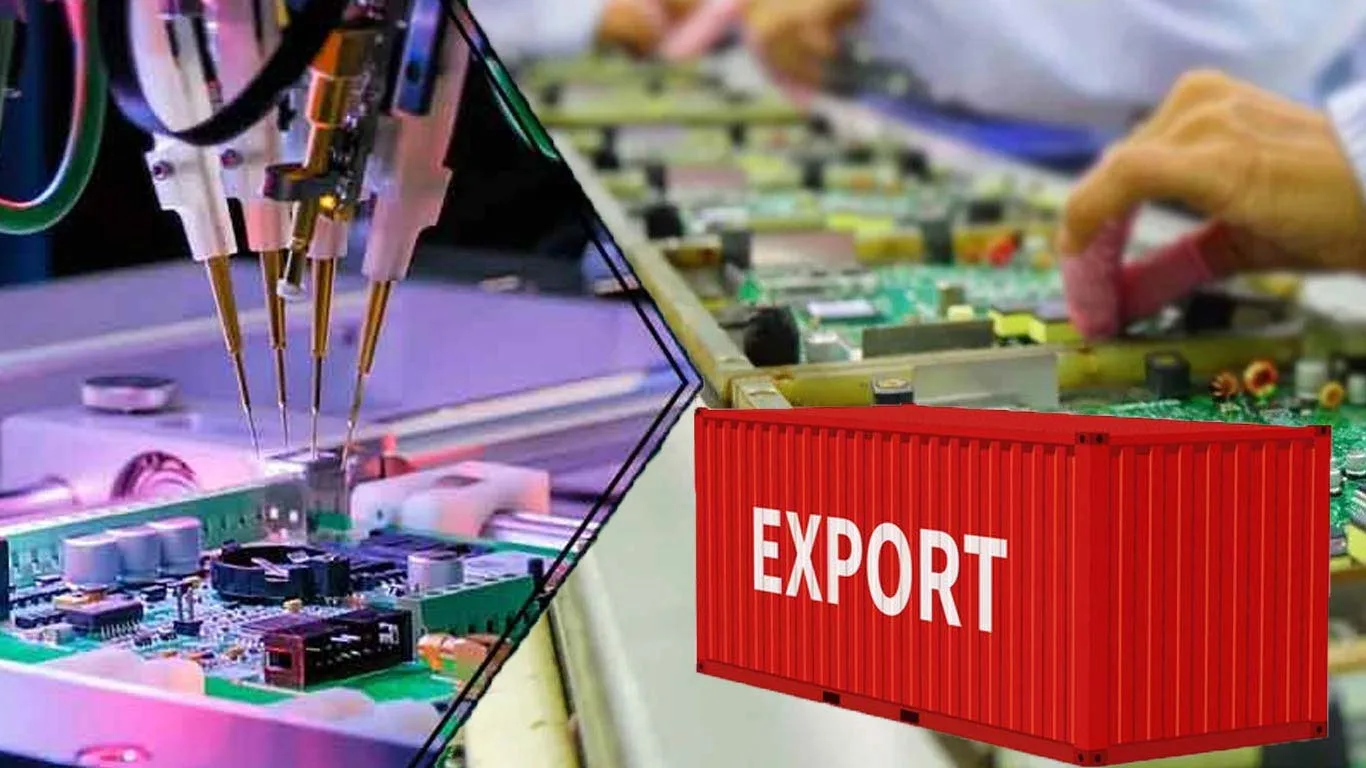
The Survey records that electronics exports reached $22.2 billion in the first half of FY26, placing the sector firmly on track to become India’s second-largest exported item by value. This performance builds on a sharp upward trajectory over the past three years, during which electronics climbed from the seventh-largest export category in FY22 to the third-largest and fastest-growing segment by FY25.
The acceleration in exports has been accompanied by a significant expansion in domestic manufacturing capacity. Total electronics production rose from Rs 6.4 lakh crore in FY22 to Rs 11.3 lakh crore in FY25. During the same period, exports increased from Rs 1.2 lakh crore to Rs 3.3 lakh crore, reflecting both scale expansion and deeper integration with international supply chains. The Survey also notes that imports of electronics have increased in parallel, indicating the sector’s growing size and participation in global production networks.
At the heart of this transformation lies the mobile phone manufacturing segment, which the Survey identifies as the most prominent driver of growth. Mobile phone production value witnessed a nearly 30-fold increase over a decade, rising from Rs 18,000 crore in FY15 to Rs 5.45 lakh crore in FY25. This rapid scale-up has enabled India to transition from a net importer of mobile phones to the world’s second-largest mobile phone manufacturer.
The expansion of manufacturing infrastructure has been equally dramatic. India now hosts more than 300 mobile manufacturing units, compared to just two units in 2014, marking a decisive shift in the country’s electronics production capabilities.
The Survey attributes this structural shift primarily to sustained policy support. Under the Production Linked Incentive (PLI) Scheme for Large Scale Electronics Manufacturing, cumulative production of approximately Rs 9.34 lakh crore had been achieved as of September 2025. Exports under the scheme stood at Rs 5.12 lakh crore, while total investments reached Rs 13,759 crore during the same period.
In addition to mobile manufacturing, the PLI Scheme 2.0 for IT Hardware has contributed to broadening the electronics manufacturing base. As per the Survey, the scheme recorded cumulative production of Rs 14,462.7 crore and attracted investments worth Rs 892.47 crore by September 2025.
Recognising persistent gaps in component manufacturing, the Government introduced the Electronics Component Manufacturing Scheme (ECMS) in April 2025. With a budgetary outlay of Rs 22,919 crore, the scheme aims to develop a robust domestic component ecosystem and strengthen India’s backward integration into global value chains. The Survey identifies component manufacturing as critical to improving domestic value addition and reducing supply chain vulnerabilities.
Infrastructure development has also played a central role in supporting the sector’s expansion. Under the Electronics Manufacturing Clusters (EMC) scheme, 19 Greenfield clusters and three Common Facility Centres (CFCs) have been approved. The upgraded EMC 2.0 scheme has further approved 11 clusters and two CFCs as of September 2025, providing shared infrastructure, testing facilities, and logistical support to electronics manufacturers.
The Survey notes that these cluster-based initiatives are designed to address structural challenges faced by the electronics sector, including high capital requirements, long gestation periods, access to advanced manufacturing technologies, and the availability of skilled manpower.
Parallel to these efforts, the India Semiconductor Mission is expected to further strengthen the electronics value chain. Backed by a Rs 76,000 crore programme, the mission focuses on developing semiconductor fabrication, assembly, testing, and packaging capabilities within the country. The Survey underlines that semiconductors are essential to sustaining growth in electronics manufacturing and reducing dependence on external suppliers.
Taken together, the Economic Survey 2025-26 presents the electronics sector as a clear example of how targeted industrial policy, infrastructure development, and global integration have combined to deliver scale, exports, and strategic manufacturing capacity. With exports already crossing $22.2 billion in the first half of FY26, the sector is positioned to play an even larger role in India’s manufacturing and export landscape in the years ahead.