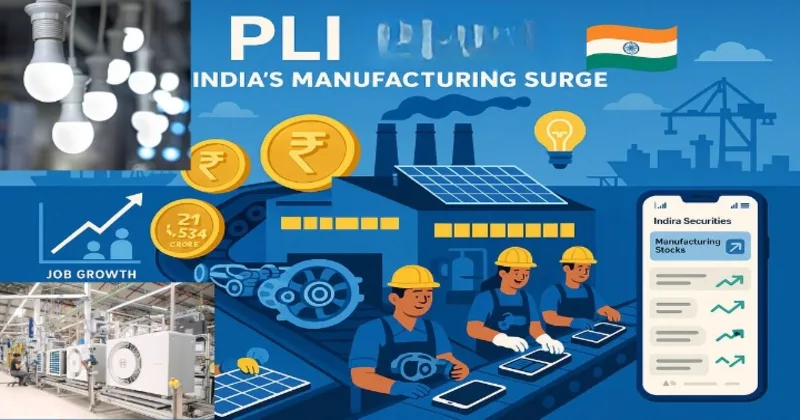
India’s manufacturing has shifted from assembly-led growth to component-driven self-reliance. Among the sectors where this paradigm shift is most apparent is the white goods sector, specifically air conditioners and LED lighting, driven by growing domestic demand, energy efficiency, and global value chains. The Production Linked Incentive (PLI) Scheme for White Goods, approved by the Union Cabinet in April 2021, a designed policy intervention to address the deep-rooted structural issues in this sector.
What is the PLI Scheme for White Goods?
The PLI Scheme for White Goods covers two major segments – Air Conditioners (ACs) and LED Lights. Earlier industrial policies were focused on finished products. This scheme is explicitly designed to build a domestic component ecosystem, which is the most important and critical part of the white goods supply chain.
Approved on 7 April 2021 with a total outlay of Rs 6,238 crore and notified by the Department for Promotion of Industry and Internal Trade (DPIIT) on 16 April 2021, the scheme is being implemented over an eight-year period from FY 2021–22 to FY 2028–29. It offers production-linked incentives ranging from 6 per cent to 4 per cent on incremental sales for a period of five years, following a base year and a one-year gestation period.
The objective is to reduce import dependence, increase domestic value addition and position India as a reliable node in global supply chains for cooling and lighting equipment.
Why White Goods Need Policy Support
India is one of the fastest-growing markets for air conditioners and LED lighting. Rising incomes, urbanisation, climate variability and energy-efficiency mandates have driven sustained demand. For decades this growth masked a critical vulnerability of high dependence on imported components from East Asia.
Before the PLI intervention, domestic value addition in air conditioners and LED lighting hovered between 20–25 per cent. Key components such as compressors, copper tubes, control assemblies, LED drivers and chip packaging were largely imported. This exposed the sector to supply-chain disruptions, currency volatility and geopolitical risks, weaknesses that became starkly visible during the pandemic years.
The PLI Scheme for White Goods tackles this structural challenge head-on by encouraging the production of components over final products, thus ensuring that economies of scale, technology and talent are developed in the country.
Numbers That Matter in White Goods
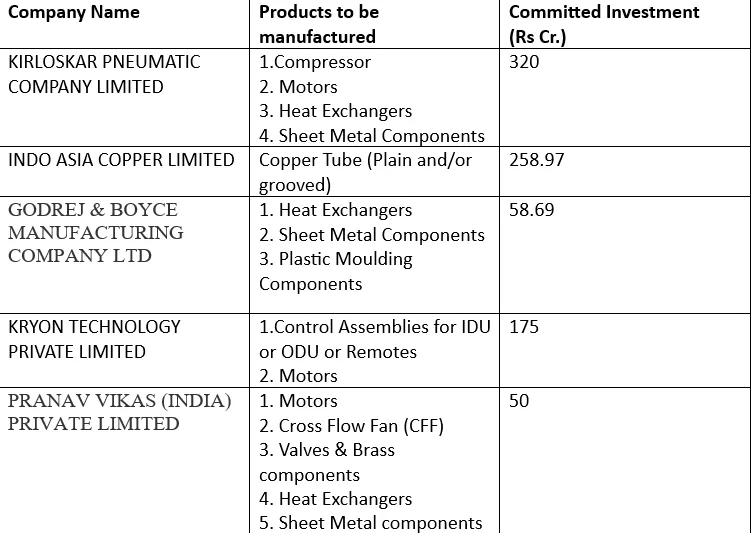
The assessment of 13 applications received in the fourth round of the PLI Scheme for White Goods has resulted in the shortlisting of five companies, all of which are involved in the production of air conditioner components. The total investment made by these companies stands at ₹863 crore. The outcome of this round alone is indicative of the catalytic effect of the scheme, with the expected production value standing at Rs 8,337.24 crore and the generation of 1,799 direct jobs in FY 2027-28. This round further enhances the component manufacturing ecosystem in the country and enhances the value chains in the air-conditioning industry in India.
These achievements are in addition to the cumulative progress made in all rounds of the scheme. A total of 85 companies have been selected under the PLI Scheme for White Goods, including air conditioners and LED lights. These companies are expected to invest a cumulative amount of Rs 11,198 crore and produce goods worth ₹1,90,050 crore. The scale of these numbers reflects a deliberate policy architecture in which targeted fiscal incentives are used not as subsidies, but as levers to crowd in substantial private investment, expand manufacturing capacity and create sustainable employment.
Who Is Manufacturing What
The fourth-round selections underline the PLI scheme’s clear emphasis on manufacturing depth rather than mere numerical expansion. The provisionally selected companies are focused on producing critical air-conditioner components, including compressors, copper tubes (both plain and grooved), control assemblies for indoor and outdoor units, heat exchangers, BLDC motors and sheet metal and plastic moulding parts. This is a strategic and value-based focus. The combination of compressors and motors significantly influences the cost, performance, and energy efficiency of an air conditioner. Copper tubes and heat exchangers are critical to efficient thermal transfer, and sophisticated control assemblies define product reliability, robustness and intelligent functionality.
On the LED side the scheme promotes domestic manufacturing of critical components such as LED chip packaging, drivers, engines, light management systems and metallised films for capacitors. These elements form the technological backbone of modern, energy-efficient lighting systems aligned with smart infrastructure and sustainability goals.
Institutional Oversight and Quality Control
The policy architecture of the PLI Scheme has built-in mechanisms to ensure seriousness and technical credibility. In the fourth round, eight applications have been referred to the Committee of Experts (CoE) for a detailed scrutiny and recommendation. This multi-level scrutiny system ensures that the incentive is not only linked to the investment intention, but also to the technology competence, scalability and viability. Such institutional scrutiny distinguishes the current PLI framework from earlier incentive regimes that often lacked outcome-based accountability.
One of the most important challenges that the scheme aims to overcome is the increase in domestic value addition from 20-25 per cent to 75-80 per cent. This is not limited to the white goods industry.
Higher value addition means:
· Lowered import costs for components
· Improved resistance to disruptions in global supplies
· Building domestic supplier networks, MSMEs and supporting industries
· Absorption of technology and building skills in India
In essence, the scheme is not only about producing goods in India but also about having ownership of the industrial knowledge that goes into the goods.
How the Present Government Has Supported the Sector
The PLI Scheme for White Goods is a part of a larger policy framework that has been created under the current government’s manufacturing plan. Rather than focusing on generalised subsidies, the strategy focuses on:
· Performance-linked incentives
· Time-bound implementation
· Sector-specific design
· Private investment as the main driver of growth
With the government commitment of a fixed outlay of ₹6,238 crore over eight years, the government has brought about predictability, which is a crucial element in the capital-intensive production of components.
The structured incentive scheme, which gradually reduces from 6% to 4% provides a fillip to early capacity expansion while also encouraging companies to focus on long-term competitiveness.
The scheme is in line with the country needs since it focuses on the development of energy-efficient cooling and lighting solutions, which will enable import substitution without resorting to protectionism and also help Indian manufacturers become a part of the global value chain instead of promoting industrial isolation.
Economic and Strategic Implications
The white goods industry may seem consumer-facing, but its strategic value is sometimes underestimated. Cooling and lighting are critical to urban infrastructure, data centers, healthcare and manufacturing. Control over these value chains enhances economic sovereignty.
The estimated Rs 1.9 lakh crore cumulative production under the PLI Scheme for White Goods is more than a revenue achievement. It represents the development of manufacturing scale, enhanced export competitiveness and job creation across various skill levels. It also represents an increasing ability in precision engineering and electronics. The 1,799 direct jobs that will be generated in the fourth round will be supplemented by massive indirect employment in logistics, tooling, materials and maintenance services, thereby multiplying the overall socio-economic impact of the scheme.
From Market to Manufacturing Power
The PLI Scheme for White Goods is one such example of how a carefully crafted policy can help overcome some of the deeply ingrained issues in the Indian manufacturing sector. By focusing on parts over finished goods, by tying incentives to performance and by requiring the creation of value within the country, the PLI Scheme represents a paradigm shift in the way India manufactures.
The fourth round of the PLI Scheme has shown promising results, with new investments of ₹863 crore, production targets of Rs 8,337 crore and direct employment of nearly 1,800 people. These are early signs of a larger shift underway. As the value addition within the country approaches 80 per cent and as India integrates itself further into the global supply chain, the white goods industry is on the cusp of not only being a consumption story but a manufacturing success story as well.
This is exactly what an emerging economy like India needs, which is to say an industrial policy that translates intent into infrastructure and numbers into national capability.