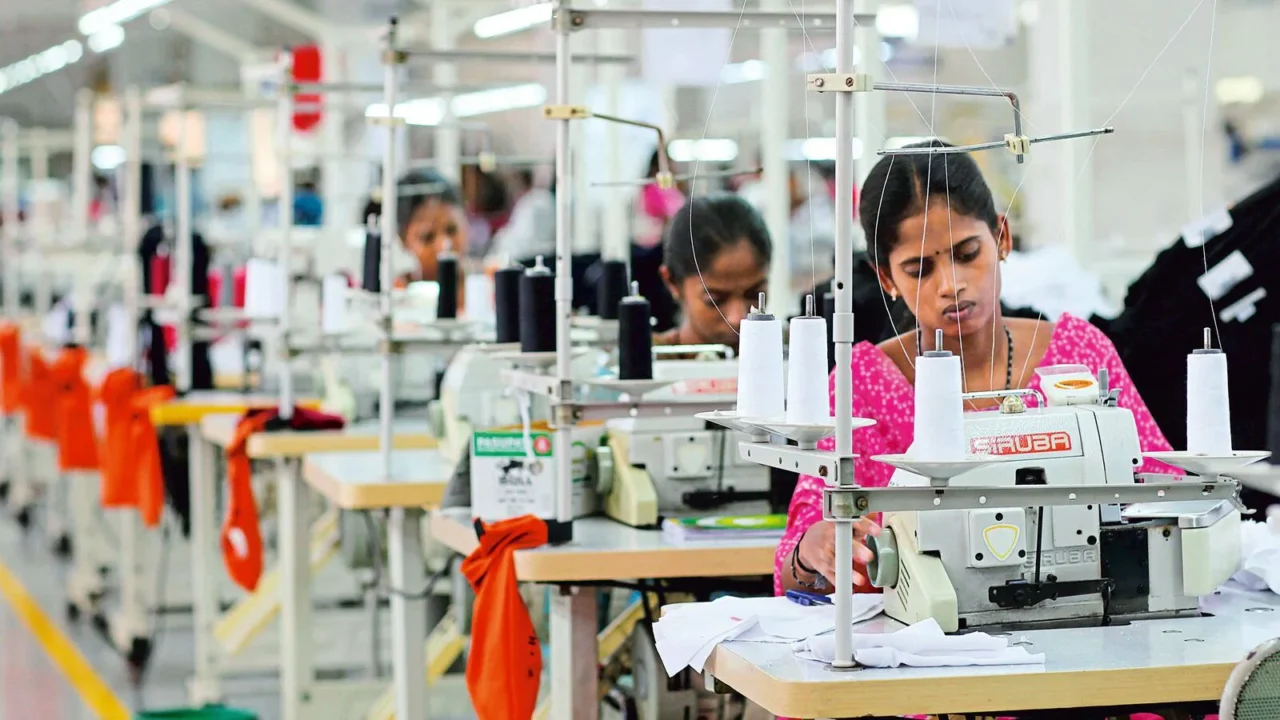
Bharat’s Micro, Small and Medium Enterprises (MSME) sector continues to receive focused policy support as the government intensifies efforts to modernise industrial clusters and strengthen traditional industries. The Ministry of MSME has successfully completed 364 projects under the Micro and Small Enterprises-Cluster Development Programme (MSE-CDP), marking a major milestone in improving infrastructure and competitiveness among small businesses.
The cluster-based approach adopted by the government aims to bring together enterprises operating in similar industries within a geographical region. Through this model, small businesses can access shared facilities, technology support, and infrastructure that would otherwise be too expensive to establish individually.
According to official information presented in the Lok Sabha, a total of 606 projects have been approved under the MSE-CDP scheme since its inception. Of these, 364 projects have already been completed, while 242 projects are currently in different stages of implementation.
These projects primarily focus on establishing Common Facility Centres (CFCs) and creating or upgrading industrial infrastructure. By pooling resources and providing access to advanced technology and facilities, the scheme aims to enhance productivity, innovation, and market competitiveness for micro and small enterprises.
Common Facility Centres
A key component of the MSE-CDP programme is the creation of Common Facility Centres, which act as shared technological and infrastructure hubs for clusters of MSMEs.
These centres offer facilities that individual small enterprises often cannot afford independently. The government provides financial assistance to establish these centres, allowing entrepreneurs to benefit from modern tools and services that improve production efficiency and product quality.
The range of facilities supported under the programme includes advanced technological infrastructure such as Industry 4.0 learning systems, additive manufacturing facilities, and digital infrastructure. These centres also house design and incubation hubs, enabling entrepreneurs to develop new products and business models.
Training and skill development form another critical aspect of the programme. Many CFCs include training centres and skill upgradation facilities, helping workers and entrepreneurs adapt to evolving industrial practices and technologies.
The scheme also encourages innovation and sustainability by supporting research and development centres, as well as infrastructure for renewable energy generation including solar, wind, and bio-energy systems. Energy management equipment is also supported to improve efficiency and reduce operational costs.
In addition, the programme promotes the development of Greenfield clusters, which are new industrial clusters designed to provide holistic growth opportunities for MSMEs in emerging sectors.
Importantly, the MSE-CDP scheme is demand-driven. State governments and Union Territories submit project proposals based on the specific needs of clusters within their regions. This ensures that the infrastructure and facilities developed under the scheme are aligned with local industrial requirements.
SFURTI Scheme Revives Traditional Industries
Alongside modern industrial development, the government is also focusing on revitalising India’s traditional industries through the Scheme of Fund for Regeneration of Traditional Industries (SFURTI).
Since the financial year 2015-16, the scheme has facilitated cluster-based development for traditional industries, bringing together artisans engaged in sectors such as handicrafts, handloom, agro-processing, coir production, honey processing, and other rural economic activities.
Under the SFURTI programme, 513 clusters have been approved across the country, with a total committed government assistance of Rs 1,332.95 crore.
The scheme aims to strengthen traditional industries by improving infrastructure, providing skill development opportunities, enhancing product value addition, and facilitating better market linkages for artisans.
Out of the total approved clusters, 378 clusters are currently operational, while 135 clusters are at various stages of implementation.
These clusters are expected to directly benefit around 3.03 lakh traditional artisans, many of whom depend on these industries as their primary source of livelihood. By organising artisans into clusters, the programme seeks to improve economies of scale, enhance productivity, and ensure sustainable income generation.
Boosting Rural Livelihoods
The cluster-based approach adopted under SFURTI has played a crucial role in strengthening rural economies. Many traditional industries operate in rural and semi-urban areas where employment opportunities are limited.
By providing artisans with access to modern equipment, training, and market linkages, the scheme helps improve both productivity and income levels. This not only supports traditional crafts but also prevents the gradual decline of heritage industries that form an integral part of India’s cultural identity.
Infrastructure development under SFURTI includes common production centres, raw material banks, design centres, packaging facilities, and marketing support systems. These interventions enable artisans to produce higher quality goods and reach larger markets.
Skill development programmes conducted under the scheme also equip artisans with new techniques and design innovations, helping traditional products remain competitive in modern markets.
Digitalisation transforming MSME operations
The MSME sector has witnessed a rapid shift towards digitalisation in recent years, with small businesses increasingly adopting modern technologies to improve operational efficiency and competitiveness.
According to the MSME Ministry, the adoption of digital payments, e-commerce platforms, Internet of Things (IoT)-enabled production tools, and artificial intelligence-based technologies has significantly improved business operations for small enterprises.
To support this transition, the government has launched several digital initiatives aimed at empowering MSMEs.
Platforms developed by the Ministry of Electronics and Information Technology, including DigiLocker and the IndiaAI Datasets Platform, are helping businesses access digital infrastructure and data resources.
At the same time, telecommunications infrastructure initiatives such as BharatNet and PM-WANI are expanding affordable internet connectivity, particularly in rural and semi-urban areas where many MSMEs operate.
Digital empowerment through MSME schemes
The MSME Ministry itself has introduced several programmes to promote digital empowerment and technological innovation among small enterprises.
One of the most significant initiatives is the Udyam registration system, which enables MSMEs to digitally register their businesses and access government benefits more easily.
The ministry also supports technology adoption through training programmes conducted at Tool Rooms and Technology Centres, where entrepreneurs can learn about advanced manufacturing processes and digital technologies.
Innovation is further encouraged through the MSME Innovative Scheme, which promotes the incubation of new ideas and technologies. Meanwhile, the MSE Green Investment for Financing Transformation (MSE-GIFT) scheme supports MSMEs in adopting environmentally sustainable technologies.
These schemes combine financial incentives, awareness programmes, and capacity building efforts to help small businesses transition towards modern, technology-driven operations.
TEAM scheme to bring MSMEs onto digital commerce
Recognising the growing importance of online marketplaces, the government has also launched the Trade Enablement and Marketing (TEAM) scheme.
This initiative focuses on helping micro and small enterprises integrate with the Open Network for Digital Commerce (ONDC), a government-backed platform designed to democratise e-commerce.
Under the scheme, financial assistance is provided to Seller Network Participants (SNPs) who help onboard MSMEs onto the platform. The assistance covers key operational aspects such as product cataloguing, account management, logistics, packaging materials, and design support.
The initiative is also designed with an emphasis on women’s entrepreneurship. Half of the MSMEs benefiting from the scheme are expected to be women-owned enterprises, reflecting the government’s broader focus on inclusive economic growth.
The combination of cluster development programmes, digital initiatives, and traditional industry support reflects the government’s broader strategy to build a resilient and competitive MSME ecosystem.
By strengthening infrastructure, encouraging technological adoption, and supporting traditional artisans, these schemes aim to create sustainable livelihoods while boosting economic growth at the grassroots level.
The progress of these programmes was shared in Parliament by Minister of State for Micro, Small and Medium Enterprises Shobha Karandlaje, who provided the details in a written reply in the Lok Sabha on March 12, 2026.
As India continues to expand its manufacturing base and digital economy, the MSME sector remains a critical pillar of the country’s economic framework. With targeted policy interventions and cluster-based development models, the government hopes to empower millions of small entrepreneurs and artisans while strengthening India’s industrial ecosystem.