NEW DELHI: As Maoism began to wane in Bastar, the southern division of Chhattisgarh state, infamous for the presence of the Maoists’ strongest units till a few years back, peace and normalcy have begun to return to the region.
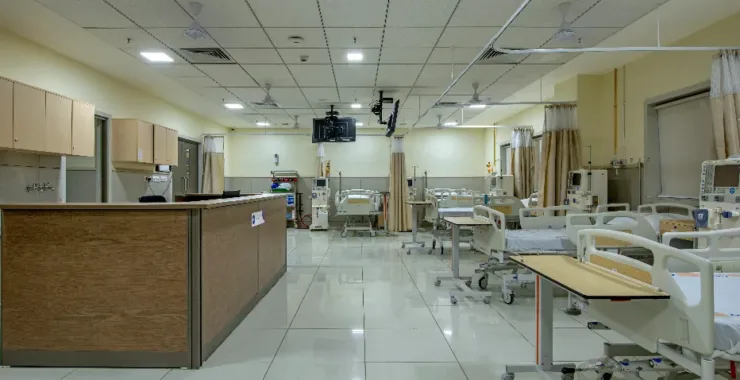
In an eye-catching development, Jagdalpur, the district headquarters of Bastar, one of the 7 districts of the division, is all set to open its first super speciality hospital from February, enabling residents to avail crucial medical services with ease.
According to details, certain facilities at the 240-bed super speciality hospital built in Dimrapal village of the town are already operational, with a formal launch scheduled for February this year. The facility has come up on around 11 acres of land and under the public-private partnership model.
The project is a result of a joint collaboration between Hyderabad Continental Hospitals and the state government of Chhattisgarh, marking a significant step forward towards providing quality healthcare in Bastar, a region where development and welfare-related work have been delayed for prolonged periods due to the threat posed by the Maoist insurgency.
The residents of the region, upon opening of the facility, would be able to avail the benefits of crucial healthcare related to cardiology, urology and neurosurgery, for which the people had to travel to Raipur or Hyderabad. According to media reports, the upcoming super speciality hospital at the town has already hired over 30 consultant doctors, junior doctors and nursing staffs with hiring process on for other vacant positions.
The project is a shining example of public-private partnership model involving the state government, which has provided the infrastructure, the Continental Hospital which is providing medical specialists and the National Mineral Development Corporation which has contributed towards operationalising the facility via CSR funding.
Strengthened security paving way for return of normalcy
It is worth noting here that the security apparatus has improved significantly in insurgency-hit pockets of the Bastar region in recent years, paving the way for development and other welfare-related schemes to reach remote regions. This comes after security forces erected key operating bases in Maoist’s strongholds, enabling the former to launch frequent operations and area domination exercises.
Installation of these camps have enabled the administration to carry out key development works such as road construction, installation of mobile towers, along restoring banking, education and health related facilities. Upgraded security apparatus has also installed a sense of security among the locals who were earlier deprived of such basic facilities and were barred from actively engaging in any such projects.
The region recently saw unfurling of the national flag for the first time in around 47 villages. The security personnel this year also hoisted the Republic Day celebrations at Karegutta Hills, the infamous bastion of the proscribed group, where a joint team of security forces carried out a fortnight long operation ‘Black Forest’ in April-May last year.
Deadline to eliminate Maoist-insurgency
Anti-Naxal drive is in full swing across multiple states affected by red terror, after Union Home Minister Amit Shah came up with a deadline to wipe out the Maoist menace by March 31, this year.
Notably, forces have already intensified their campaign in insurgency-hit states like Chhattisgarh, Jharkhand and affected regions of Andhra Pradesh, Telangana, Maharashtra and Odisha. Operations against Maoists in Bastar alone resulted in neutralisation of more than 250 Naxalites in 2025.
Other than the ongoing security campaign, the government of respective states have also launched rehabilitation schemes for Maoists, laying down arms before authorities. Significantly, near about 2000 former Maoists returned to the mainstream by shunning the path of violence and terror in 2025.