India startup architecture systematically building Viksit Bharat
June 24, 2026
  • Read Ecopy
  • Circulation
  • Advertise
  • Careers
  • About Us
  • Contact Us
Android AppiPhone AppArattai
Organiser
  • ‌
  • Bharat
    • Assam
    • Bihar
    • Chhattisgarh
    • Jharkhand
    • Maharashtra
    • View All States
  • World
    • Asia
    • Europe
    • North America
    • South America
    • Africa
    • Australia
  • Editorial
  • International
  • Opinion
  • RSS @ 100
  • More
    • Op Sindoor
    • Analysis
    • Sports
    • Defence
    • Politics
    • Business
    • Economy
    • Culture
    • Special Report
    • Sci & Tech
    • Entertainment
    • G20
    • Azadi Ka Amrit Mahotsav
    • Vocal4Local
    • Web Stories
    • Education
    • Employment
    • Books
    • Interviews
    • Travel
    • Law
    • Health
    • Obituary
  • Subscribe
    • Subscribe Print Edition
    • Subscribe Ecopy
    • Read Ecopy
  • ‌
  • Bharat
    • Assam
    • Bihar
    • Chhattisgarh
    • Jharkhand
    • Maharashtra
    • View All States
  • World
    • Asia
    • Europe
    • North America
    • South America
    • Africa
    • Australia
  • Editorial
  • International
  • Opinion
  • RSS @ 100
  • More
    • Op Sindoor
    • Analysis
    • Sports
    • Defence
    • Politics
    • Business
    • Economy
    • Culture
    • Special Report
    • Sci & Tech
    • Entertainment
    • G20
    • Azadi Ka Amrit Mahotsav
    • Vocal4Local
    • Web Stories
    • Education
    • Employment
    • Books
    • Interviews
    • Travel
    • Law
    • Health
    • Obituary
  • Subscribe
    • Subscribe Print Edition
    • Subscribe Ecopy
    • Read Ecopy
Organiser
  • Home
  • Bharat
  • World
  • Operation Sindoor
  • Editorial
  • Analysis
  • Opinion
  • Culture
  • Defence
  • International Edition
  • RSS @ 100
  • Magazine
  • Read Ecopy
Home Bharat

India startup architecture systematically building the foundations of Viksit Bharat

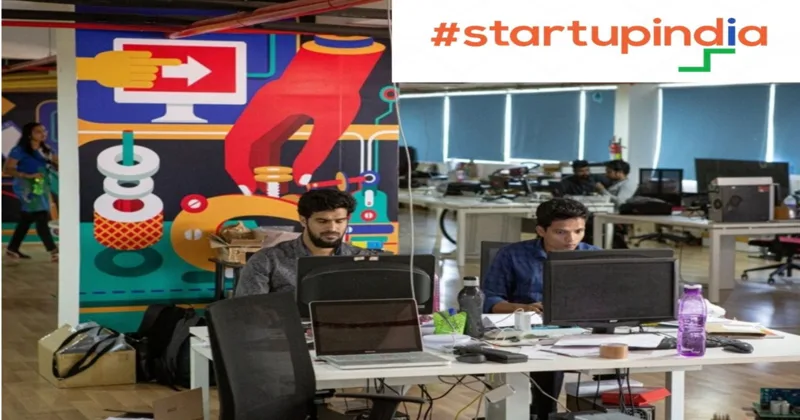
Startup India ecosystem has emerged as a structured national framework enabling innovation, early-stage risk-taking and inclusive entrepreneurship, while extending institutional support and capital access beyond metros to strengthen Viksit Bharat long-term economic and technological growth

Vivek KumarVivek Kumar
Jan 25, 2026, 06:00 pm IST
in Bharat, Analysis, Economy, Sci & Tech
Follow on Google News
Representative Image

Representative Image

FacebookTwitterWhatsAppTelegramEmail

India marks a decade of its startup policy journey, the entrepreneurial ecosystem today reflects not spontaneity but institutional design. The rise of over 2 lakh DPIIT recognised startups by December 2025 is not confined to private risk taking only, it is the outcome of a well planned public framework that deliberately addressed capital access, mentorship gaps, regional imbalance and early stage of development. This first phase of India’s startup transformation focused on building the backbone policy, finance, incubation and human capital, without which scale of development would not have been possible.

From policy signal to system creation

When the Startup India Initiative was launched in 2016 under the Department for Promotion of Industry and Internal Trade (DPIIT), India had only four unicorns. The challenge was not a lack of ideas, but the absence of a full lifecycle support system. Over the decade, the government has shifted approach from enabling entry to engineering continuity by ensuring startups could survive ideation and early failure.

By 2025, India crossed 120 unicorns with a combined valuation exceeding $350 billion, a structural leap driven by domestic capital formation, incubator density and risk sharing mechanisms.

Funding the risk: From venture scarcity to capital depth

One of the defining interventions in the journey of start-ups in India has been that of the “Fund of Funds for Start-ups” or FFS, which has a corpus of ₹10,000 crores and is managed by SIDBI. Instead of being selected by the Government itself, the FFS has opted for a market savvy route by making investments through SEBI registered Alternative Investment Funds or AIFs.

By the end of 2025, it had supported more than 140 AIFs, facilitated the incremental use of ₹25,500+ crores and allowed investment into 1,370+ startups. This investment structure was instrumental in bootstrap stage, capital intensive startups such as Zypp Electric, which tapped into electric vehicle sector focused funds leds by FFS supported AIFs and contributed towards employment generation and lowering overall urban emissions and pollution through last mile electric logistics solutions in the sectors of Delhi-NCR, Bengaluru and Hyderabad.

De-risking the earliest stage: Seed and credit access

Recognising that venture capital is not enough to incubate idea stage innovation, the government introduced the Startup India Seed Fund Scheme (SISFS) with a committed corpus of ₹945 crore. Unlike growth stage funding, SISFS addresses the most vulnerable stage in the life cycle of a startup and supports proof of concept development, prototyping, product trials and early market validation. By 2025, the scheme had sanctioned over 215 incubators across the country, enabling thousands of early-stage startups to get structured seed support. One of the exciting beneficiaries of this evolving ecosystem is “AyuSynk” a health tech startup incubated in a Tier-II city. Utilising seed funding, AyuSynk piloted AI-driven primary diagnostic solutions for semi urban clinics, showcasing how early risk capital enables experimentation and healthcare innovation beyond metropolitan centres.

In parallel, CGSS resolved the chronic Indian constraint on account of lack of collateral with ₹800plus crore of loans guaranteed across 330 plus cases, startups in manufacturing and services were able to access bank finance without the need for asset backing. This turned out to be of essence for hardware and agri processing startups who do not fit pure VC models.

Mentorship as infrastructure, Not charity

Capital alone does not scale companies. The MAARG National Mentorship Portal institutionalised access to experienced founders, sector experts and investors. Rather than informal networks limited to elite circles, mentorship became digitally democratised.

Startups such as FarmSetu, an agri logistics platform connecting FPOs to urban retailers, credit mentorship under MAARG for refining supply chain models and regulatory navigation a key to operating across multiple states.

A significant outcome of structured policy was the States’ Startup Ranking Framework, which introduced measurable governance competition among states. Rather than centralised execution, states were incentivised to improve policy clarity, incubation support and procurement access.

The results are visible:

  • Approximately 50 per cent of DPIIT defined startups today come from Tier-II and Tier-III cities
  • Ecosystem leaders that emerged were Odisha, Kerala, Madhya Pradesh and Rajasthan which are not conventional hotspots
  • This distribution helped decentralization and new innovations such as Navik AgriTech in Madhya Pradesh, which focused on IoT solutions for small farmers in their soil-related advisory, emerged through incubators supported by the state and not through accelerators in.

Atal Innovation Mission: Creating the human pipeline

While Startup India concentrated on startups, Atal Innovation Mission (AIM) tried to address a much larger aspect with mindset and skillsets. This had a budget allocation of ₹2,750 crore until 2028. They targeted schools, colleges and communities.

The premier Atal Tinkering Labs (ATLs) have 10,000+ labs in 733 districts, exposed 1.1 crore children to applied problem solving, yielding 16 lakh innovation projects. One such product developed using this pipeline is Eyantra Robotics, formed by former students of ATL, currently developing low cost robotics kits for training institutes, thereby filling the gap between what is taught and what is required in industry.

Also Read: India Quietly Hits Back at Tariff Hooliganism: Mega deals with Europe & UAE to re-engineer global trade power dynamics

Grassroots and inclusion as strategy not afterthought

Apart from the technology hubs, India focused on encouraging grassroots entrepreneurship. Programmes like SVEP, ASPIRE and PMEGP ensured enterprise creation was not urban exclusive.

  • SVEP supported 3.74 lakh rural enterprises by June 2025
  • PMEGP enabled manufacturing projects up to ₹50 lakh with margin subsidies up to 35% for special categories

From this ecosystem emerged Grameen Haats Solutions, a rural commerce startup helping SHG-run enterprises digitise procurement and local markets demonstrating how policy backed microenterprise can transition into scalable platforms.

Structural shift in start-ups environment

Perhaps the most underreported transformation is gender inclusion. By December 2025, more than 45 per cent of recognized start-ups had at least one female director or partner. This is not a coincidence, this has been achieved through incentives and incubator requirements to facilitate access to credits.

Start-ups such as SheServe, a women led platform for home based professional services in Tier III towns, are examples of how the idea of inclusion got converted into practical business models and not just a feel good factor.

The initial Indian experience was not about scaling valuation, remedying a shortage of capital, an asymmetric problem of mentorship, geography or overcoming challenges associated with risks pertaining to the start-up’s early growth. The challenge was to correct all these simultaneously to ensure that innovation happens from a classroom, village or small town rather than an office park.


Topics: Viksit BharatstartupsAtal Innovation MissionunicornsStartup India ecosystemDepartment for Promotion of Industry and Internal Trade (DPIIT)
ShareTweetSendShareSend
✮ Subscribe Organiser YouTube Channel. ✮
✮ Join Organiser's WhatsApp channel for Nationalist views beyond the news. ✮
Previous News

Jamaat-e-Islami Kerala targets government school children via painting contest, raising fears over free thinking

Next News

Reviving Ganga as trade route: How inland waterways are reshaping the economy of Kashi

Related News

Prime Minister Narendra Modi

Viksit Bharat: PM Modi slams Congress — ‘Blocks development, claims credit’

The Modi era is presented as a transformative phase in Indian politics, governance, and national identity, reflecting the aspirations of a rapidly evolving India

Modi Yug: How twelve years of governance reshaped India’s aspirations, identity & development trajectory

Bharat Innovates: Launchpad for India’s deeptech industry; Features 120 innovators, 15 institutions & 500 investors

Railway Minister Ashwini Vaishnaw

How India achieved a global first by running double-stack container trains under an electrified railway network

Uttar Pradesh CM Yogi Adityanath

Project GANGA: Yogi Adityanath’s ambitious plan to transform rural Uttar Pradesh into network of smart digital villages

As Bharat moves toward Viksit Bharat, reclaiming the Gurukul tradition of debate, experiential learning, and holistic education, as envisioned in NEP 2020, is the need of the hour

From Gurukul to NEP 2020: Reclaiming Bharat’s ancient educational wisdom for a holistic and viksit future

Load More

Latest News

Can Karnataka bypass SIR rules? Residence certificate move sparks citizenship debate

Karnataka SIR Controversy: Residence certificate plan unlikely to pass ECI’s voter verification test

The US Ambassador to India Sergio Gor and Tamil Nadu Chief Minister Joseph Vijay; The tweet of BJP Tamil Nadu State Secretary Ashvathaman.

BJP Tamil Nadu urges Jaishankar to intervene over US Ambassador’s ‘two nations’ remark after meeting CM Joseph Vijay

Puri Rath Yatra 2026: Authorities finalise crowd management plan

Puri Rath Yatra 2026 in Odisha: Massive security, healthcare and transport arrangements finalised

Karnataka's Gruha Lakshmi scheme faces scrutiny after CAG flags 19,000 beneficiaries linked to one account

Karnataka: Gruha Lakshmi scheme under scanner; CAG flags 19,000 beneficiaries linked to same bank account

Pesticides linked to cancer and environmental harm remain in use on Indian farms, sparking fresh concerns about food safety

Toxic Harvest? Why cancer-linked pesticides continue to be used across Indian farms despite global concerns

Gem-quality diamonds found during exploration in Chhattisgarh's Mahasamund

From Panna to Mahasamund: Could Chhattisgarh be India’s next diamond frontier?

External Affairs Minister S Jaishankar

Kanishka Bombing Anniversary: Jaishankar reaffirms India’s commitment to combat terrorism in all its forms

Rani Durgawati

Remembering Rani Durgavati: A woman can be a mother, an empress and an embodiment of an immortal resolve

Karan Singh Kept in Dark: Sheikh Abdullah Never Informed J&K’s Sadr-e-Riyasat of Syama Prasad Mookerjee’s Death (This image is generated by AI)

Syama Prasad Mookerjee Death Mystery: Karan Singh says Sheikh Abdullah never informed him

On the occasion of Dr Syama Prasad Mookerjee’s State-Level Balidan Diwas , Chief Minister Shri Mohan Charan Majhi and others at an event organized at Jayadev Bhawan on June 23, 2026

“Article 370 abrogation fulfilled Dr Syama Prasad Mookerjee’s dream,” says Odisha CM Majhi at Balidan Divas programme

Load More
  • Privacy
  • Terms
  • Cookie Policy
  • Refund and Cancellation
  • Delivery and Shipping

© Bharat Prakashan (Delhi) Limited.
Tech-enabled by Ananthapuri Technologies

  • Home
  • Search Organiser
  • Bharat
    • Assam
    • Bihar
    • Chhattisgarh
    • Jharkhand
    • Maharashtra
    • View All States
  • World
    • Asia
    • Africa
    • North America
    • South America
    • Europe
    • Australia
  • Editorial
  • Operation Sindoor
  • Opinion
  • Analysis
  • Defence
  • Culture
  • Sports
  • Business
  • RSS @ 100
  • Entertainment
  • More ..
    • Sci & Tech
    • Vocal4Local
    • Special Report
    • Education
    • Employment
    • Books
    • Interviews
    • Travel
    • Health
    • Politics
    • Law
    • Economy
    • Obituary
  • Subscribe Magazine
  • Read Ecopy
  • Advertise
  • Circulation
  • Careers
  • About Us
  • Contact Us
  • Policies & Terms
    • Privacy Policy
    • Cookie Policy
    • Refund and Cancellation
    • Terms of Use

© Bharat Prakashan (Delhi) Limited.
Tech-enabled by Ananthapuri Technologies