Joint Tax for Couples: A game-changer in India
September 16, 2026
  • Read Ecopy
  • Circulation
  • Advertise
  • Careers
  • About Us
  • Contact Us
Android AppiPhone AppArattai
Organiser
  • ‌
  • Bharat
    • Assam
    • Bihar
    • Chhattisgarh
    • Jharkhand
    • Maharashtra
    • View All States
  • World
    • Asia
    • Europe
    • North America
    • South America
    • Africa
    • Australia
  • Editorial
  • International
  • Opinion
  • RSS @ 100
  • More
    • World Hindu Congress 2026
    • Op Sindoor
    • Analysis
    • Sports
    • Defence
    • Politics
    • Business
    • Economy
    • Culture
    • Special Report
    • Sci & Tech
    • Entertainment
    • G20
    • Azadi Ka Amrit Mahotsav
    • Vocal4Local
    • Web Stories
    • Education
    • Employment
    • Books
    • Interviews
    • Travel
    • Law
    • Health
    • Obituary
  • Subscribe
    • Subscribe Print Edition
    • Subscribe Ecopy
    • Read Ecopy
  • ‌
  • Bharat
    • Assam
    • Bihar
    • Chhattisgarh
    • Jharkhand
    • Maharashtra
    • View All States
  • World
    • Asia
    • Europe
    • North America
    • South America
    • Africa
    • Australia
  • Editorial
  • International
  • Opinion
  • RSS @ 100
  • More
    • World Hindu Congress 2026
    • Op Sindoor
    • Analysis
    • Sports
    • Defence
    • Politics
    • Business
    • Economy
    • Culture
    • Special Report
    • Sci & Tech
    • Entertainment
    • G20
    • Azadi Ka Amrit Mahotsav
    • Vocal4Local
    • Web Stories
    • Education
    • Employment
    • Books
    • Interviews
    • Travel
    • Law
    • Health
    • Obituary
  • Subscribe
    • Subscribe Print Edition
    • Subscribe Ecopy
    • Read Ecopy
Organiser
  • Home
  • Bharat
  • World
  • Operation Sindoor
  • Editorial
  • Analysis
  • Opinion
  • Culture
  • Defence
  • International Edition
  • RSS @ 100
  • Magazine
  • Read Ecopy
Home Bharat

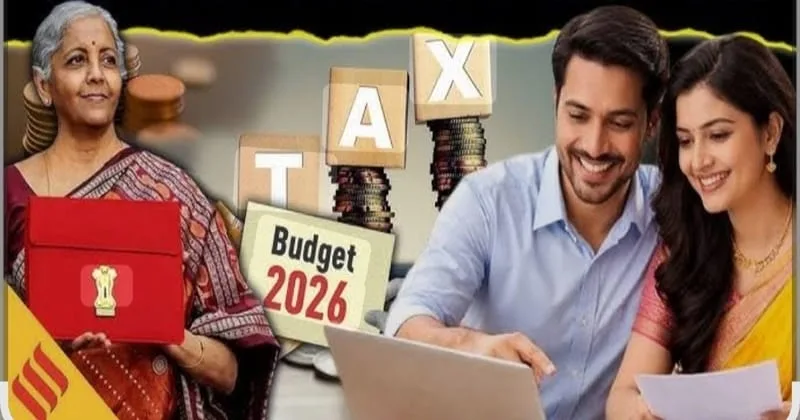
Joint Taxation for Married Couples — A historic shift in India’s tax system?

As India looks ahead to the Union Budget 2026–27, the proposal to introduce optional joint taxation for married couples is emerging as a potential game-changer in personal income tax. If implemented, it could shift the system from individual-centric taxation to a more family-oriented approach, offering relief to many households

WEBDESKWEBDESK
Jan 24, 2026, 07:30 pm IST
inBharat, Economy
Follow on Google News
Representative image

Representative image

Facebook
Twitter
WhatsAppTelegramEmail

New Delhi: As India prepares for the Union Budget 2026–27, a bold idea is gaining traction in financial and policy circles: introducing an optional joint taxation system for married couples. If approved, this would mark one of the most significant changes to Indian personal taxation in decades, moving from a strictly individual‑based assessment to a family‑oriented approach that could offer substantial relief for many households.

Present System: Individuals, not families

Under India’s current income‑tax framework, every taxpayer is assessed individually, irrespective of marital status or shared family expenses. Each spouse must file a separate return, claim exemptions and deductions on their own income, and cannot benefit from the unused exemptions of the other.

Currently, India’s income-tax system treats each individual separately, which creates a clear anomaly for many families. In single-income households, the non-earning spouse’s exemption limit goes completely unused, and even when one partner earns the majority of the household income, being married does not provide any tax advantage. This approach does not reflect the economic reality of many families, where incomes are often pooled, and expenses are shared. Joint taxation seeks to address this gap by allowing married couples to combine their incomes and file a single tax return as a household, rather than filing separately, thereby better aligning taxation with how families actually function financially.

Joint taxation would allow a married couple to combine their incomes and file a single tax return as a household, rather than submitting two separate returns. Under this system, the combined income would be assessed under a shared tax slab structure, potentially with a higher basic exemption limit and wider slabs for joint filers. Importantly, the system is expected to be optional, giving couples the flexibility to choose between joint filing and the existing individual-based taxation, depending on what is more beneficial for them. Both spouses would still need valid PANs to be eligible. Overall, the objective of joint taxation is to recognise the household as a single economic unit, more accurately reflecting shared incomes, expenses, and financial responsibilities.

Several major economies already follow some form of family-based or joint taxation, providing useful global precedents for India. In the United States, married couples can choose to file their taxes jointly or separately, with joint filing often offering significant tax advantages. Similarly, Germany and several other European countries allow the incomes of spouses to be combined under specific conditions for tax assessment. Supporters of joint taxation in India frequently cite these international models to argue that recognising households rather than just individuals can lead to a more equitable and realistic tax system.

What Joint Taxation Could Fix

Better utilisation of exemptions

Under a separate filing, a non‑earning spouse’s exemption and slab benefits are wasted. Joint taxation would bring these unused limits into play, potentially reducing the effective tax burden of the household.

More efficient tax slabs

One of the most discussed aspects of joint taxation is the possibility of a redesigned and more efficient tax slab structure for married couples. While these slabs are only illustrative and not part of any official government policy, experts suggest that joint filing could come with wider income bands and a higher basic exemption limit for households.

Up to Rs 8,00,000 Nil

RS 8,00,001 – Rs 16,00,000 5 per cent

Rs 16,00,001 – Rs 24,00,000 10 per cent

Rs 24,00,001 – Rs 32,00,000 15 per cent

Rs 32,00,001 – Rs 40,00,000 20 per cent

Rs 40,00,001 – Rs 48,00,000 25 per cent

Above Rs 48,00,000 30 per cent

The key advantage of such a structure lies in the doubling of the basic exemption limit and wider slab widths compared to individual taxation. This could significantly reduce the effective tax burden for many families, particularly single-income households, by allowing income to be taxed more gradually rather than being pushed into higher brackets too quickly. Overall, a broader slab system under joint taxation would aim to make tax rates more proportional to household earning capacity and better aligned with shared financial responsibilities.

Also Read: Kalyan Magazine Turns 100: Amit Shah lauds Gita Press for promoting Sanatan Dharma and running on a non-profit mission

Relief on surcharge

Under the current tax system, surcharge provisions apply once an individual’s income crosses a specified high-income threshold. In a joint taxation framework, experts argue that this threshold could be meaningfully raised for households, allowing combined incomes to be assessed before the surcharge becomes applicable. Such a change could provide additional relief to upper-middle-income families and make the surcharge structure more aligned with household-level earning realities, rather than individual incomes alone.

Better use of deductions

Joint assessment might allow more efficient use of deductions on items like home loan interest, medical insurance premiums, and other eligible investments by allowing them to be shared within the household calculation.

Simplified compliance

Two separate returns can complicate tax planning for families where investments, assets, or incomes are jointly held. Joint filing could simplify compliance and reduce administrative burden.

Who could benefit most?

Single‑income households, where only one spouse earns, stand to gain the most. For households where both partners earn similar incomes, the benefit may be less pronounced and, in some cases, could push the combined income into higher tax brackets.

The Union Budget 2026–27 will be presented by Finance Minister Nirmala Sitharaman on February 1, 2026. If the proposal is introduced, it could provide meaningful relief to many middle-class families and significantly reshape income-tax planning for married couples across the country.
 

Topics: Married CouplesNirmala SitharamanIndian EconomyBudget ExpectationsTax ReformsUnion Budget 2026Joint TaxationIncome Tax India
Share
Tweet
SendShareSend
✮ Subscribe Organiser YouTube Channel. ✮
✮ Join Organiser's WhatsApp channel for Nationalist views beyond the news. ✮
Previous News

NATO’s Moment of Truth: When the Security Umbrella Starts Leaking

Next News

Bagurumba Dwhou – Assam Sets Another New Milestone

Related News

Prime Minister Narendra Modi

UPI hits 24.51 billion transactions, now operational in 11 countries; PM Modi pushes global expansion

Representative Image

Indian Economy is not “Dead”: The numbers tell a very different story

Representative Image

The 7.8 per cent GDP growth is real; The outrage is manufactured!

PM Modi at SRCC

SRCC @100| Sach ki hoonkar ke aage, jhooth ki goonj tikegi nahi: PM Modi slams opposition as India ends fragile 5 tag

NITI Aayog data puts India’s unemployment debate in context, highlighting rising employment and labour-force participation

How did the opposition turn unemployment into a political weapon? NITI Aayog data puts the debate in the right context

AI Generated Representative Image

Japan Credit Agency Upgrades India to “A” Rating: Strong institutional reforms drive growth despite global headwinds

Load More

Latest News

Representative Image

India crossed 80 Lakh HPV vaccine doses despite a sustained misinformation campaign

Riyadh’s search for Israeli intelligence and Islamabad’s refusal to deploy forces to Yemen expose growing cracks in the regional security equation

Saudi turns to Israel for intelligence as Houthis escalate; Sunni NATO ally Pakistan refuses troops for Yemen war

Bihar Temple Vandalism: Police detain 3 minor Muslim boys for stone-throwing, urination at Hanuman murti in Nalanda

IIT Madras hosts first universal brotherhood day celebration, highlights Swami Vivekananda’s legacy and vision for youth

Universal Brotherhood Day: IIT Madras hosts first celebration honouring Swami Vivekananda’s historic Chicago speech

SECL is powering India’s energy security today while advancing responsible mining, greener operations and a sustainable path towards Net Zero

Powering the present, building the future: How SECL is delivering energy security and a net-zero pathway together

Representative Image

Who Owns the Blueprint Inside Your Chip? How India is Moving from Chip Imports to Home-Grown Silicon

From Left to Right: Kamakshi Swaminathan, National Vice President, Saksham; Satish Bansal, National Treasurer, Saksham; Umesh Aandhare, National General Secretary, Saksham; Alok Kumar, Sah Sarkaryavah; Dayal Singh Panwar, National President, Saksham; Gurmeet Singh Mahal, Jodhpur Prant President, Saksham; Dr Jasraj Sharma, Jodhpur Mahanagar President, Saksham; and Dhananjay Kumar Singh, National Krida Ayam Pramukh, Saksham

Saksham’s resolve for inclusion

Kashmiri Pandits perform a ritual on Balidan Diwas of Kashmiri Pandits, organised by Panun Kashmir in Paloura

Panun Kashmir observes Balidan Diwas in Jammu & Bengaluru, pay homage to martyrs

Tamil Nadu: Emerald Murugan murti stolen from Nadu Palani temple recovered from abandoned quarry, three arrested

Vande Mataram Row: Karnataka Congress govt faces HC challenge over two-stanza restriction

Load More
  • Privacy
  • Terms
  • Cookie Policy
  • Refund and Cancellation
  • Delivery and Shipping

© Bharat Prakashan (Delhi) Limited.
Tech-enabled by Ananthapuri Technologies

  • Home
  • Search Organiser
  • Bharat
    • Assam
    • Bihar
    • Chhattisgarh
    • Jharkhand
    • Maharashtra
    • View All States
  • World
    • Asia
    • Africa
    • North America
    • South America
    • Europe
    • Australia
  • Editorial
  • Operation Sindoor
  • Opinion
  • Analysis
  • Defence
  • Culture
  • Sports
  • Business
  • RSS @ 100
  • Entertainment
  • More ..
    • Sci & Tech
    • Vocal4Local
    • Special Report
    • Education
    • Employment
    • Books
    • Interviews
    • Travel
    • Health
    • Politics
    • Law
    • Economy
    • Obituary
  • Subscribe Magazine
  • Read Ecopy
  • Advertise
  • Circulation
  • Careers
  • About Us
  • Contact Us
  • Policies & Terms
    • Privacy Policy
    • Cookie Policy
    • Refund and Cancellation
    • Terms of Use

© Bharat Prakashan (Delhi) Limited.
Tech-enabled by Ananthapuri Technologies