

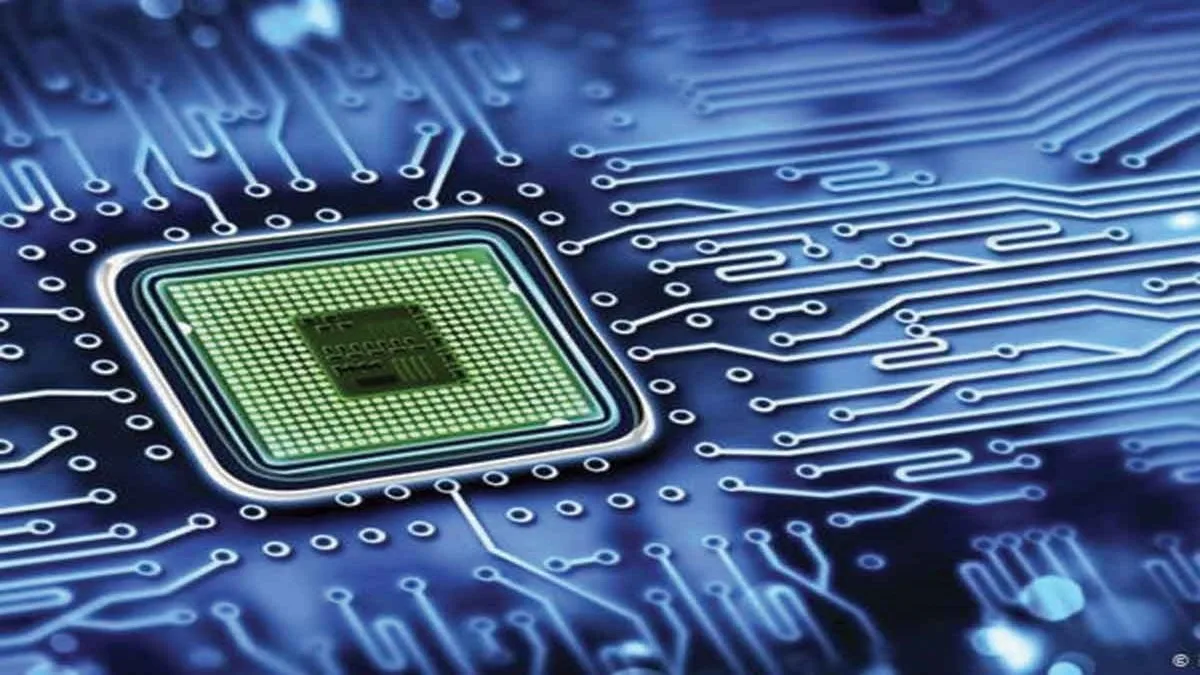
Who Owns the Blueprint Inside Your Chip? How India is Moving from Chip Imports to Home-Grown Silicon
September 15, 2026
  • Read Ecopy
  • Circulation
  • Advertise
  • Careers
  • About Us
  • Contact Us
Android AppiPhone AppArattai
Organiser
  • ‌
  • Bharat
    • Assam
    • Bihar
    • Chhattisgarh
    • Jharkhand
    • Maharashtra
    • View All States
  • World
    • Asia
    • Europe
    • North America
    • South America
    • Africa
    • Australia
  • Editorial
  • International
  • Opinion
  • RSS @ 100
  • More
    • World Hindu Congress 2026
    • Op Sindoor
    • Analysis
    • Sports
    • Defence
    • Politics
    • Business
    • Economy
    • Culture
    • Special Report
    • Sci & Tech
    • Entertainment
    • G20
    • Azadi Ka Amrit Mahotsav
    • Vocal4Local
    • Web Stories
    • Education
    • Employment
    • Books
    • Interviews
    • Travel
    • Law
    • Health
    • Obituary
  • Subscribe
    • Subscribe Print Edition
    • Subscribe Ecopy
    • Read Ecopy
  • ‌
  • Bharat
    • Assam
    • Bihar
    • Chhattisgarh
    • Jharkhand
    • Maharashtra
    • View All States
  • World
    • Asia
    • Europe
    • North America
    • South America
    • Africa
    • Australia
  • Editorial
  • International
  • Opinion
  • RSS @ 100
  • More
    • World Hindu Congress 2026
    • Op Sindoor
    • Analysis
    • Sports
    • Defence
    • Politics
    • Business
    • Economy
    • Culture
    • Special Report
    • Sci & Tech
    • Entertainment
    • G20
    • Azadi Ka Amrit Mahotsav
    • Vocal4Local
    • Web Stories
    • Education
    • Employment
    • Books
    • Interviews
    • Travel
    • Law
    • Health
    • Obituary
  • Subscribe
    • Subscribe Print Edition
    • Subscribe Ecopy
    • Read Ecopy
Organiser
  • Home
  • Bharat
  • World
  • Operation Sindoor
  • Editorial
  • Analysis
  • Opinion
  • Culture
  • Defence
  • International Edition
  • RSS @ 100
  • Magazine
  • Read Ecopy
Home Bharat

Who Owns the Blueprint Inside Your Chip? How India is Moving from Chip Imports to Home-Grown Silicon

India’s Semiconductor Mission is delivering results, with ₹1.64 lakh crore in investments, 12 units approved and home-grown chip designs gaining support through the Design Linked Incentive scheme

Neel GalaNeel Gala
Sep 15, 2026, 08:35 pm IST
inBharat, World, Opinion, International Edition
Follow on Google News
Facebook
Twitter
WhatsAppTelegramEmail

Five years after the India Semiconductor Mission was approved with an outlay of ₹76,000 crore, the record is remarkable: twelve manufacturing units cleared, investment above ₹1.64 lakh crore, three plants already in commercial production and the country’s first chip fabrication plant due in 2028. A quieter scheme, the Design Linked Incentive, has backed two dozen young Indian companies that design chips rather than build them. For a country that until recently imported every chip it used, the Ministry of Electronics and IT has earned its credit.

What deserves attention is that the Mission was designed well, not just funded well. Committing a design to silicon for the first time costs a fortune in one go, and no startup can earn its way there gradually. The scheme put support precisely at that step.

I can speak to this directly, because my company was one of those awardees. Since then, InCore has taken five customer and partner chips all the way to silicon  for motor control, smart electricity meters, smart doorbells and LiDAR-based sensing. Our processor designs run from tiny low-power controllers up to chips capable of running Linux.

These are practical, high-volume Indian products and that is precisely their significance. In such products, ownership of the design strengthens a company’s long-term capabilities, supports value creation in India and enables each unit sold to contribute to import substitution.

Semicon 2.0: Major Step

This is why Semicon 2.0, approved in July with an outlay of ₹1,27,500 crore, is an important next step. Alongside equipment, materials and research, it recognises design IP as a pillar in its own right. Design IP is the blueprint of the processor inside a chip, licensed, much like software, by whoever owns it. By recognising both manufacturing capacity and design ownership, the Mission supports a more complete and self-reliant semiconductor ecosystem.

A large share of a chip’s value comes from its design. Indian-owned design IP enables more of that value, knowledge and commercial opportunity to remain within the country throughout the life of a product. It also strengthens technological assurance in strategic sectors such as defence, space, telecom and the power grid. Manufacturing capacity gives India resilience, while design ownership deepens domestic capability and makes the ecosystem stronger. Together, they advance India’s goal of achieving 70 to 75 per cent semiconductor self-sufficiency by 2029.

Semicon 2.0 provides a strong platform for India’s design capabilities to grow alongside its manufacturing base. Home-grown processor designs, reference products and chip-design software can reinforce one another, creating wider commercial opportunities for Indian companies and greater choice for electronics manufacturers.

Semiconductors and India’s Growing Market

India’s growing base of competitive chip designs can support a vibrant domestic marketplace, making it easier for companies to discover, evaluate and license Indian technology. Shared platforms and clear commercial pathways can connect designers with product companies and help successful designs reach a wider market.

The Mission’s support for Indian designs is also creating the foundation for their wider adoption. Reference products, early commercial deployments and participation by public-sector and private-sector electronics companies can help proven Indian designs move steadily from development to large-scale use.

India’s strength in software and chip design also positions the country to contribute to the next generation of chip-design tools. Open chip architectures and AI-assisted design are creating new possibilities, and progress in this area can benefit every part of the semiconductor ecosystem through the 2030s.

Five years ago, India’s ability to design and manufacture its own chips was still an emerging ambition. The India Semiconductor Mission has helped turn that ambition into working silicon, commercial products and expanding domestic capability. With design recognised as a central pillar under Semicon 2.0, India is well placed to build a semiconductor ecosystem in which innovation, manufacturing and ownership grow together.

Topics: Semi Conductor hub
Neel Gala
Neel Gala
CTO and Co-Founder, InCore Semiconductors Pvt. Ltd [Read more]
Share
Tweet
SendShareSend
✮ Subscribe Organiser YouTube Channel. ✮
✮ Join Organiser's WhatsApp channel for Nationalist views beyond the news. ✮
Previous News

Saksham’s resolve for inclusion

Related News

A representative image (Source: X)

Tata electronics plans two more semiconductor fabs in Gujarat’s Dholera, eyes long-term global demand

Load More

Latest News

Who Owns the Blueprint Inside Your Chip? How India is Moving from Chip Imports to Home-Grown Silicon

From Left to Right: Kamakshi Swaminathan, National Vice President, Saksham; Satish Bansal, National Treasurer, Saksham; Umesh Aandhare, National General Secretary, Saksham; Alok Kumar, Sah Sarkaryavah; Dayal Singh Panwar, National President, Saksham; Gurmeet Singh Mahal, Jodhpur Prant President, Saksham; Dr Jasraj Sharma, Jodhpur Mahanagar President, Saksham; and Dhananjay Kumar Singh, National Krida Ayam Pramukh, Saksham

Saksham’s resolve for inclusion

Kashmiri Pandits perform a ritual on Balidan Diwas of Kashmiri Pandits, organised by Panun Kashmir in Paloura

Panun Kashmir observes Balidan Diwas in Jammu & Bengaluru, pay homage to martyrs

Tamil Nadu: Emerald Murugan murti stolen from Nadu Palani temple recovered from abandoned quarry, three arrested

Vande Mataram Row: Karnataka Congress govt faces HC challenge over two-stanza restriction

Keralam: Catholic nun claims classical dance learners’ ‘future will be disastrous’, urges them to pray to Jesus Christ

RSS Sarsanghchalak Dr Mohan Bhagwat with Rashtrasant Manojnyacharya Shri Pulak Sagar Ji Mahara

Rajasthan: Dr Bhagwat & Acharya Pulak Ji hold meaningful discussions on social harmony, cow service, dharma & culture

Bikers gather during the protest, with a pig’s head displayed (left); Kaunas Mosque in Lithuania (right).

Pig’s head displayed at Lithuania’s Kaunas Mosque as bikers disrupt Friday prayers amid fresh tensions across Europe

How Bal Gangadhar Tilak Turned Ganesh Chaturthi Into a Nationalist Movement

From Ganesh Utsav to Mass Movement: How Tilak’s ‘Lokmanya’ status faced desperate Communist propaganda

PM Modi’s Tamil Diplomacy: How Thirukkural Is Taking Tamil Wisdom to the World | BRICS 2026

PM Modi’s Tamil Diplomacy: How Thirukkural Is Taking Tamil Wisdom to the World | BRICS 2026

Load More
  • Privacy
  • Terms
  • Cookie Policy
  • Refund and Cancellation
  • Delivery and Shipping

© Bharat Prakashan (Delhi) Limited.
Tech-enabled by Ananthapuri Technologies

  • Home
  • Search Organiser
  • Bharat
    • Assam
    • Bihar
    • Chhattisgarh
    • Jharkhand
    • Maharashtra
    • View All States
  • World
    • Asia
    • Africa
    • North America
    • South America
    • Europe
    • Australia
  • Editorial
  • Operation Sindoor
  • Opinion
  • Analysis
  • Defence
  • Culture
  • Sports
  • Business
  • RSS @ 100
  • Entertainment
  • More ..
    • Sci & Tech
    • Vocal4Local
    • Special Report
    • Education
    • Employment
    • Books
    • Interviews
    • Travel
    • Health
    • Politics
    • Law
    • Economy
    • Obituary
  • Subscribe Magazine
  • Read Ecopy
  • Advertise
  • Circulation
  • Careers
  • About Us
  • Contact Us
  • Policies & Terms
    • Privacy Policy
    • Cookie Policy
    • Refund and Cancellation
    • Terms of Use

© Bharat Prakashan (Delhi) Limited.
Tech-enabled by Ananthapuri Technologies