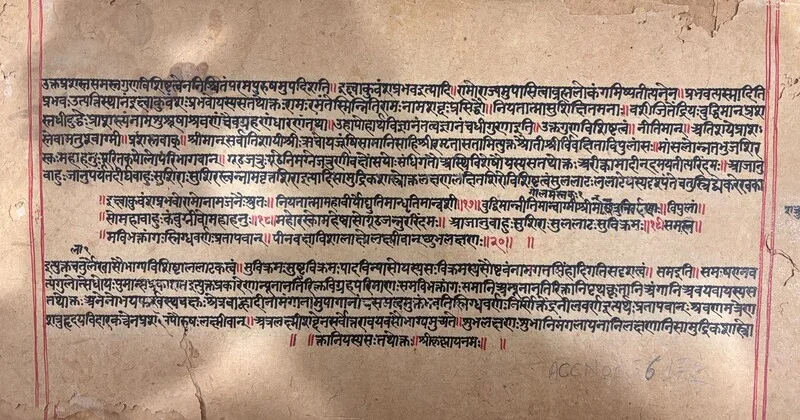
Ayodhya: A rare 233-year-old Sanskrit manuscript of the Valmiki Ramayana has been formally gifted to the Antarrashtriya Ram Katha Sangrahalaya (International Ram Katha Museum) in Ayodhya, marking a significant step in preserving India’s cultural and literary heritage.
233 साल पुरानी वाल्मीकि रामायण राम कथा संग्रहालय को भेंट की गई
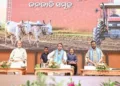
नई दिल्ली। केंद्रीय संस्कृत विश्वविद्यालय के कुलपति प्रोफेसर श्रीनिवास वरखेड़ी ने एक सांस्कृतिक हस्तांतरण के तहत, तीन मूर्ति स्थित प्रधानमंत्री संग्रहालय और पुस्तकालय (पीएमएमएल) की कार्यकारी परिषद के अध्यक्ष नृपेंद्र… pic.twitter.com/s3b1WwV5i1
— VSK BHARAT (@editorvskbharat) January 22, 2026
The manuscript was presented by Prof. Shrinivasa Varakhedi, Vice Chancellor of the Central Sanskrit University, to Nripendra Misra, Chairman of the Executive Council of the Prime Minister’s Museum and Library (PMML) at Teen Murti, during a ceremonial handover on January 21.
Authored by Adi Kavi Valmiki and accompanied by the classical commentary Tattvadipikatikka by Maheshvara Tirtha, the manuscript dates back to Vikrama Samvat 1849 (1792 CE). Written in Sanskrit in Devanagari script, it is a rare and well-preserved testament to the textual tradition of the Ramayana.
The collection includes five major kandas: Balakanda, Aranyakanda, Kishkindhakanda, Sundarakanda, and Yuddhakanda, reflecting both the narrative richness and philosophical depth of the epic. Scholars consider it a vital source for the study of classical Sanskrit literature and Indic itihasa traditions.
Previously on loan to Rashtrapati Bhavan, the manuscript has now been permanently transferred to the Ram Katha Museum in Ayodhya, reinforcing the museum’s role as a global center for Ramayaṇa studies and ensuring its long-term preservation and wider public access.
Speaking at the event, Prof. Varakhedi noted that the gift would help immortalize the timeless wisdom of the Valmiki Ramayana, making it accessible to scholars, devotees, and visitors from around the world in the sacred city of Ayodhya.
Nripendra Misra described the donation as a landmark moment for devotees of Bhagwan Ram and for the Ram Mandir complex, emphasising that the manuscript would significantly enrich the cultural and spiritual resources of the Ram Katha Sangrahalaya.