Organiser has, over the years, consistently reported on disturbing allegations emerging from Jamia Millia Islamia, a centrally funded university located in the national capital. From accusations of forced and inducement-based religious conversions to claims of systemic harassment of Hindu, Dalit and tribal employees and students, the institution has repeatedly found itself at the centre of controversy.
What distinguishes the present case is not merely the gravity of the allegations, but the documentary trail that accompanies it, including a detailed First Information Report, medical records, administrative complaints and police findings that, prima facie, establish offences under stringent legal provisions. Yet, despite this, the university administration has taken no visible action against the accused faculty member.
The case of Ram Phool Meena, a Scheduled Tribe employee of Jamia Millia Islamia, has once again forced uncomfortable questions into the public domain, about power, prejudice and protection within institutions funded by public money.
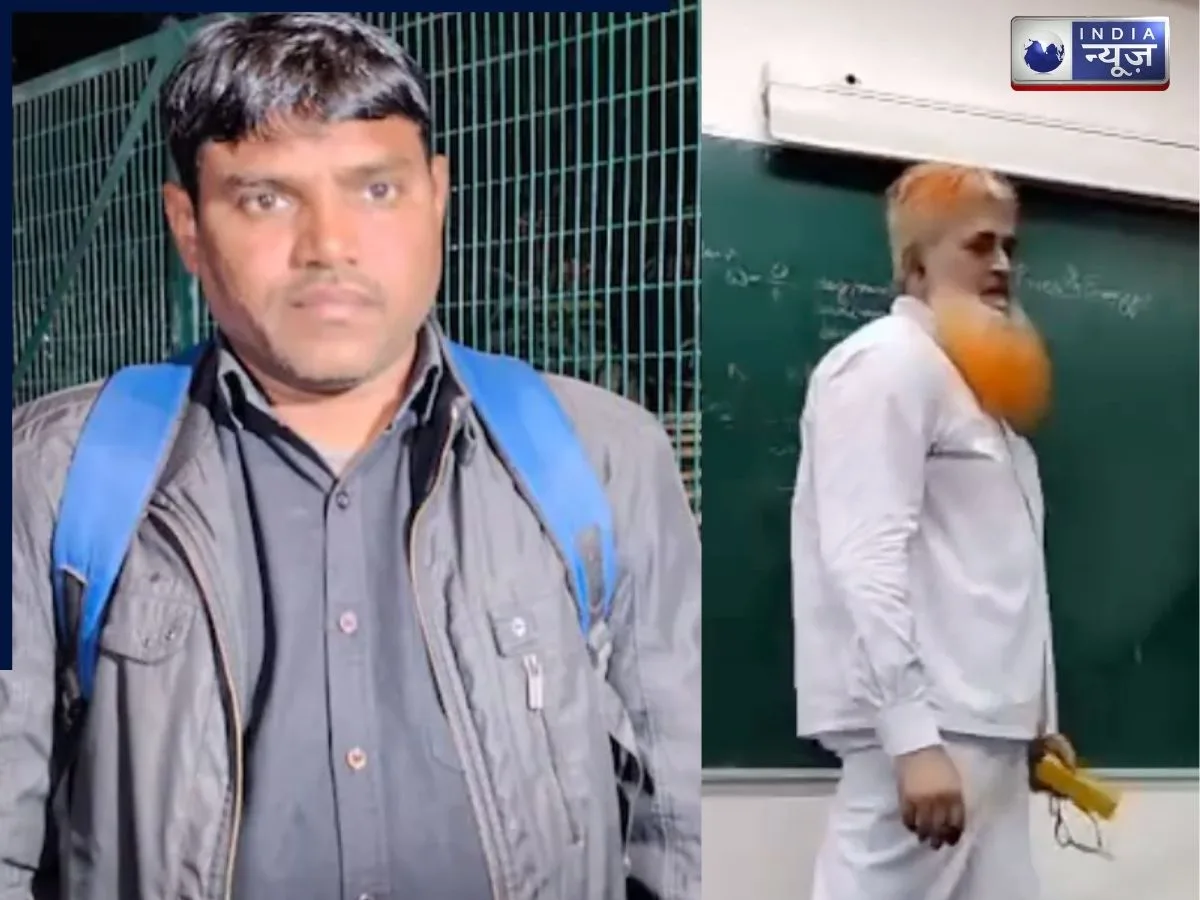
Who is the complainant
Ram Phool Meena, son of Narayan Lal Meena, belongs to the Scheduled Tribe community. He is employed as an Upper Division Clerk at Jamia Millia Islamia’s University Polytechnic, a unit functioning under the central university. By his own account and supported by official records, Meena has served in the institution in a non-teaching capacity and had no prior disciplinary issues.
The accused named in the FIR is Dr Riyazuddin, an Associate Professor in the Civil Engineering Department of the University Polytechnic.
The First Incident: January 13, 2026
According to Meena’s written complaint and the FIR subsequently registered, the first incident took place on January 13, 2026, at approximately 3:00 pm.
Meena stated that he was seated at his desk, carrying out his routine official work, when Dr Riyazuddin entered his office space without provocation. Approaching Meena’s table, the faculty member allegedly addressed him using caste-linked slurs, referring to him as “Meena kamina.”
When Meena objected and requested him to speak with basic dignity, the situation escalated. As per the complaint, Dr Riyazuddin began hurling obscene abuses, including slurs involving Meena’s mother and sister. The verbal abuse, Meena stated, was aggressive, humiliating and entirely unprovoked.
Shaken by the incident, Meena submitted a written complaint to the Registrar of Jamia Millia Islamia on the very same day.

What followed, according to Meena, was not institutional protection but administrative indifference. For the next two days, no action was taken on his complaint. More alarmingly, Meena alleged that the contents of his written complaint were leaked from within the Registrar’s office to the accused faculty member.
This alleged breach of confidentiality, Meena claims, directly contributed to the escalation that followed.
Second Incident: Violence and explicit caste abuse
On January 16, 2026, around 5:00 pm, Dr Riyazuddin returned to Meena’s office.
This time, the abuse, as recorded in the FIR, was more explicit, targeted and violent. The accused allegedly questioned Meena’s “audacity” to complain and explicitly invoked his tribal identity and religious background.
According to Meena’s statement, Dr Riyazuddin said: “Arey harami Meena, tumhari aukaat kaise hui ki tumne mere khilaaf complaint ki? Tum saale Adivasi jangli ho, Musalmanon ke idare mein rehkar mere khilaaf shikayat karne ki jurrat kaise ki?”

When Meena protested against this language, the faculty member allegedly came close and punched him in the face. This was followed by four to five additional punches. Meena stated that his lips began bleeding and he suffered visible swelling below his left eye.
Medical evidence and immediate aftermath
Following the assault, Meena had to seek medical attention at Jamia’s Ansari Health Centre, where he received primary treatment. Medical prescriptions dated January 16, 2026, have been attached with his police complaint.
The physical injuries, Meena stated, were accompanied by severe mental trauma, depression and a deep sense of social humiliation, particularly because the abuse occurred at his workplace and was rooted in his caste and tribal identity.
Later that same evening, at around 6:30 pm, Meena once again approached the Registrar’s office, this time accompanied by his Principal, Prof Mumtaz Ahmad Khan. He submitted another written complaint and sought immediate institutional intervention.
According to Meena, the Registrar assured him that the matter would be taken seriously and that there was “no need to go anywhere else.”
However, instead of disciplinary action against the accused faculty member, a transfer order was issued against Meena on the very same day. The order dated January 16, 2026, bearing Order No. F. No. Gen. 32/Esstt.-NT/RO/JMI/2025, transferred the complainant out of his department.
Meena has described this transfer as retaliatory, punitive and intended to silence him.
Police complaint and FIR registration
Having lost faith in the university administration, Meena approached the Delhi Police and formally lodged a complaint.
Based on his complaint dated January 17, 2026, an FIR (No. 33/2026) was registered at Jamia Nagar Police Station, South-East Delhi, on January 20, 2026.
As per police records, Meena’s medical examination was conducted at AIIMS, New Delhi, vide MLR No. M18042492600515 dated January 20, 2026. The doctor recorded the injury details and declared the complainant fit for statement.
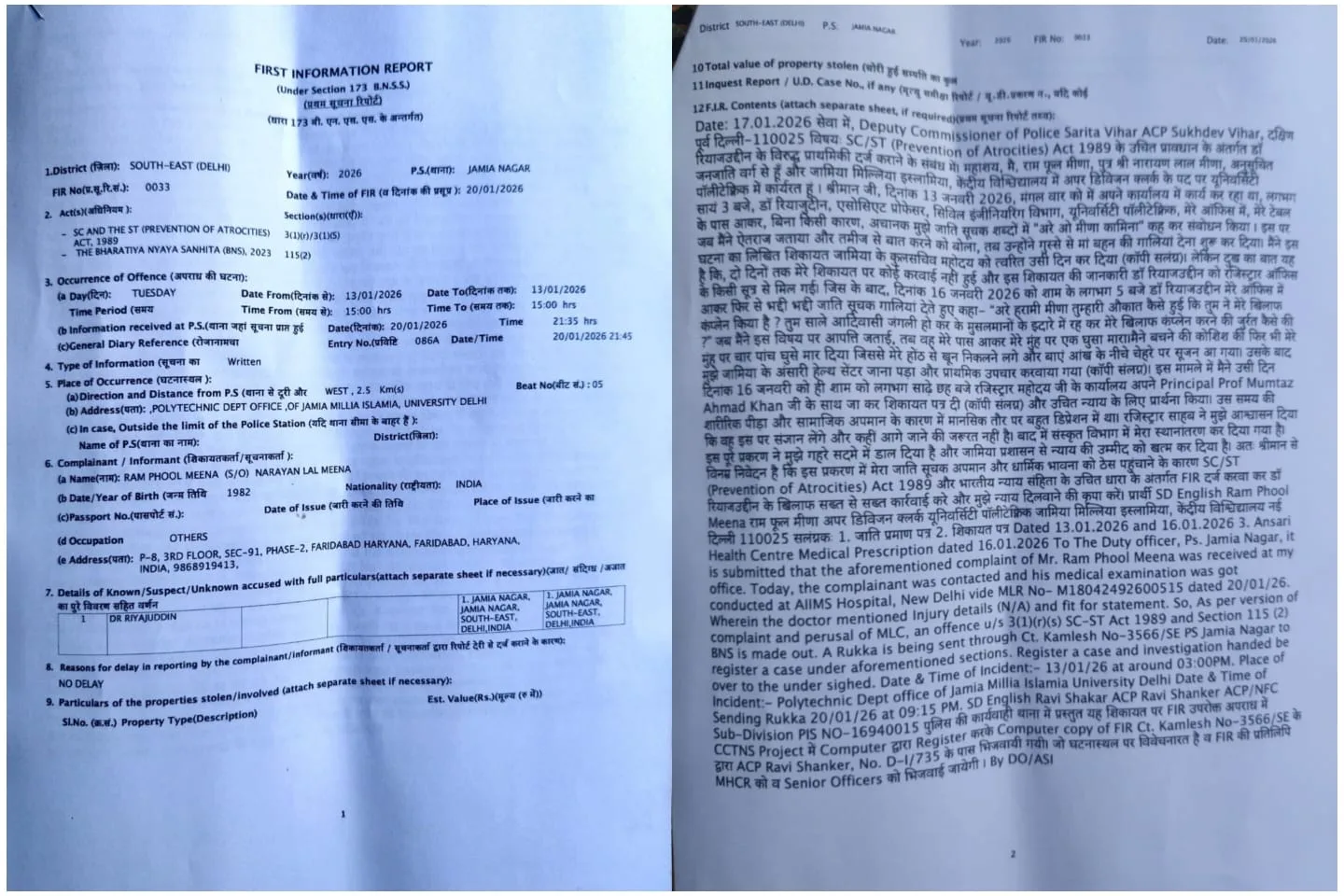
After examining the complaint and medical evidence, the police concluded that offences under Sections 3(1)(r) and 3(1)(s) of the Scheduled Castes and Scheduled Tribes (Prevention of Atrocities) Act, 1989, and Section 115(2) of the Bharatiya Nyaya Sanhita were made out.
The FIR was registered through the CCTNS system, and the investigation was handed over to the concerned officer.
No suspension, No action
Despite the registration of an FIR under stringent provisions of law, Dr Riyazuddin continues in service. No suspension order, disciplinary inquiry or administrative action has been initiated against him so far.
This inaction has drawn sharp comparisons with a December 2025 incident, when Professor Virendra Balaji Shahare was suspended within days for setting an examination question asking students to “discuss atrocities against Muslims in India with examples.” The suspension order dated December 23, 2025, also mentioned that an FIR would be filed against him.
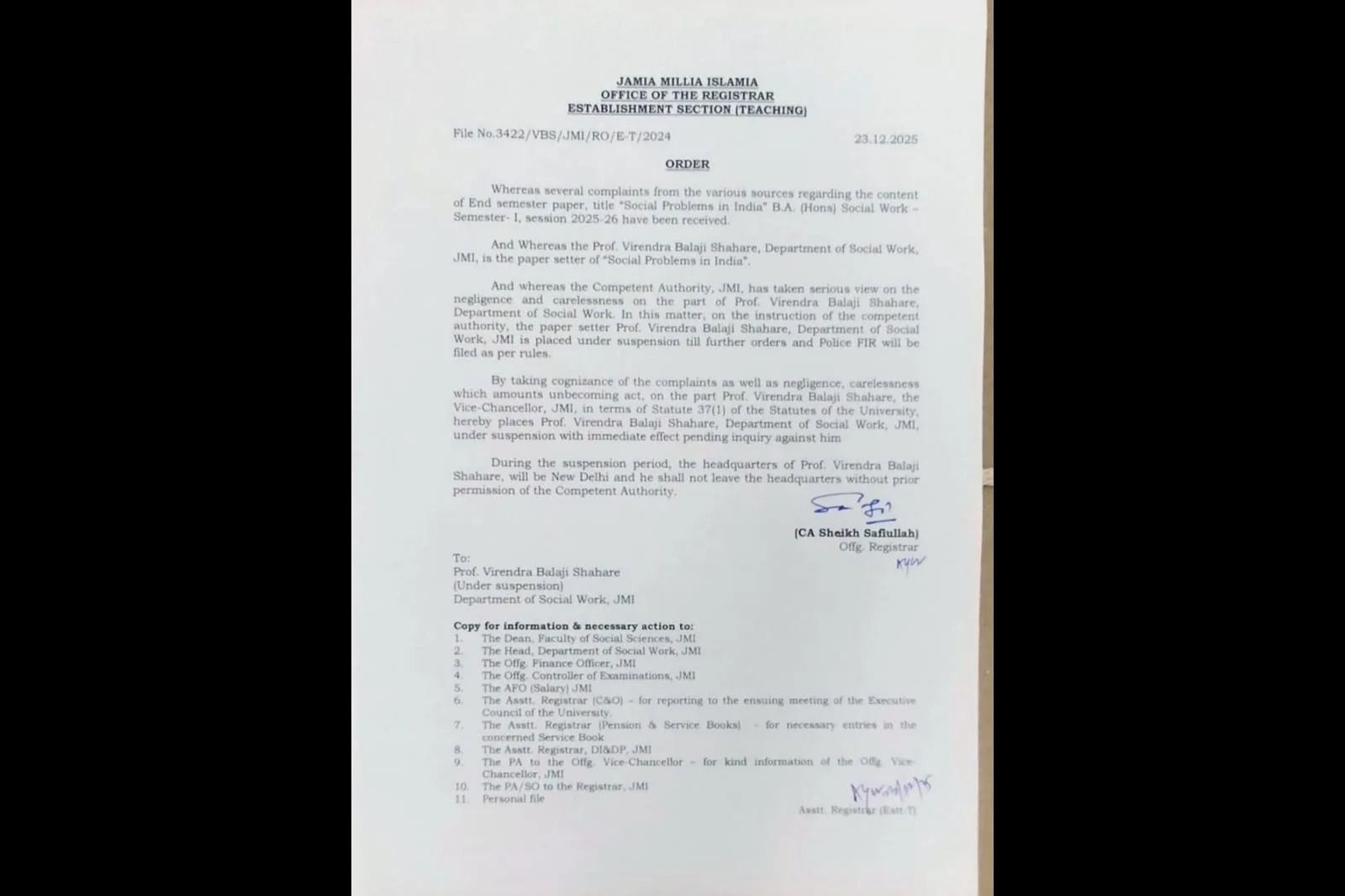
In contrast, in the present case involving alleged physical assault, caste abuse and an FIR under the SC/ST Act, the administration’s continued silence has sparked an unavoidable question, whether Dr Riyazuddin is being shielded by the system because he is a Muslim.
Allegations of religious targeting
Speaking to Organiser, Ram Phool Meena alleged that the abuse he faced was not limited to these incidents. He claimed that over time, he had been subjected to repeated pressure to convert, both directly and indirectly, within the university ecosystem.
He further stated that he has been referred to as a “kaffir” by several individuals on campus, a term he described as dehumanising and humiliating. According to Meena, the sustained harassment stems solely from his religious identity as a Hindu.
It is notable that he had been subjected to continuous caste-based discrimination and exclusion directly and indirectly. He remains in a state of apprehension, fearing for his life in such circumstances. Moreover, he says that his complaint of 13th January 2026 was not taken in cognisance by the Registrar and was intentionally leaked to the accused, which led to the most humiliating incident of physical assault on January 16. He also believes that there is a very strong ecosystem to suppress such incidents from public purviews.
The Meena case is not an isolated incident. On July 17, 2024, Organiser reported that Jamia Registrar Nazim Hussain allegedly told a Dalit employee, “Bring Iman, and we will secure your and your children’s careers.”
On October 26, 2024, another Organiser report revealed that a Divyang woman was allegedly pressured to convert and told, “Wearing a hijab will bring noor to your face.”
These reports triggered nationwide outrage and led to the formation of a fact-finding committee. The committee released a 64-page report on November 14, 2024, at a press conference addressed by former Delhi High Court judge Justice (Retd) S. N. Dhingra and former Delhi Police Commissioner S. N. Srivastava.
The report recorded testimonies from 27 individuals, including teaching faculty, non-teaching staff, students and alumni. Witnesses alleged coercion into religious conversion, discrimination against non-Muslims and career stagnation for those who refused to convert.
One Assistant Professor testified that her Hindu beliefs were mocked and that she was denied promotion despite eligibility, while juniors were promoted ahead of her.
Zero tolerance or zero accountability
Following the earlier controversies, Jamia’s Officer on Special Duty had publicly stated that the university would follow a “zero tolerance policy against forced conversion and discrimination.”
However, the Meena case, involving documented allegations of assault, caste abuse and retaliatory transfer, suggests a gap between stated policy and ground reality.
With repeated allegations of coercion, discrimination, violence and administrative retaliation emerging from Jamia Millia Islamia, the institution once again finds itself under intense scrutiny.
The unavoidable question now confronting policymakers and the public is whether it is justified for the Central government to continue funding an institution that is repeatedly accused of violating the dignity, safety and constitutional rights of its own employees.
As the investigation proceeds, the outcome of the Meena case may well become a litmus test for institutional accountability, equality before law and the credibility of assurances made in the name of reform.