
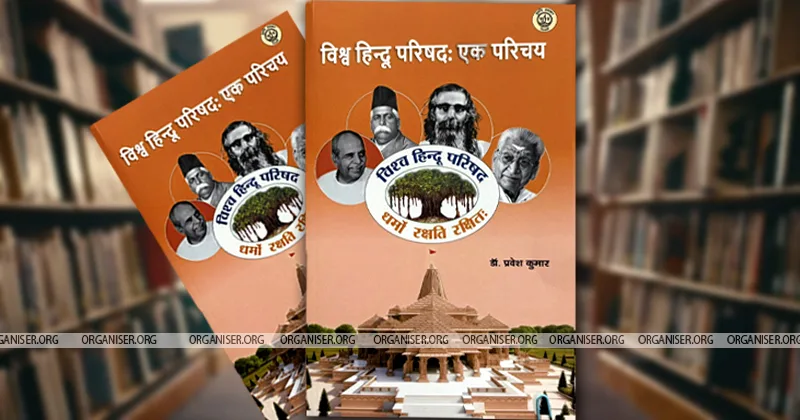
The work “Vishwa Hindu Parishad: Ek Parichay” is not merely a concise record of organisational activities; rather, it represents a structured and rigorous scholarly endeavour aimed at comprehensively understanding the Vishwa Hindu Parishad’s (VHP) ideological underpinnings, historical context, socio-cultural functions and its multidimensional sphere of service. The book is dedicated to Pujya Moropant Pingle ji and Ashok Singhal ji, the inspirational figures behind the Shri Ram Janmabhoomi movement, thereby signalling a profound engagement with the Parishad’s ideological lineage and activist trajectory. The goodwill message from Shri Mahant Ravindra Puri Maharaj, National President of the Akhil Bharatiya Akhada Parishad, alongside the foreword by Shri Alok Kumar, International President of the VHP, situates the book within spiritual, institutional and historical frameworks.
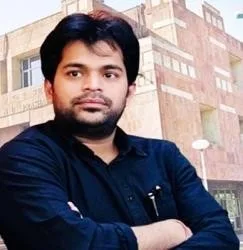
Accordingly, this volume transcends the role of mere reading material, attaining significance as organisational memory, archival documentation and a work of ideological reflection. The writer of this book, Dr Pravesh Kumar, is a serious, research-oriented, and ideologically informed scholar whose intellectual engagement is deeply rooted in the study of Indian society and knowledge traditions, cultural organisations, nationalist discourse, and, in particular, questions of social justice and samajik samrasta. As a professor at the prestigious Jawaharlal Nehru University (JNU), New Delhi and concurrently the National Spokesperson of the VHP, his perspective is enriched by both scholarly insight and practical organisational experience.
More about ‘Vishwa Hindu Parishad: Ek Parichay’
The opening lines of the book—“Hindavah Sodarah Sarve, Na Hindu Patito Bhavet; Mama Diksha Hindu Raksha, Mama Mantra Samanta” articulate the cultural consciousness and civilizational continuity of Hindu society, establishing the book’s initial ideological framework. Here, Hindutva is presented not as a narrow or divisive doctrine but as a broad civilizational commitment informed by values of fraternity, protection and equality. This text constitutes the first rigorous academic exposition on the VHP, attempting to comprehend the revival, reinterpretation and reconstruction of a great Indian civilizational polity following the profound disruptions inflicted on Indian knowledge systems, cultural institutions and memory-based public life by Mughal and British regimes during the periods of medieval and colonial modernity.
The book refrains from reducing the Parishad’s emergence to merely religious revivalism, nor does it confine its analysis to a unilateral political-resistance paradigm. Instead, it situated the VHP within the framework of a “cultural self-determination consciousness” that developed organically within Indian society, fundamentally motivated by aspirations for social cohesion, collective self-awareness, and civilizational-national unity. Divided into seven chapters, the book conceptualises the VHP’s intellectual journey along two principal dimensions: the “Religious Axis (Dharmik Punj)” and the “Social Axis (Samajik Punj)”. The religious axis encompasses initiatives such as cow protection, propagation of dharma, engagement with dharma-acharyas, monastic and temple traditions, the priestly class, preservation of the Sanskrit language, and religious pilgrimage organisations, posited as central pillars of the civilizational structure.
Hindu awareness campaigns, blood donation, and tree-planting drives
Conversely, the social axis includes Hindu awareness campaigns, blood donation, tree-planting drives, service-oriented activities, and programs promoting samajik samrasta, which are interpreted as expressions of cultural responsibility within the modern public sphere. The book emphasises that the underlying objective of these initiatives is not the mere organisation of religious sentiment but, through the unity of Hindu society, the enrichment, preservation and propagation of the Indian nation and the Sanatan cultural ethos. Slogans resonating from the Prayag Dharm Sansad—“Desh dharm se naata hai, gaay hamari maata hai,” “Hum gaay nahi paalte, gaay humein paalti hai,” “Gau samvardhanam se rashtra vardhanam,” “Hindu ghata to desh batega” and Swami Vivekananda’s penetrating observation that “if one person leaves Hinduism, it is not merely one person less, but an additional adversary” are deployed not as emotive appeals but as civilizational arguments, providing a philosophical and sociological framework to comprehend the interconnections among community, tradition, faith and social responsibility. Thus, when read within the context of contemporary cultural discourses in India, the book transcends mere introduction of an organisation, establishing itself as a broad intellectual document that explores the interplay of tradition, identity, and unity within Indian modernity.
“Our Inspiration—The Power of Hindutva
The first chapter, “Our Inspiration—The Power of Hindutva”, gestures toward the profound philosophical tradition of Indian civilisation, which not only endured foreign invasions, cultural aggressions and colonial repression but also sustained itself through continuous processes of reconstruction. The author asserts that the essence of Indian civilisation is not merely a matter of historical longevity; it is a living, experiential, and self-aware tradition with roots in antiquity, fundamentally distinct from Western conceptions of civilisation.
The chapter presents a sophisticated comparative analysis of Western notions of nationhood, which emphasise external markers such as race, territory, or language, and the Indian conception, wherein the nation exists as “a lived and vibrant internal reality.” This conception reflects a spiritual-cultural community whose foundational source is the life-force of Hindutva. Accordingly, the author contends that the Indian nation is not the outcome of historical events but the tangible manifestation of the sages’ enlightened will, austerity, and contemplation.
A significant portion of the chapter examines historical instances of temple desecration, the suppression of knowledge traditions, and the destruction of educational institutions, noting that despite such adversities, Indian society demonstrated resilience in its reconstruction. The author emphasises that although temples were destroyed and structures dismantled, culture remained intact. This enduring vitality exemplifies the internal strength of Hindutva, which preserved societal memory and safeguarded the self.
Richness of ancient Indian education systems
Furthermore, the chapter highlights the richness of ancient Indian education systems, referencing Nalanda, Takshashila, and other gurukul traditions. Statistical data demonstrates that India maintained an extensive educational infrastructure, countering colonial historiographical constructions that portrayed India as “ignorant” or “knowledge-deficient.” Drawing on Dharmapala’s research, the author underscores that the status of Shudras in traditional Indian society has often been viewed through a unidimensional lens. The actual socio-economic structure was far more complex, dynamic and locally contextualised, a nuance colonial historians overlooked in assessing the Shudra community’s education, occupational roles and social position.
The central thesis of the chapter is that Indian civilisation repeatedly reorganised itself, reclaimed cultural resources, and reinstated a sense of pride. According to the author, this process of revival does not signify reactive nationalism but embodies the long-standing cultural confidence nurtured by Hindutva over centuries. In this sense, the chapter transcends mere historical narration, providing an intellectual articulation of the processes of civilizational memory, reconstruction, and self-renewal. It reaffirms the grandeur, resilience, cultural continuity, and the spiritual dimension of nationhood inherent in Indian civilisation, invoking a civilizational self-dialogue in the reader and demonstrating that Indian tradition continues to operate as a source of inspiration and vitality.
In the second chapter, the formation of the Vishwa Hindu Parishad (VHP) is contextualised within the long historical experience that bridges India’s civilizational memory and modern national consciousness. This period, even post-independence, remained marked by the question of reviving symbols of national identity. The verse from the Brihaspati Agama—“Himalayāt samārabhya yāvat Indu sarovar…” — positions India not merely as a geopolitical entity but as a divinely constituted cultural territory, a vision that subsequently assumed an organisational form.
1963 World Hindu Conference emerged as a decisive moment
Post-independence governmental indifference toward the preservation of cultural heritage, the historical memory of temple destruction, recurrent references to the invasions of Ghazni and Gauri, and the unfinished question of national-symbol restoration collectively created a milieu in which the reconstruction of the Somnath Temple and its re-consecration in 1951 emerged not simply as religious ceremonies but as affirmations of civilizational continuity. Within this historical frame, the events of 22 December 1949 in Ayodhya, disparities in religious-legal frameworks, debates surrounding Muslim Personal Law, and controversies over religious conversion began to acquire the character of broader socio-cultural discourse.
Amid these tensions and aspirations, the 1963 World Hindu Conference emerged as a decisive moment, bringing together saints, dharma-acharyas, socio-cultural organisations, and representatives of the diaspora to articulate the need for a shared civilizational platform. Subsequently, at the saints’ council and intellectual deliberation convened in Mumbai on 29–30 August 1964, the decision to formally establish the VHP was taken. In this context, M. S. Golwalkar and S. S. Apte emerged as pivotal figures in the organisation’s formative period, with Apte serving as the first General Secretary and Golwalkar as the guiding ideological mentor. The participation of representatives from monastic and saintly traditions, including Swami Chinmayananda, imbued the organisation with a distinctly spiritual–cultural dimension.
Following its establishment, the VHP consciously positioned its sphere of activity outside the ambit of political contestation, focusing instead on cultural revival, social cohesion, preservation of pilgrimage heritage, reinforcement of cultural identity among the Indian diaspora, debates on conversion, and community organisational initiatives. It becomes evident that the organisation’s emergence was not a reactionary response to immediate circumstances but a manifestation of a long-standing historical consciousness actively engaged in re-establishing memory, tradition and cultural autonomy within Indian society. The VHP’s organisational form, therefore, represents an institutional extension of this aspiration, constituting an ongoing journey of cultural revival aimed at integrating Hindu society into a shared civilizational experience at both national and global levels.
Chapters three and four elucidate the multifaceted operational vision of the VHP as part of a broader civilizational project. Central to this project was the objective of counterbalancing the tendencies of appeasement toward Muslim and Christian communities in the public sphere under the pretext of secular discourse, while simultaneously reinstating the self-awareness, cultural dignity, and ideological presence of Hindu society. The VHP’s underlying conception posits culture not as the domain of a single community but as a perennial stream shared by all—“Sanskriti sabki, ek chirantan; khoon–ragon mein Hindu hain, virat saagar samaj apna, hum sab iske bindu hain.” This understanding forms the ideological foundation for organising the entire Hindu society into a coherent socio-cultural entity, giving rise to the notion of the “social axis” as a concrete institutional structure for service-oriented work.
According to the book, the VHP operates 6,399 service centres across education, health, social support, and self-reliance initiatives, comprising 3,526 educational centres, 1,137 health centres, 446 social work centres, and 1,290 self-reliance projects. These programs are presented not merely as philanthropic endeavours but as processes of social leadership development, community-based organisation, and empowerment. The tradition of cow protection is framed as a moral and cultural imperative of Hindu life—“Vipra, Dhenu, Sur, Sant hit leenh manuj avatar” with the establishment of cow-assistance centres, cattle-sheds, conservation programs, and coordinated rural activities underscoring religious-social responsibility. In several states, the issue has evolved into a subject of policy debate and public discourse, signalling its socio-political relevance.
In the domain of social cohesion, the VHP articulates its organisational ideal through the principle—“Hindavah Sodarah Sarve, Na Hindu Patito Bhavet. Mama Diksha Hindu Raksha, Mama Mantra Samanta.” This vision emphasises the creation of an egalitarian society transcending caste and social divisions. Cultural propagation is thus linked to the existential question of Hindu society: if it becomes constricted, the nation’s cultural foundation is undermined. Consequently, the propagation department and associated cells have structured social engagement, dialogue, and identity awareness in an organised framework.
Under the religious axis, programs such as dharma-acharya engagement, the construction of a bridge between devotion to God and patriotism, youth-saint liaison, the Sadhvi Shakti Parishad, and dialogue with temple-priest communities are conceptualised as instruments for reorganising cultural leadership.
Sanskrit preservation, religious pilgrimages, the Kumbh Mela, and the Kanwar Yatra
Sanskrit preservation, religious pilgrimages, the Kumbh Mela, and the Kanwar Yatra are presented not merely as ritual acts but also as symbols of communal memory and cultural unity. The operational structure positions the Bajrang Dal as a platform for emerging youth leadership through initiatives in security awareness, cow protection, college-student organisation, child-care centres, and weekly congregations. At the same time, the Durga Vahini and Matri-Shakti units highlight female participation as organisational and cultural strength. Efforts in satsang, specialised liaison departments, and global coordination with the Hindu diaspora are interpreted through strategic intellectual frameworks such as “Setting Hindu, Positioning Hindu, Organized Hindu, Strengthening Hindu”, aiming to establish Hindu identity as an organised, capable, and dialogically competent cultural force on a global scale.
Overall, these chapters present the VHP’s work as a comprehensive civilizational project integrating five dimensions: service, social cohesion, religious revival, organisational development, and global coordination, in which cultural consciousness and social institutionalisation evolve in a complementary interplay.
In the concluding chapters, the journeys and movements organised by the Vishwa Hindu Parishad (VHP) are analysed as long-term processes of cultural awakening, social organisation, and civilizational remembrance. These journeys are interpreted not merely as religious rituals, but as dynamic instruments of “public engagement, cultural revival and national integration,” echoing the age-old principle “Yatra Dharmaḥ Tatra Jayaḥ” within the context of contemporary social life. The 1982 Gnana Rath Yatra in Tamil Nadu and the 1983 Dharma Yatra in Kerala were established by the VHP as forums for dialogue-based socio-cultural presence in South India. Concurrently, the Ekta Yagna journeys ideologically embodied the notion that India’s sacred geography serves as a map of its cultural consciousness.
Processions such as the Rath Yatra from Pashupati to Rameshwaram, the Mahadev Rath from Haridwar to Kanyakumari, and the Kapil Rath from Gangasagar to Somnath symbolised the idea that “Vasudhaiva Kutumbakam”—not merely the land, but collective memory itself is shared.” During the 1980s, regional processions including the Shri Ram–Janaki Yatra, the Bihar Gnana Rath, Tamil Nadu’s Shakti Rath, Andhra Pradesh’s Satya Rath, Assam’s Bhagwat Rath, and Haryana’s Ekta-Mas Yatra weaved a tapestry of cultural unity across India’s diverse regions.
Detailed discussion of the VHP’s movements
Urban religious-cultural presence expanded through processions such as the 1985 Ahmedabad Jagannath Rath Yatra and the 1986 Gnana Deepak Rath Yatra, while the 1987 religious study tour in Malaysia extended the project internationally to the Indian diaspora. Pilgrimages in 1988—Jammu Jal Yatra, Baba Amarnath, and Budha Amarnath reinstated cultural and devotional memory in peripheral and mountainous regions. The 1990 Bajrang Dal Dharma-Jagran Yatra mobilised youth as organisational energy, and the 1994 Maharishi Valmiki and Sidhu–Kanhu Yatras foregrounded the historical reinterpretation of Dalit and tribal heroes, reinforcing discourse on social cohesion.
Entering the new millennium, the 2005 Sant Ravidas Chetna Yatra and the 2006 Ashta-Matrika Rath Yatra in Odisha endowed marginalised communities with renewed cultural recognition and ideological significance. Collectively, these journeys are portrayed as integrated social mechanisms of “contact–dialogue–memory–organisation.”
Similarly, the book provides a detailed discussion of the VHP’s movements. The anti-untouchability campaigns are linked to social cohesion and the principle of “Hindavah Sodarah Sarve”. The Shri Ram Janmabhoomi liberation struggle, along with related issues in Kashi and Mathura, is framed as a discourse of cultural rights and historical justice. The 2007 Ram Setu Bachao Yatra is emphasised as an effort to safeguard maritime pilgrimage traditions, archaeological evidence, and cultural memory. The essential argument is that these journeys and movements are not instruments of reactive politics, but manifestations of a long-lived civilizational consciousness that cultivates devotion, service, memory, and organisational integration across Indian society.
Thus, the book situates the Vishwa Hindu Parishad not merely as an organizational entity, but as an integral component of India’s civilizational consciousness, cultural memory, social cohesion, and religious revival a continuum shaped over historical time. The narrative systematically examines the organisation’s founding context, ideological inspiration, institutional structure, service initiatives, pilgrimages, movements and samrasta-oriented projects, demonstrating that it represents not just descriptive documentation but a strategic project of “Hindu society’s self-awareness and cultural autonomy.”
The author synthesises academic research, organisational experience and civilizational discourse, presenting the VHP’s activities not as emotional appeals but as processes of social leadership development, community organisation, cultural continuity and national integration. In this sense, the book transcends an organisational introduction to become a significant scholarly work for understanding the relationship between Indian modernity, tradition and identity.