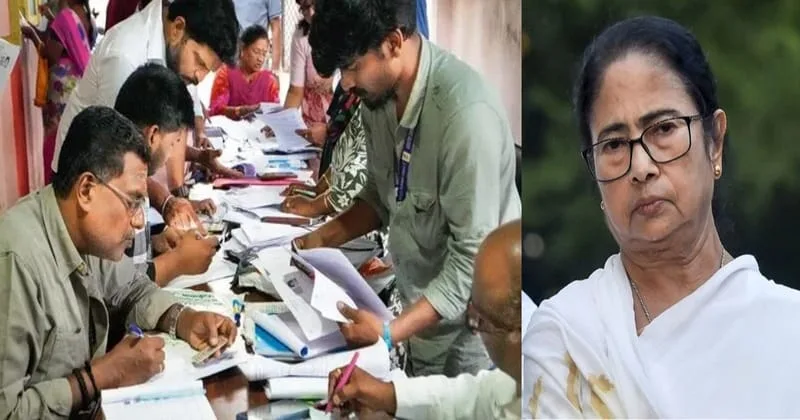
Kolkata: The Election Commission of India (EC) on January 19 told the Supreme Court that it has uncovered glaring and “scientifically impossible” anomalies in West Bengal’s electoral rolls as part of the ongoing Special Intensive Revision (SIR) exercise ahead of the 2026 assembly elections.
Reason why TMC is opposing logical discrepancies notices under SIR pic.twitter.com/KwAAG08pB0
— Rishi Bagree (@rishibagree) January 20, 2026
In one striking example from Assembly Constituency 283 (Barabani, Asansol district), a single individual’s name was recorded as the father of 389 registered voters, a number that defies logical demographic norms. A similar case in Assembly Constituency 169 (Bally, Howrah district) showed another person listed as the father of 310 voters.
According to the EC’s affidavit to the Supreme Court, the voter database also shows thousands of instances in which one parent is linked to implausibly high numbers of children, including cases with 50, 100, or more, far above the nationwide average family size of roughly 4.4 members.
EC counsel Rakesh Dwivedi told the Supreme Court that such “logical discrepancies” require enhanced scrutiny and verification to ensure there is no fraudulent mapping of electors. Notices are now being issued to those affected, asking them to provide the correct parental details.
A three‑judge bench headed by Chief Justice Surya Kant directed the Election Commission to publicly display the list of voters flagged with logical discrepancies, at gram panchayat and block offices, and to allow submission of documents or objections within a set period.
The court’s order came amid criticism that the SIR exercise, now identifying over 1.2 crore voters with “logical discrepancies”, could cause stress and confusion among eligible voters and must be carried out transparently.
The electoral roll anomalies in West Bengal have put the ruling Trinamool Congress and Chief Minister Mamata Banerjee under intense scrutiny. Opposition leaders and election experts have accused the TMC of ignoring implausible entries in the voter rolls, including hundreds of voters linked to a single parent, raising serious questions about the party’s administrative oversight and commitment to free and fair elections. Analysts have pointed out that the TMC government oversaw the compilation of these electoral rolls for years, yet these massive discrepancies were only flagged after EC scrutiny, suggesting systemic negligence or possible complicity in allowing such irregularities to persist. The controversy highlights a growing perception that while the Election Commission is acting to safeguard the integrity of the voter list, Mamata Banerjee’s rhetoric appears aimed more at deflecting attention from her party’s administrative failures than resolving the deep-rooted inconsistencies in voter registration.