LUCKNOW: The Uttar Pradesh Madhyamik Shiksha Parishad (UP Board) has decided to make vocational education compulsory for students of Classes 9 and 11, starting with the academic session 2026, to strengthen skill-based learning and enhance employability among school students. The decision aligns with the objectives of the National Education Policy (NEP) 2020, which emphasises integrating academic learning with practical, skills-oriented education to prepare students for real-world challenges. Announcing the decision, UP Board Secretary Bhagwati Singh said that subject committees have completed the preparation of curricula for various vocational trades, including Information Technology and allied fields, Electronics, Apparel, and Beauty and Wellness.
“The subject committees have prepared and approved detailed courses for vocational trades after several rounds of meetings led by Additional Secretary Satyendra Kumar Singh and Skand Shukla,” Singh said. He added that the move is designed to create a strong link between school education and employment opportunities by equipping students with practical skills and industry-relevant knowledge.
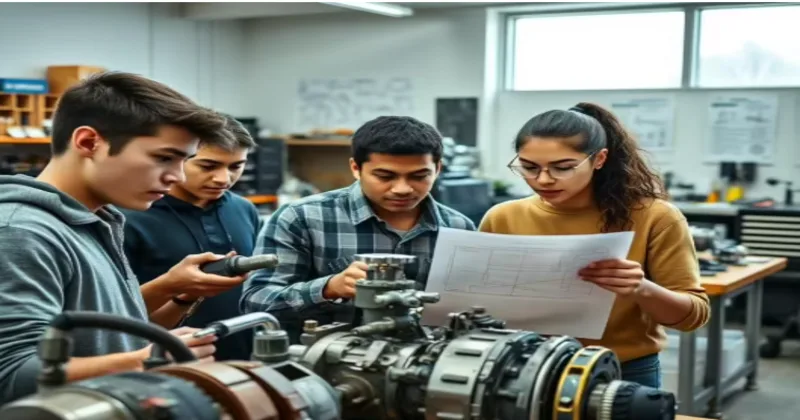
The new vocational curricula have been developed by subject experts after detailed consultations to ensure alignment with current technological needs and industry expectations. The aim is to ensure that students get hands-on experience and acquire skills that enhance their employability immediately after school or in higher education. “The approved curricula focus on the latest technological developments, job market trends, and employability skills. Practical, skill-based, and job-oriented content has been included to ensure students develop relevant competencies,” said Singh.
According to UP Board Secretary Bhagwati Singh, the vocational subject will be introduced alongside the existing curriculum, not as a replacement. It will be treated as an additional compulsory subject, similar to how computer or moral education is structured in some schools.
The initiative is fully in line with the National Education Policy (NEP) 2020, which calls for integrating vocational education into mainstream schooling to promote skill development, self-reliance, and entrepreneurship. Officials said the introduction of mandatory vocational courses will also help reduce the gap between formal education and employment. Students will not only gain theoretical knowledge but also practical experience in various trades, preparing them for diverse career paths in both traditional and emerging sectors.
“This is a meaningful step towards connecting school education with employment, imparting practical knowledge to students, and preparing them for future challenges,” Bhagwati Singh said. He added that the UP Board’s initiative will help build a skilled and self-reliant workforce, in line with the state government’s broader vision of empowering youth through education and vocational training.
The Central Institute of Vocational Education (CIVE), Bhopal, played a crucial role in supporting the UP Board in developing the vocational curricula. The collaboration helped in ensuring that the courses meet national standards and remain consistent with the broader framework of vocational training recognised across India. Several subject experts, including Sanjeev Kumar Arya, Virendra Nath Shukla, Dr Aditi Goswami, Dr Dilip Singh, and Dr Avinash Pandey, contributed significantly to the course design and content development. Their inputs helped make the curricula more comprehensive, practical, and aligned with industry needs.
The inclusion of more trades will allow students from different parts of Uttar Pradesh to select skill-based courses that align with their local industries and future career interests. Officials noted that once the new system is implemented, vocational subjects will form an integral part of the school timetable, with both theoretical and practical components. Schools will be equipped with training materials, labs, and workshops to facilitate effective teaching and learning.
By making vocational education mandatory, the UP Board aims to shift the focus of secondary education from rote learning to skill-based and experiential learning. It is also expected to give students a competitive edge in both employment and higher studies. Experts say this reform will not only help bridge the skills gap in the workforce but also encourage more students to pursue entrepreneurship, start-ups, and technical careers.
Educational institutions across the state have welcomed the decision, calling it a “forward-looking step” that aligns Uttar Pradesh with the national agenda of creating a Skilled India.
By combining academic learning with job-oriented training, the Yogi Adityanath government aims to empower youth with employable skills, promote innovation, and strengthen the link between education and economic growth. From 2026, every student in the state’s secondary schools will not only study textbooks but also learn skills that can open real opportunities in the job market, making education truly meaningful and future-ready.